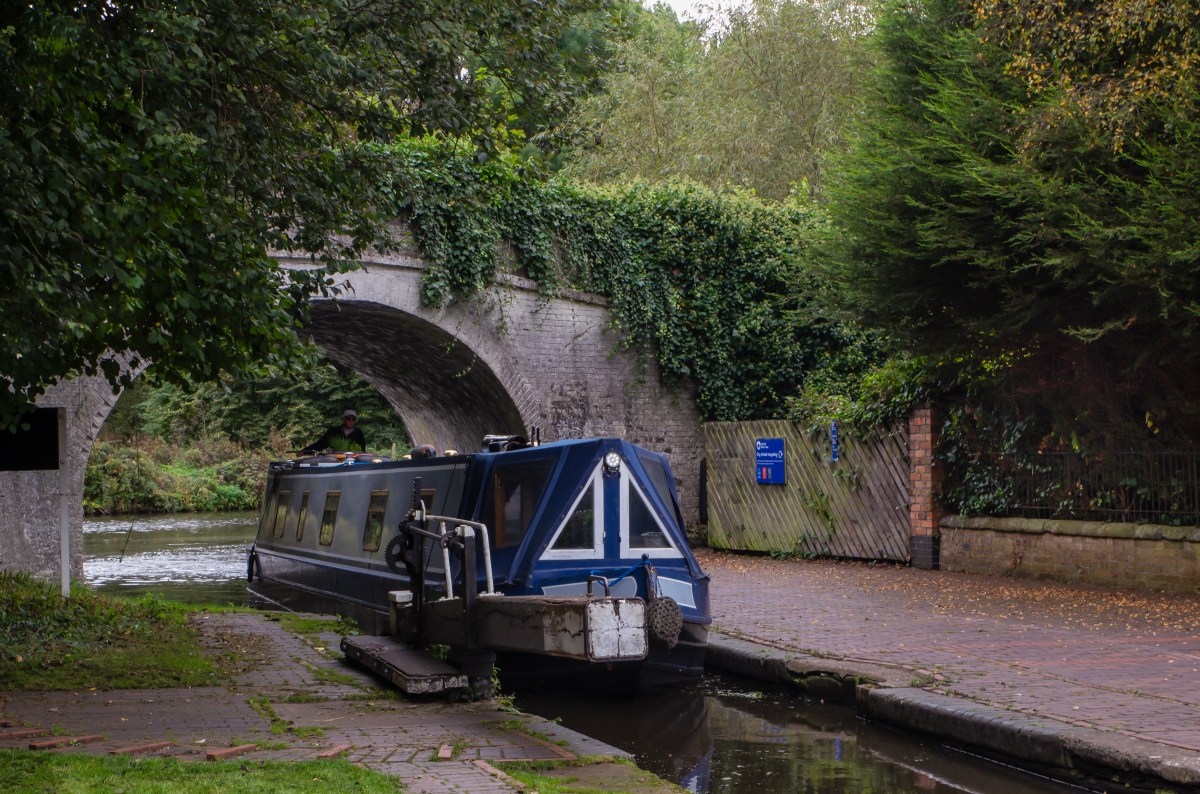
Clayworth to West Stockwith, Chesterfield Canal
Monday 18th September 2023
The start of this part of our journey to Cheshire had been less than auspicious. Train services south from Newcastle, and into Newcastle, were severely disrupted because of an incident near Northallerton. Some trains were delayed, and some were cancelled, which meant that the ones which did finally run were overcrowded as well as delayed. We had to change trains twice instead of once, and last minute change-of-platform announcements added to the stress. We’d arranged a taxi to take us from Retford to Retford and Worksop Boat Club at Clayworth, where we’d left Derwent Lass, and the taxi had to be re-arranged too.
Even more worryingly, because there were no shops in Clayworth, I had arranged a delivery from Morrisons with the all-important supplies of milk, bread, and other assorted provisions, which was due to arrive at 5o’clock at the boat club.
We managed to get on the 4.05 train at Doncaster for Retford, only to be told as we boarded the train, that it was a Hull Trains service and our tickets weren’t valid. But the nice ticket inspector, on hearing the tale of woe, let us off.
We got to Clayworth at ten minutes to five. At five to, the Morrisons van appeared in the car park.
All was well.
But not for long.
We knew that the weather forecast was bad for Wednesday, so the plan was to go to West Stockwith the next day, and wait until Thursday before travelling up the Trent towards Newark and Nottingham. But we got up to find the wind was blowing in 40mph gusts, and rain was forecast too.
We stayed put, venturing out only for a short walk along the towpath to pick some blackberries.
Although the forecast was that winds would moderate by lunchtime, this didn’t happen and Wednesday was even worse. It wasn’t even nice enough to go out for a walk. Ian was still hankering after going anyway, and had to be reminded that if we ended up across the canal, or stuck in a bank, he was the one who would have to extricate us.
Thursday September 21st
Clayworth to West Stockwith
We were glad we hadn’t tried to go on Wednesday. We got up to pale September sunshine and cloudless skies and had a delightful passage to West Stockwith.
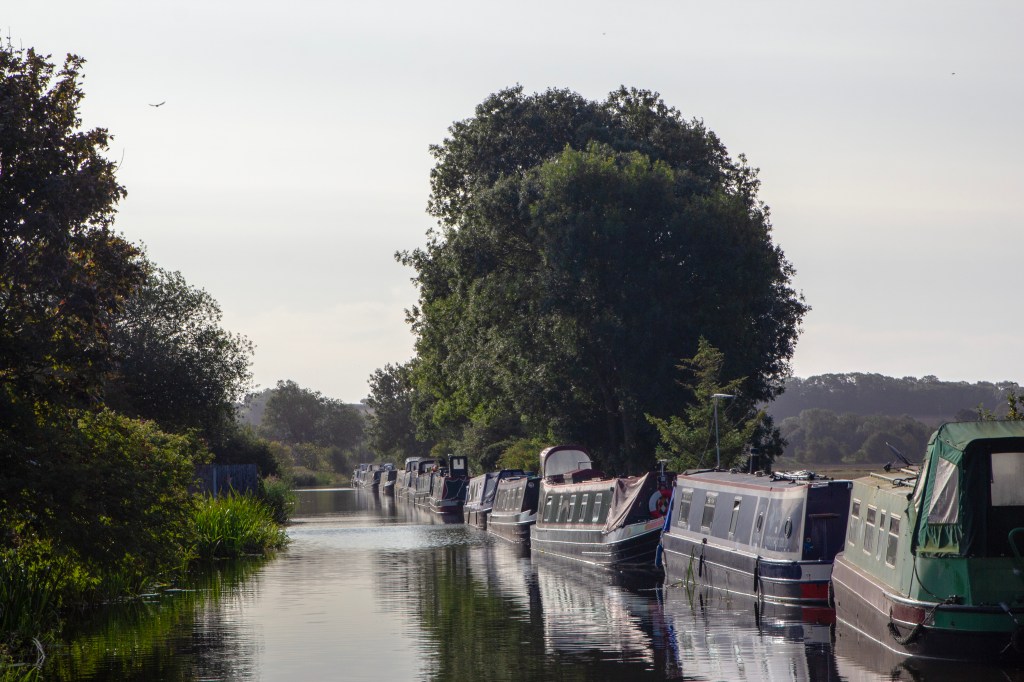

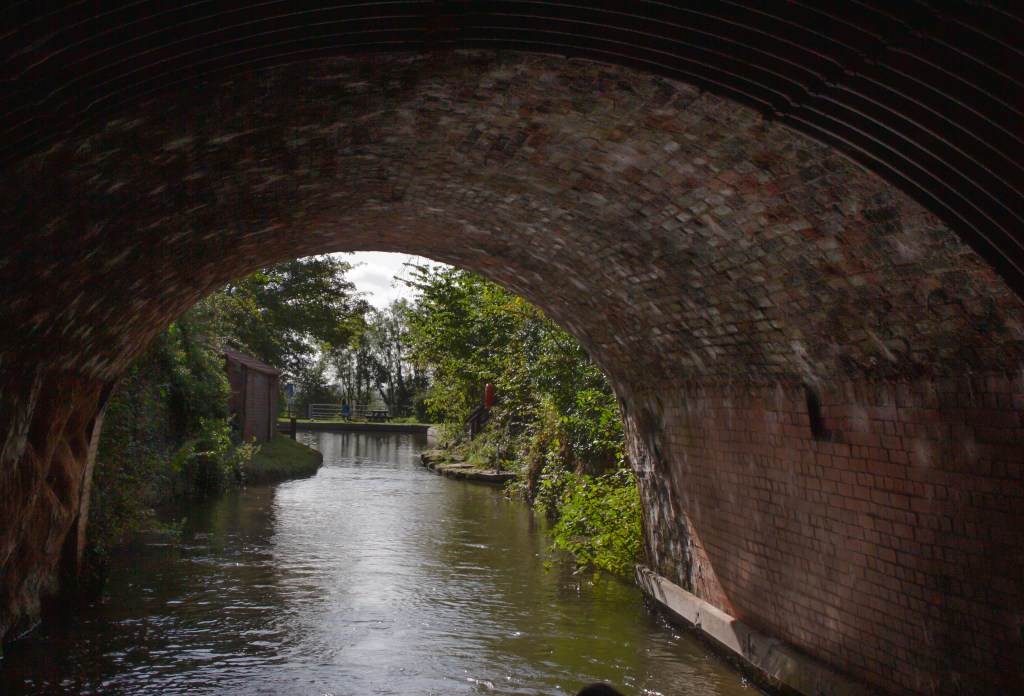

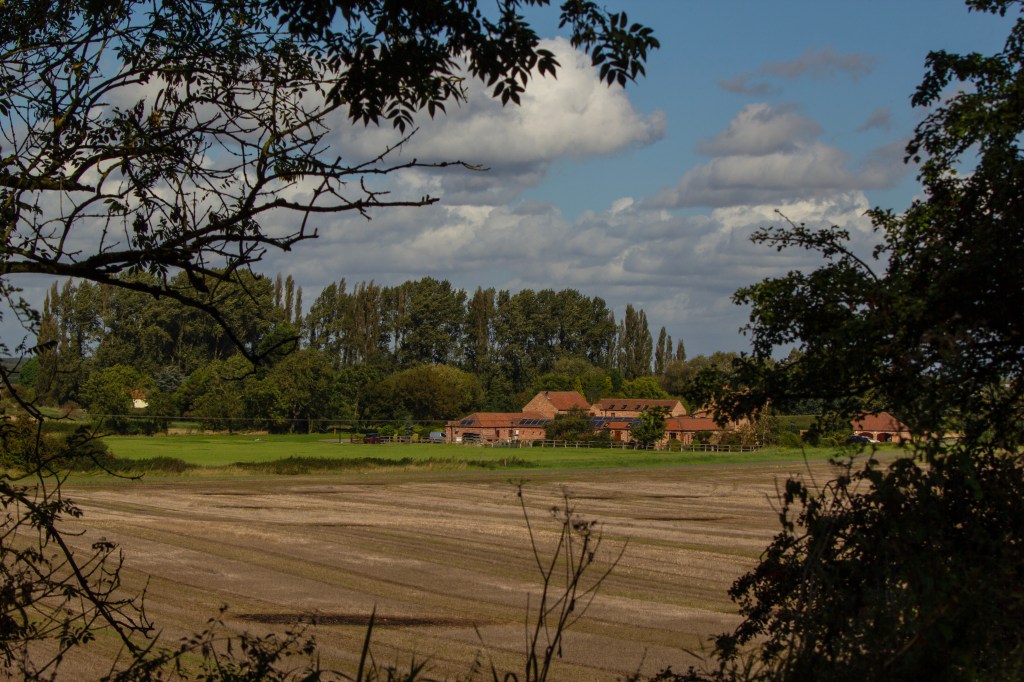
We rather desperately needed a pump out, but when we got to West Stockwith, it was only to find that the pump out machine wasn’t working. The Lock keeper had gone home for the night, and even with help and advice from some fellow boaters, Ian had to admit defeat, after spending quite some time trying to work out what was wrong.
The Waterfront Inn sits across the canal basin so we thought we’d have a meal out. We walked round to the pub where there was a posse of bikers in the car park, which seemed to augur well.
But when we tried the front door, it was clearly locked and unlikely to open that evening, as it was already 7 o’clock. As we were walking away, and I was gloomily entertaining the prospect of performing a culinary miracle on Derwent Lass, the owners came to the door and apologetically explained that they were closed for two weeks for refurbishment. But they suggested we tried the White Hart. 500 yards away along the Main Street.
It was a long 500 yards, but we got there and were rewarded with a very nice meal, with efficient and friendly service and a good atmosphere.
Friday September 22nd 2023
West Stockwith to Torksey Lock
To our great relief, the Lock Keeper appeared at 8.30 and fixed the pump out machine. It appeared that when it had been used the previous afternoon, while the boater had flushed the system with water from the canal, a small twig had got stuck in the non-return valve. This was quickly rectified, and we were very glad indeed that we wouldn’t have to wait for a visiting engineer to come and sort it out.
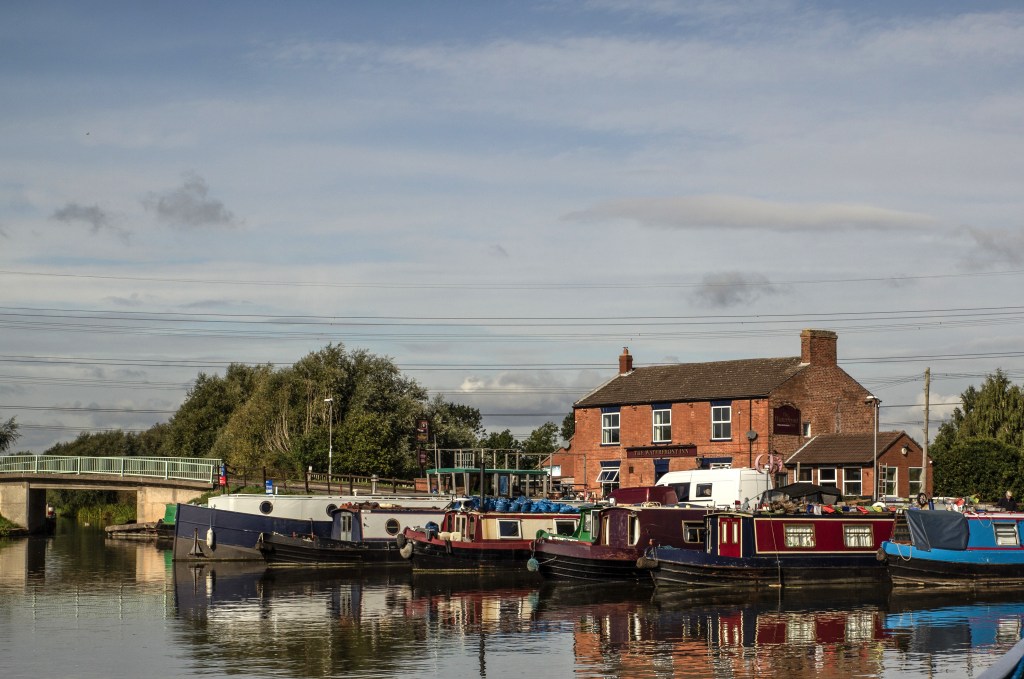
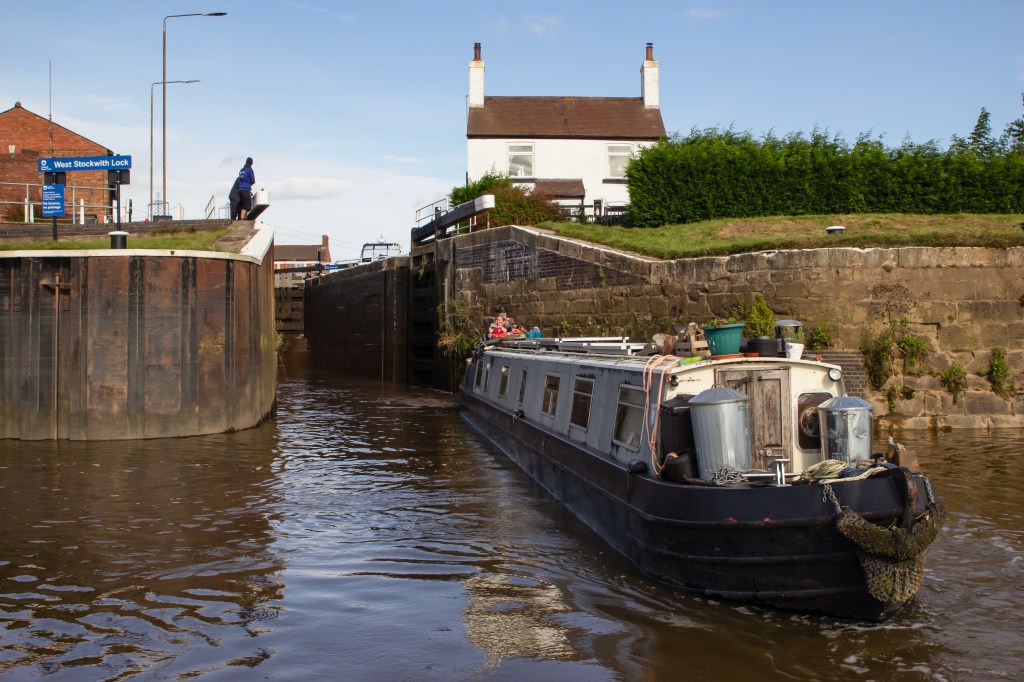
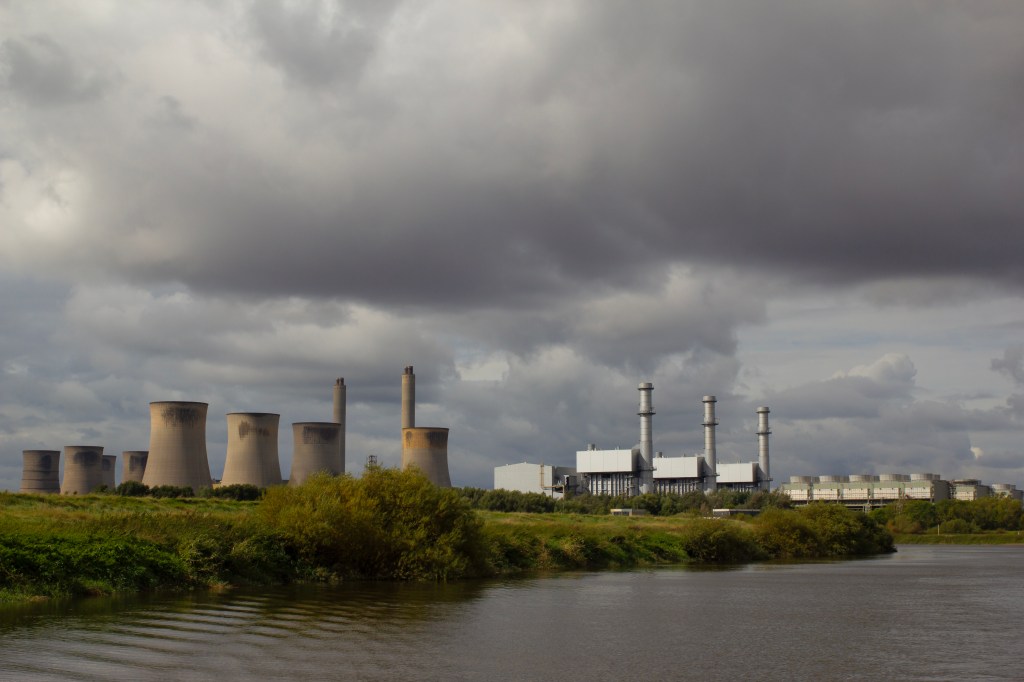
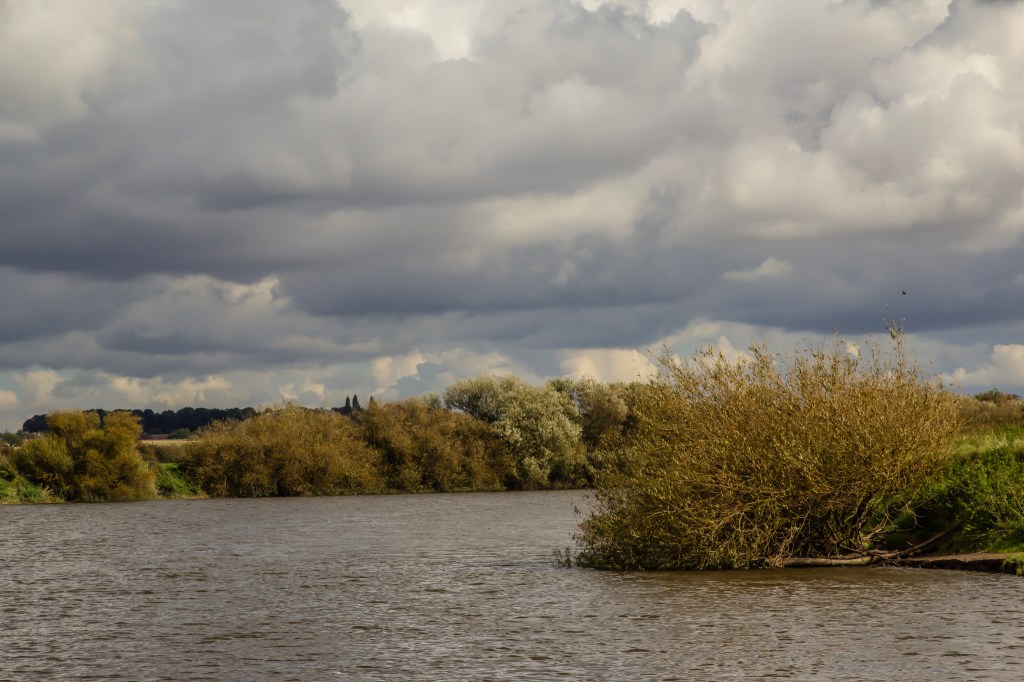
We were still on the tidal part of the River Trent, so our departure time was fixed by the tide times and the Lock Keeper. Our slot was 10.30, together with nbPillar of Autumn, and we travelled up the river together.


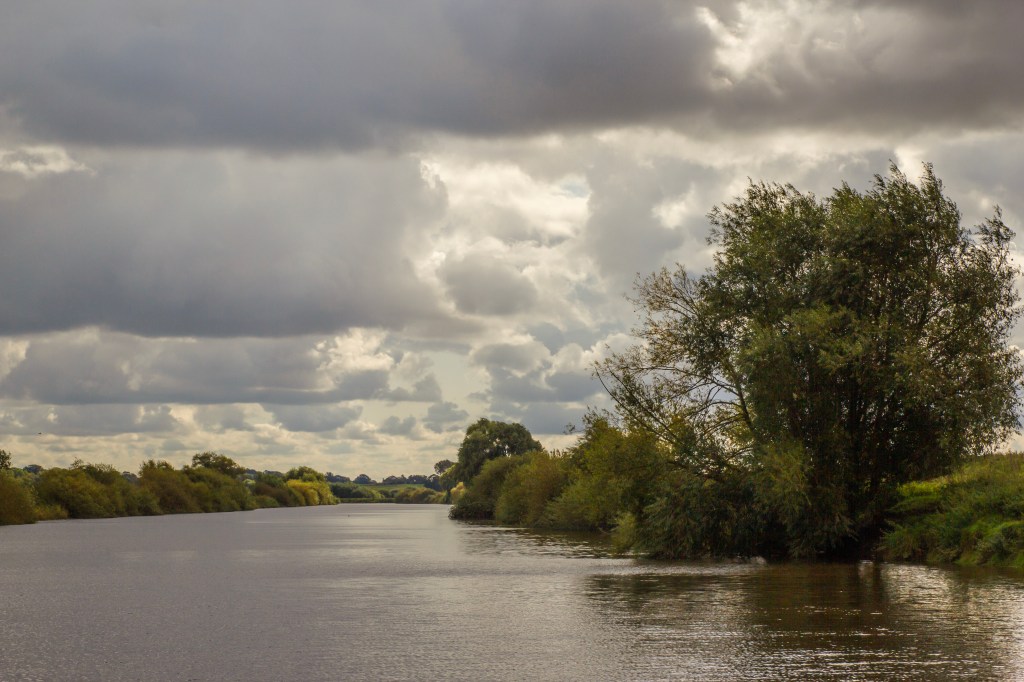
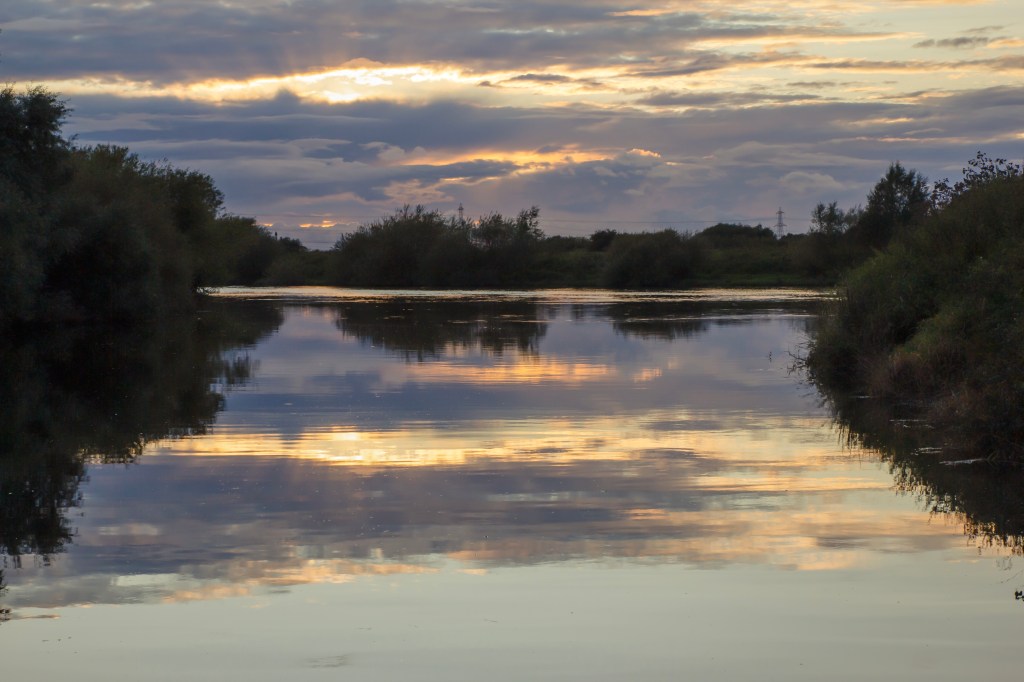
.
Saturday September 23rd
Torksey Lock to Newark
Ian had been advised by one of the lock keepers to wait till midday before setting off for Newark. The logic was that this was slack water, after which we’d be going with the tide. The journey would take about three hours, but the slight worry was that we wouldn’t get to Cromwell Lock, where the tidal part of the river ends, before it was closed for the day.
But another lock keeper contradicted this advice and suggested leaving Torksey at 7.30 in the morning – also a time of slack water, but then the tide would be against us and the journey would take about five hours.
Operating on the principle of why do anything the easy way when there’s a more difficult one available, Ian decided we would go early. In fairness, this meant that we’d be at Cromwell Lock in plenty of time and we would also be able to get as far as Newark, where we could stay in King’s Marina, with such conveniences as an easy place to tie up, and mains electricity.
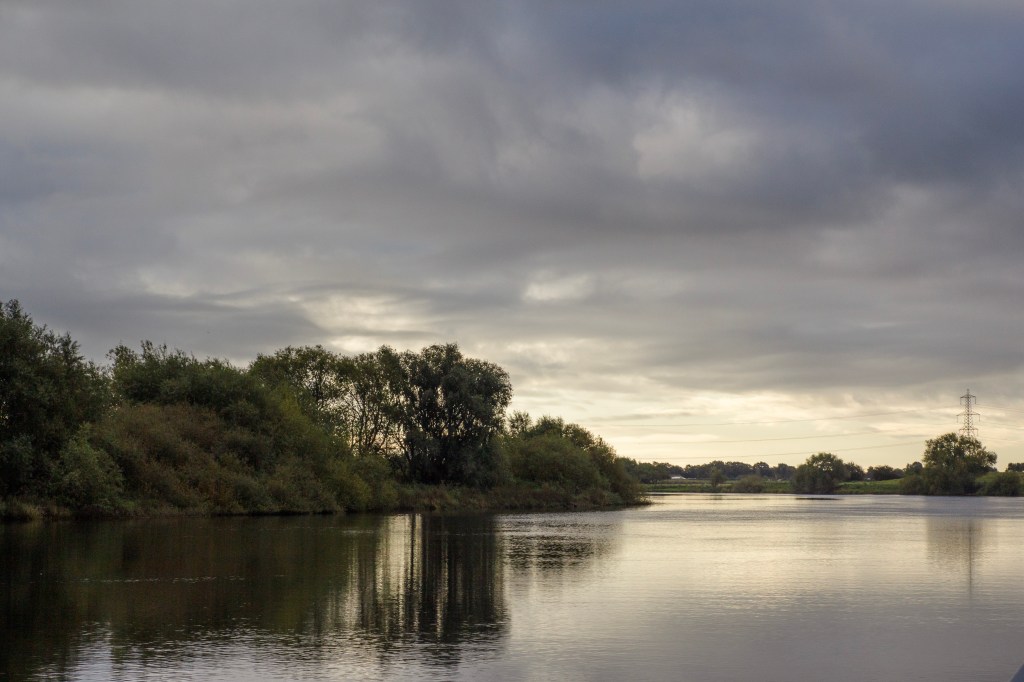
The lock keeper at Torksey had collared Ian and asked if another boat could ‘buddy up’ with us. This was nbMary, whose owner was an old gentleman, even older than us, who was on his own, had no river charts and no radio. He appeared promptly at 7.30 and followed us all the way through Cromwell Lock, where we stopped for lunch.
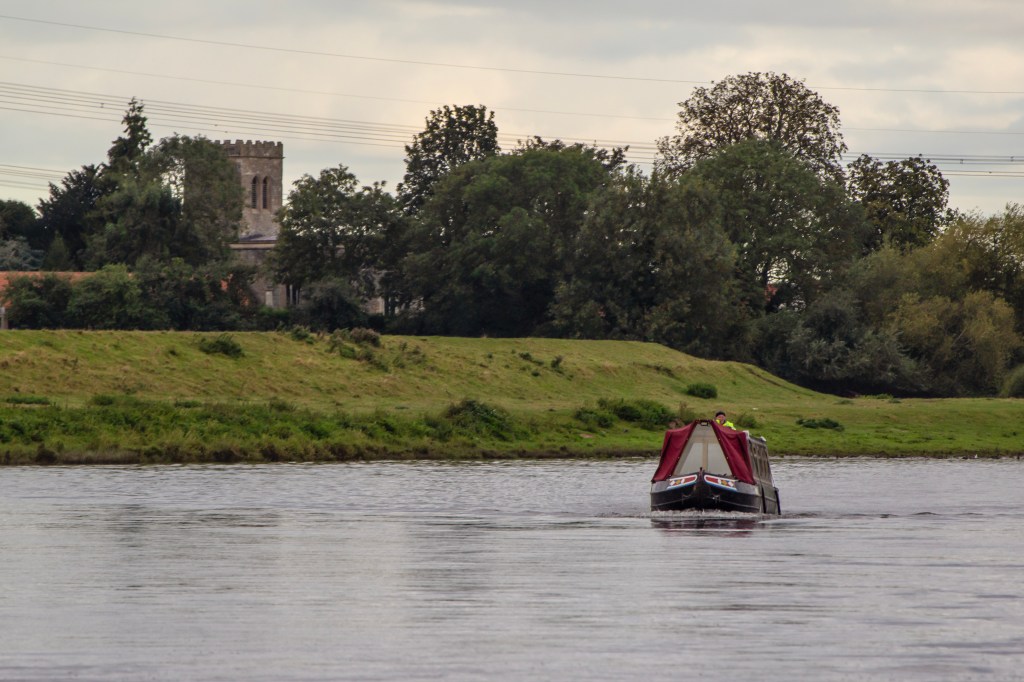
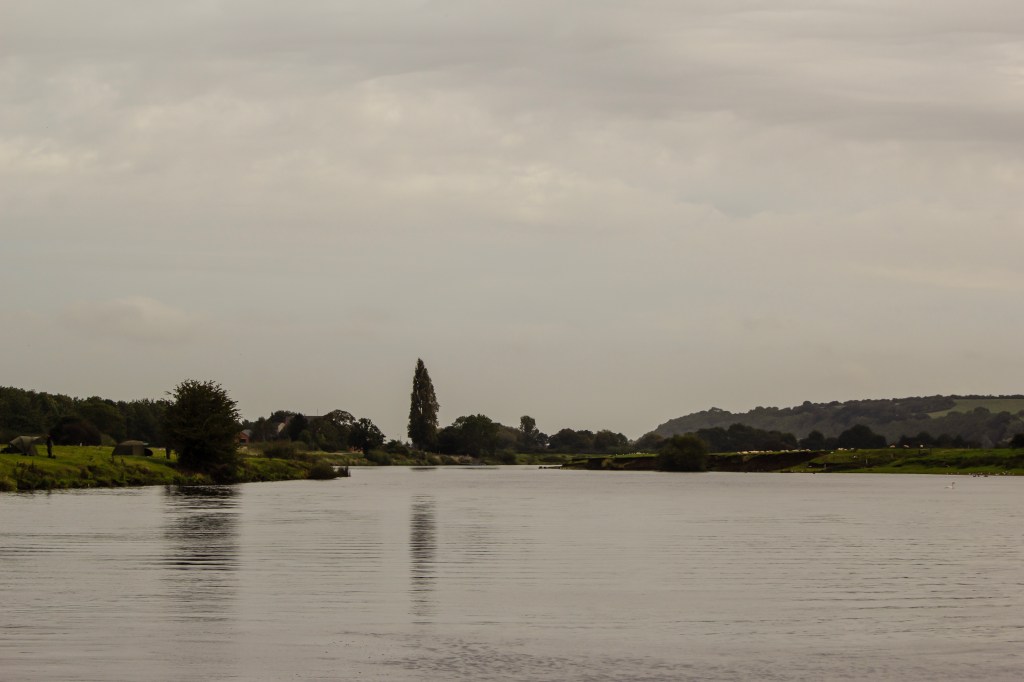
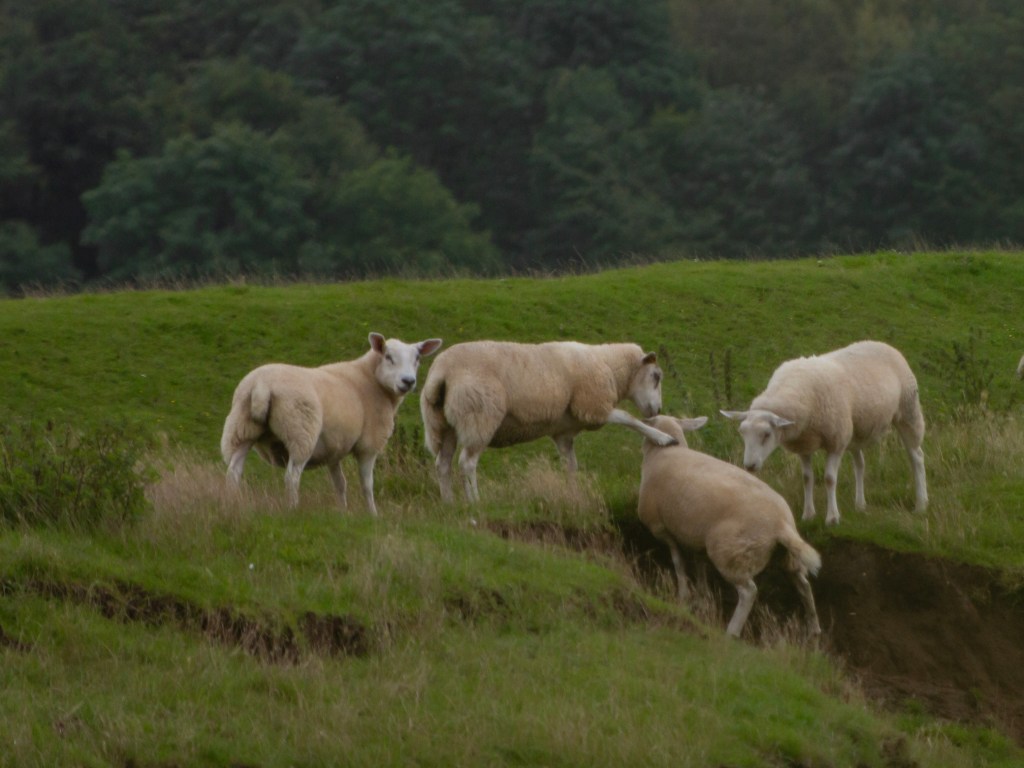
There wasn’t any particularly interesting scenery, but some birds and animals to photograph.

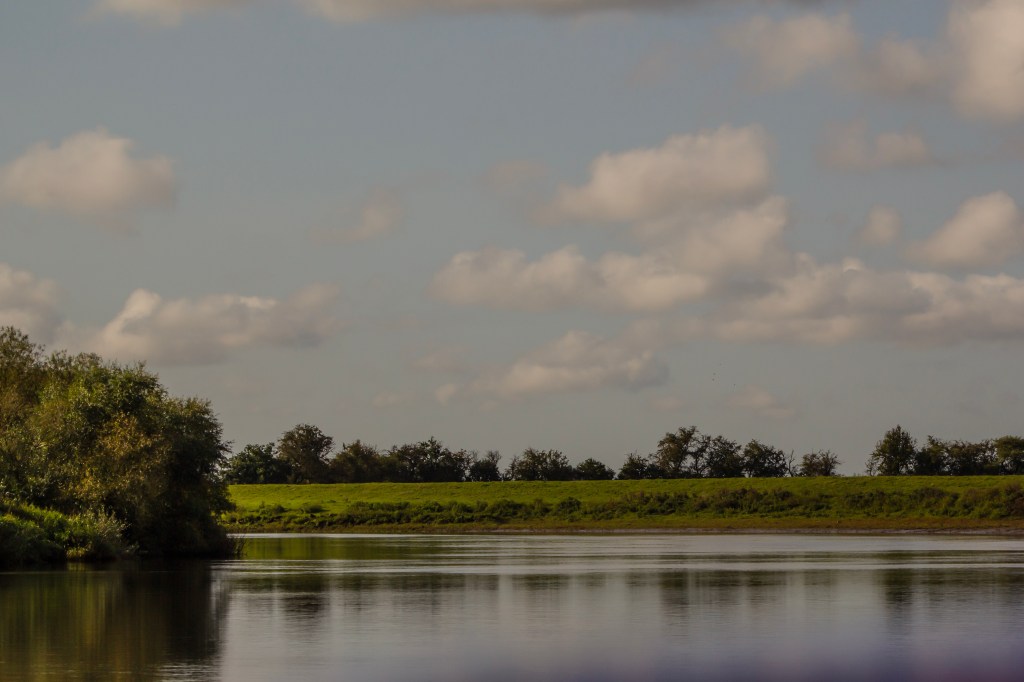
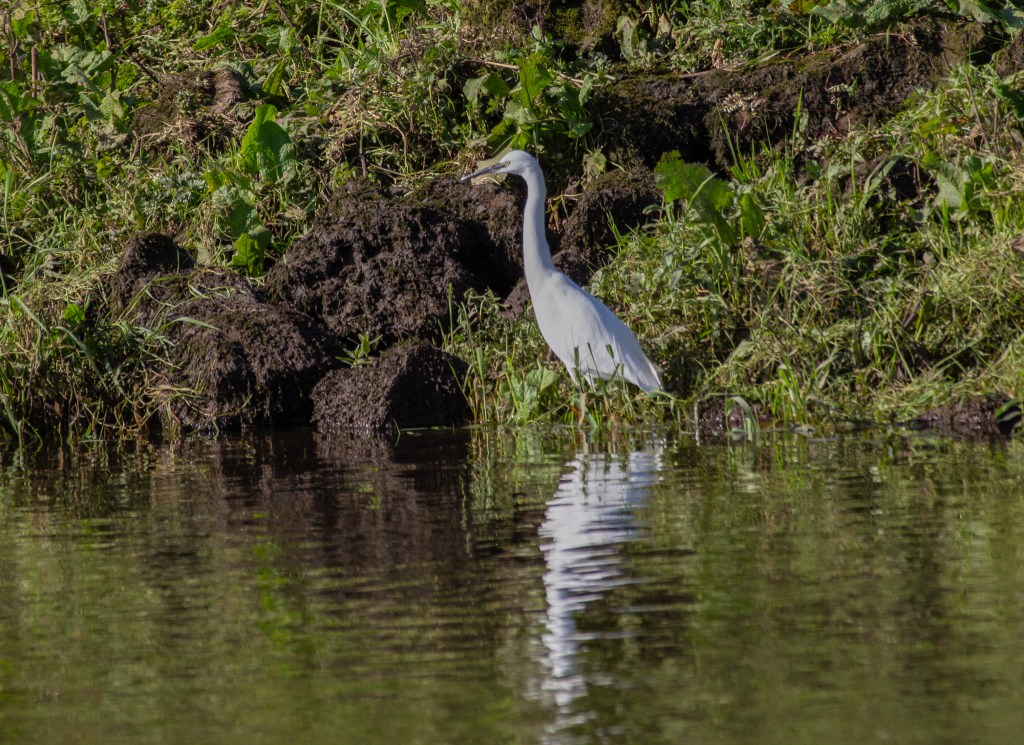

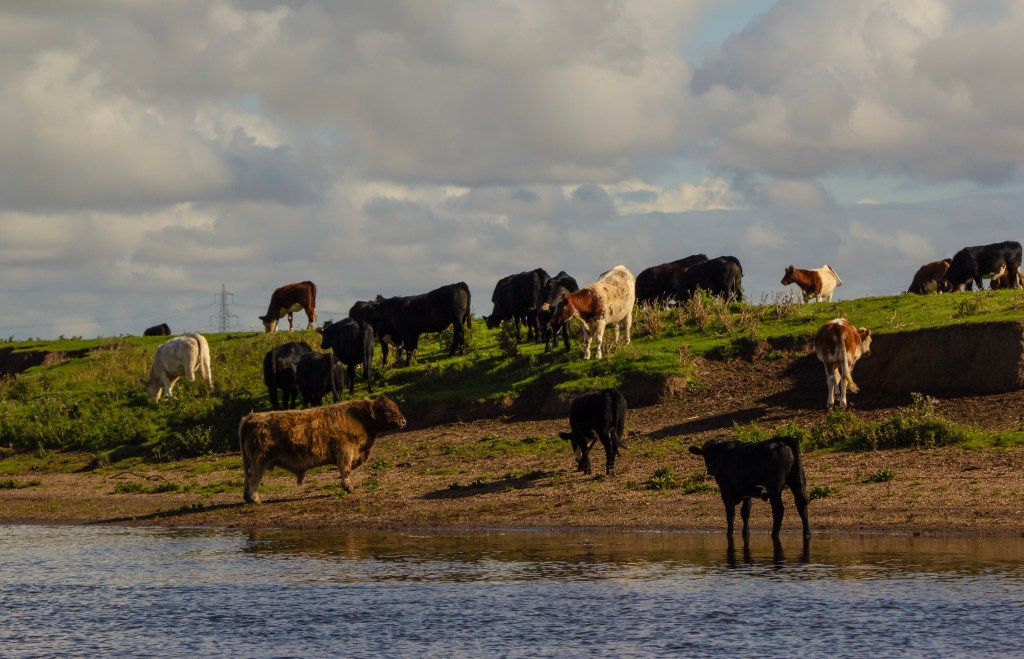
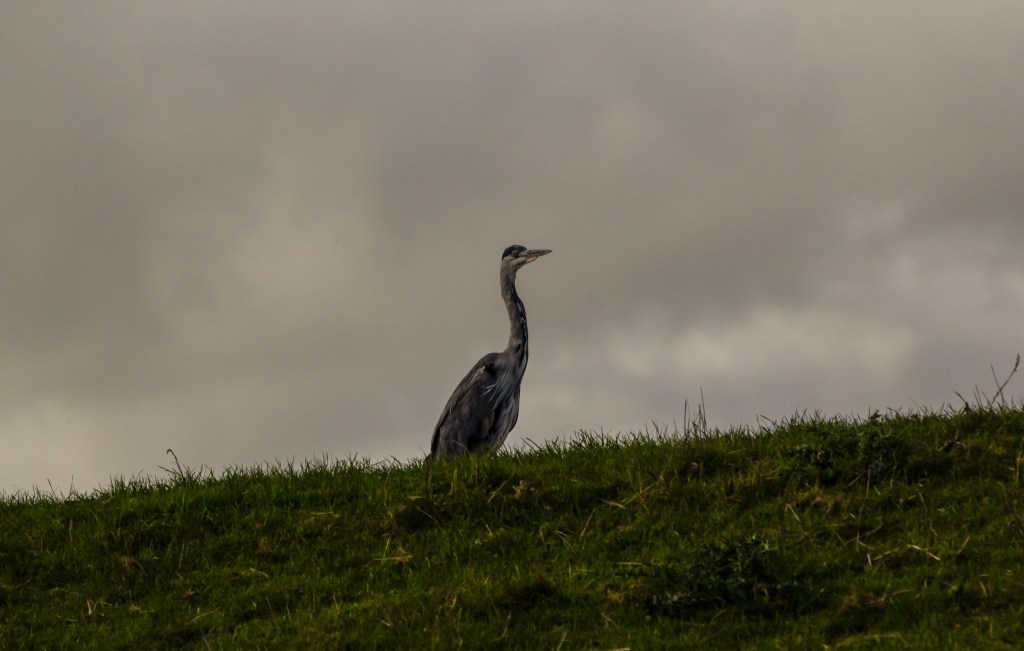
Cromwell Lock has significance for boaters, as it marks the end of the tidal part of the River Trent.
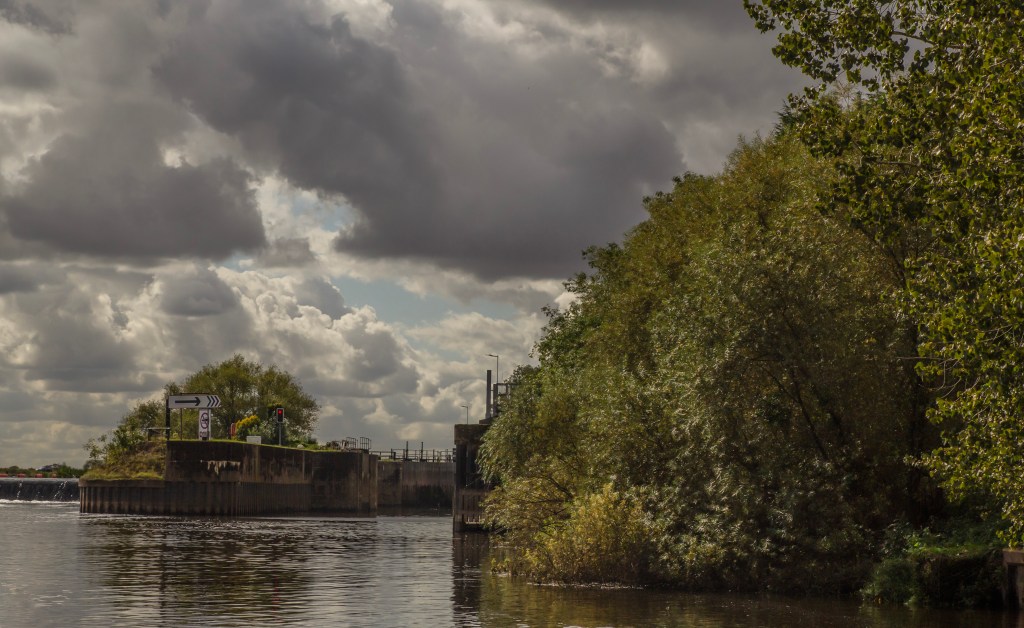
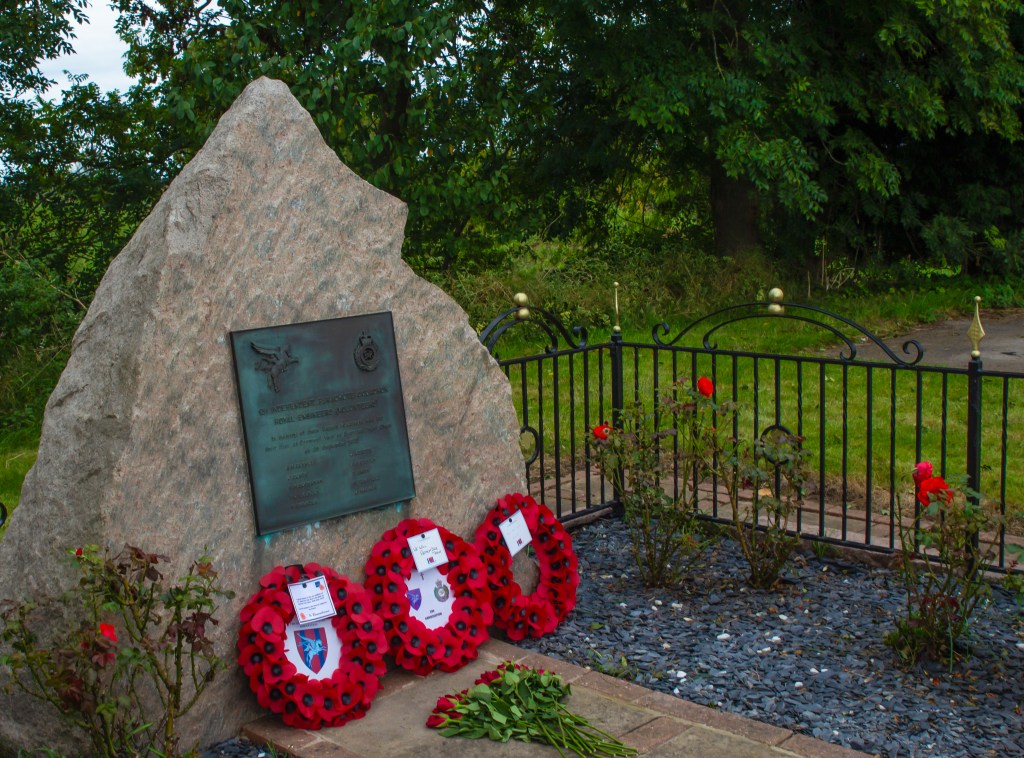
Above the lock is a poignant memorial to ten members of 300 Troop of 131 Parachute Squadron Royal Engineers (V). They were taking part in an overnight exercise, the Stoke to Hull run, and drowned when their assault boat went over the weir on the night of September 28th, 1975.
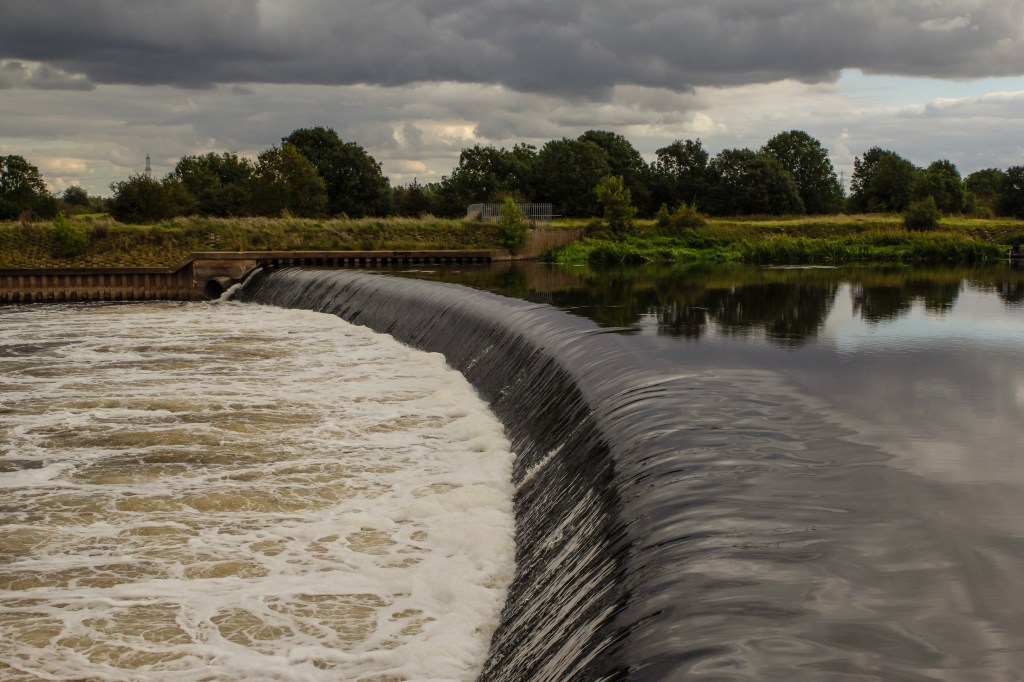
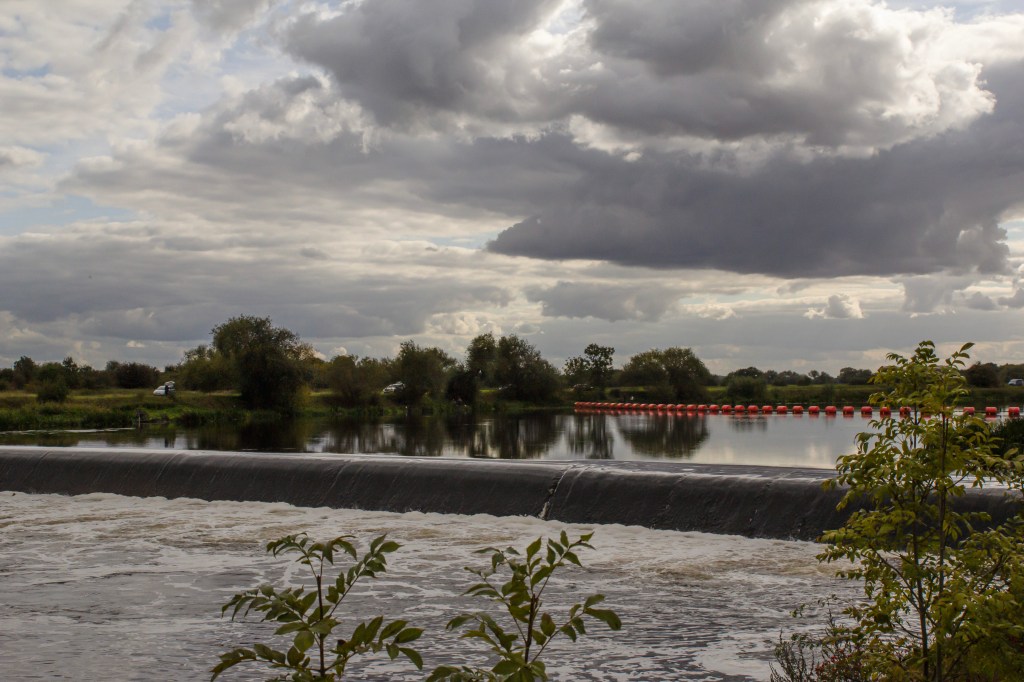
Cromwell Lock and the weir reminded us of some of the places we’d been to in North America. The huge lock is next to a vast weir, where the water drops several feet into the wide expanse of the river.

We had a warm welcome at King’s Marina from the staff who helped us moor on the jetty. Ian had had to reverse Derwent Lass onto the mooring, and they seemed impressed with his skill.
24th -25th September
Newark
We went out exploring Newark town centre, steeped in history and fine buildings. But being Sunday morning, not only were most of the shops closed, but the Civil War Museum and the town Museum and Art Gallery were shut too.
We did find a coffee shop but decided to have lunch on the boat and then get an Uber to Southwell, a few miles away, to visit the Minster and the Workhouse.
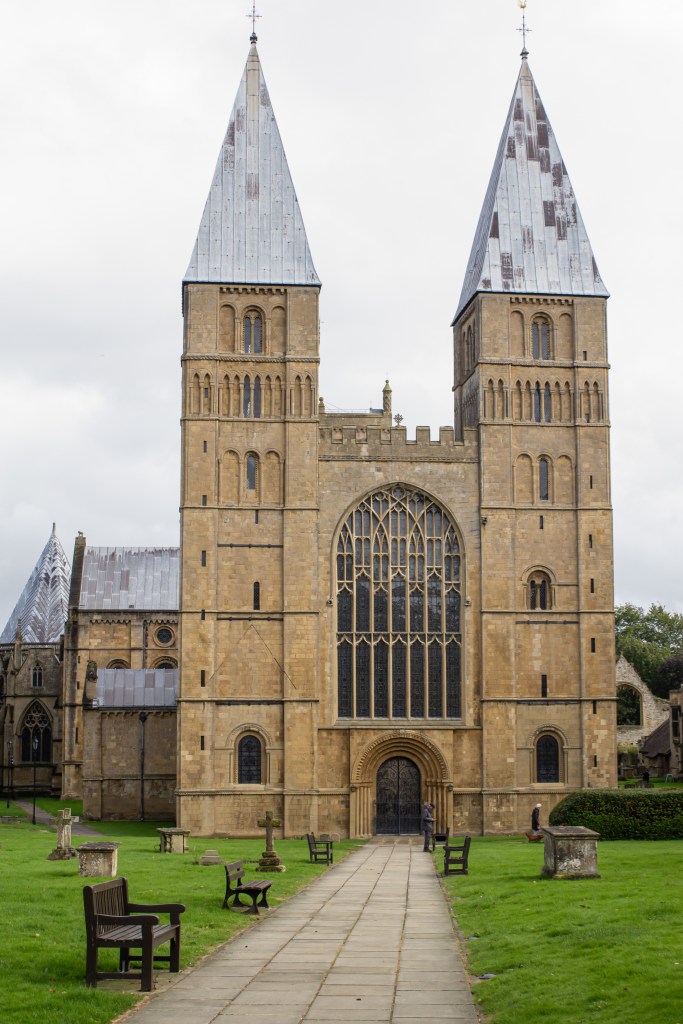
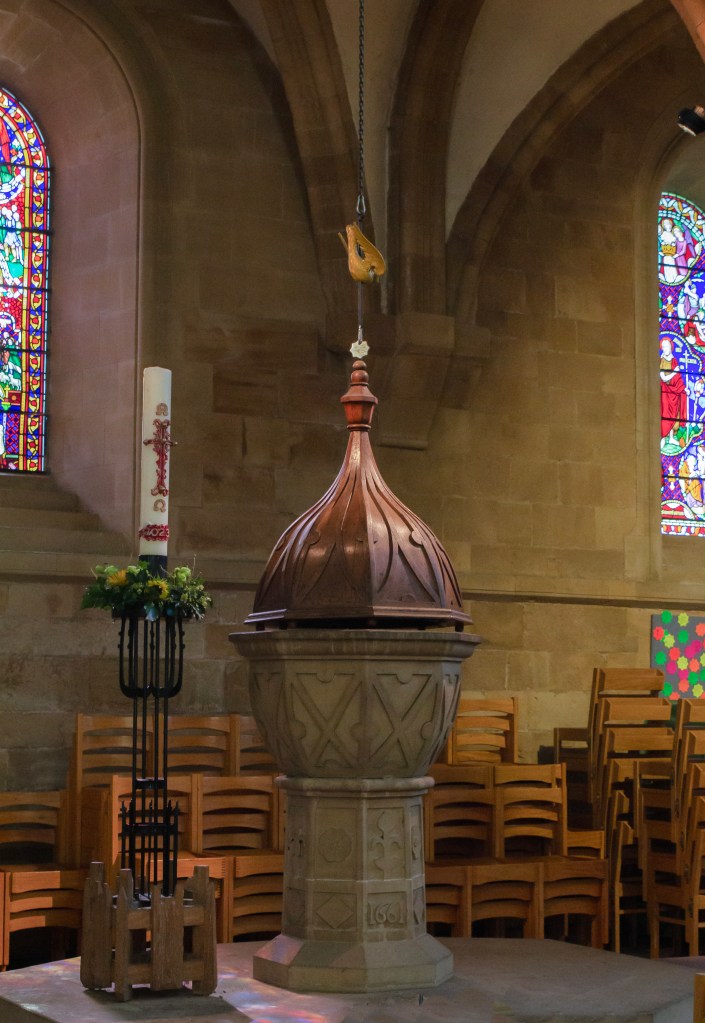
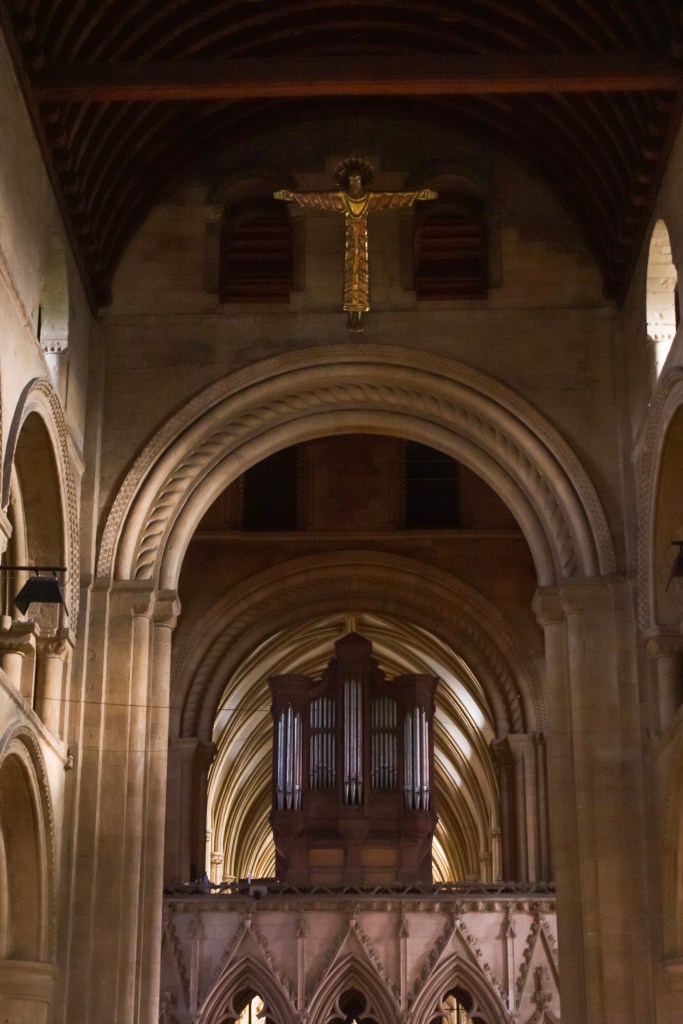
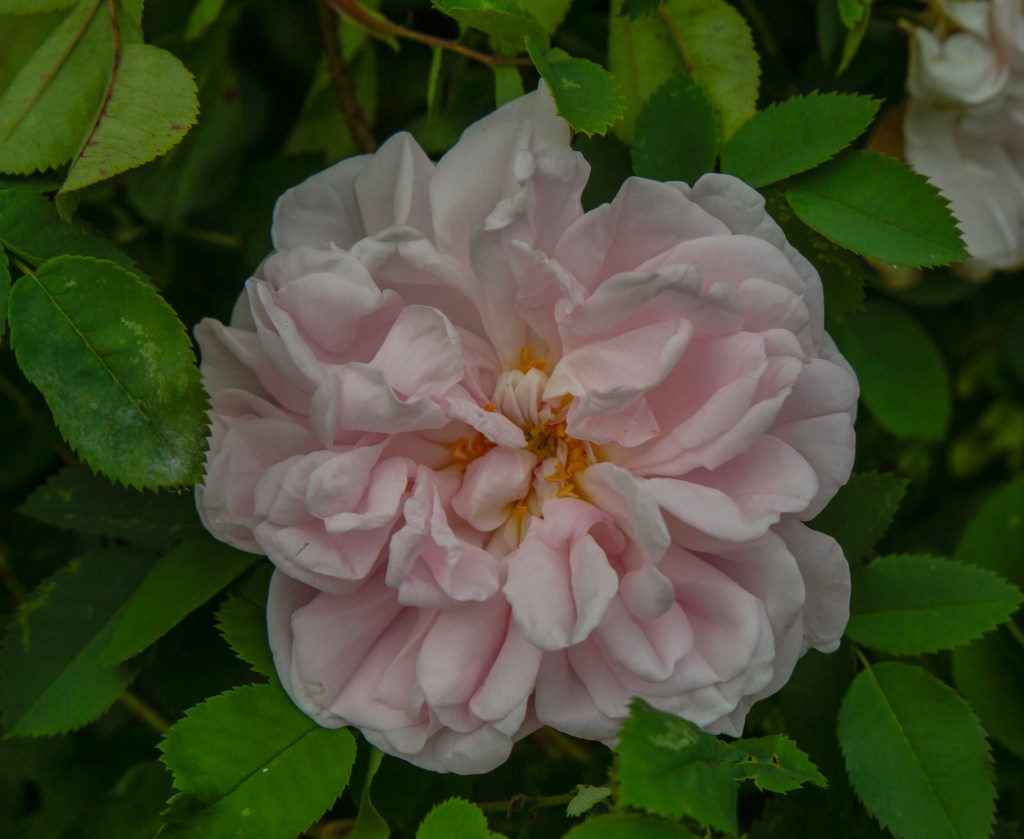
The Minster was so beautiful and interesting that we didn’t manage the Workhouse. We were welcomed by the Minster staff, who took the time to explain what we should look for and some of the history. Charles 11 spent his last night of freedom there, as did Cardinal Thomas Wolsey. There was a lovely garden too.

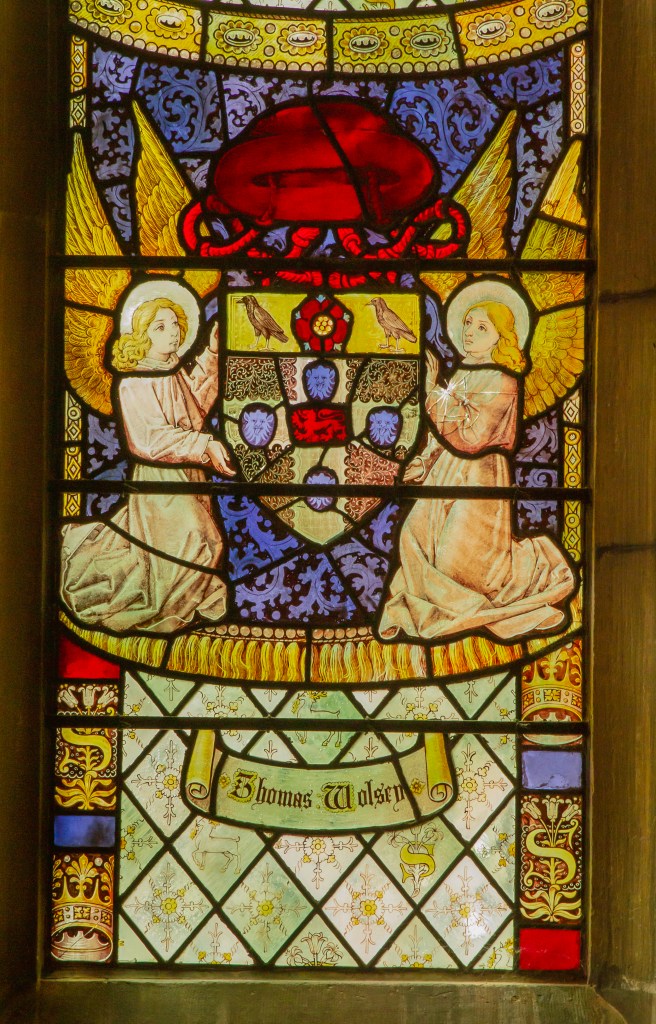

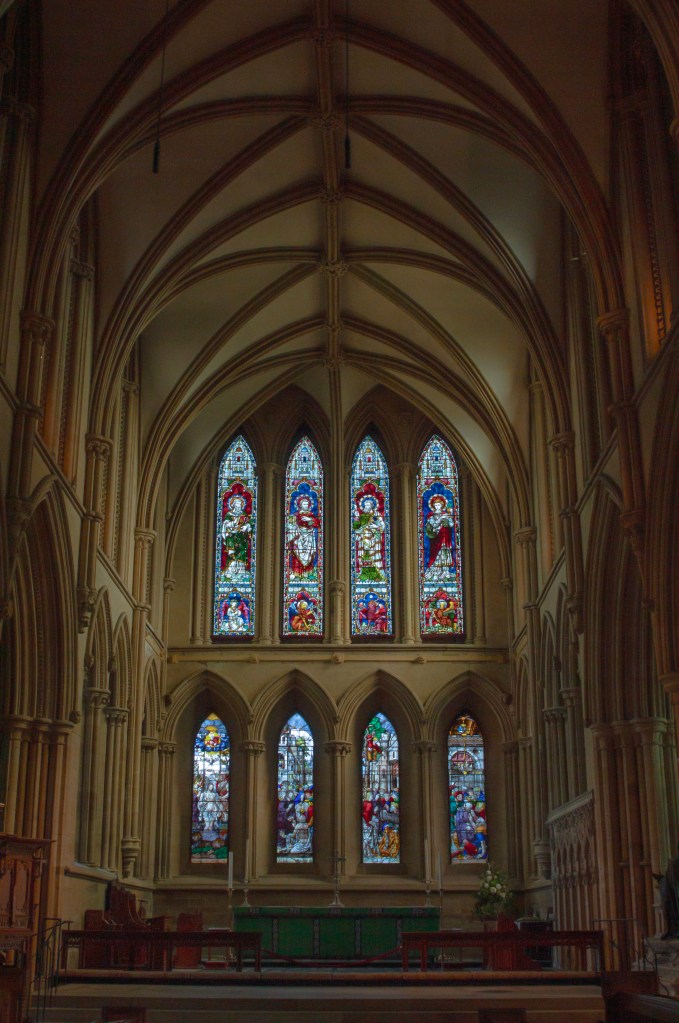
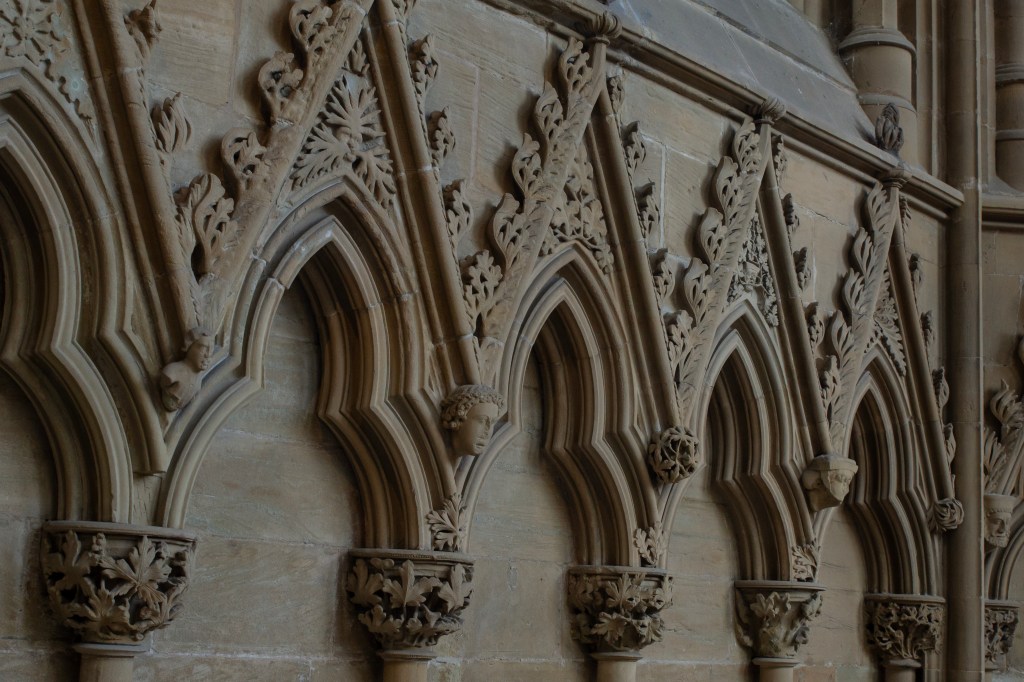
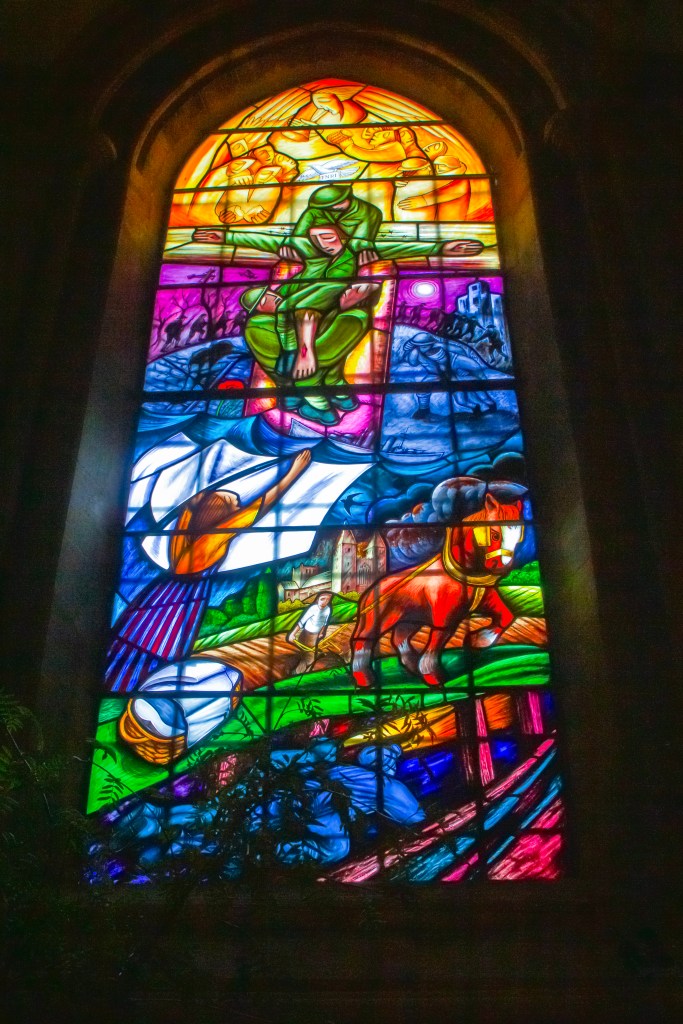

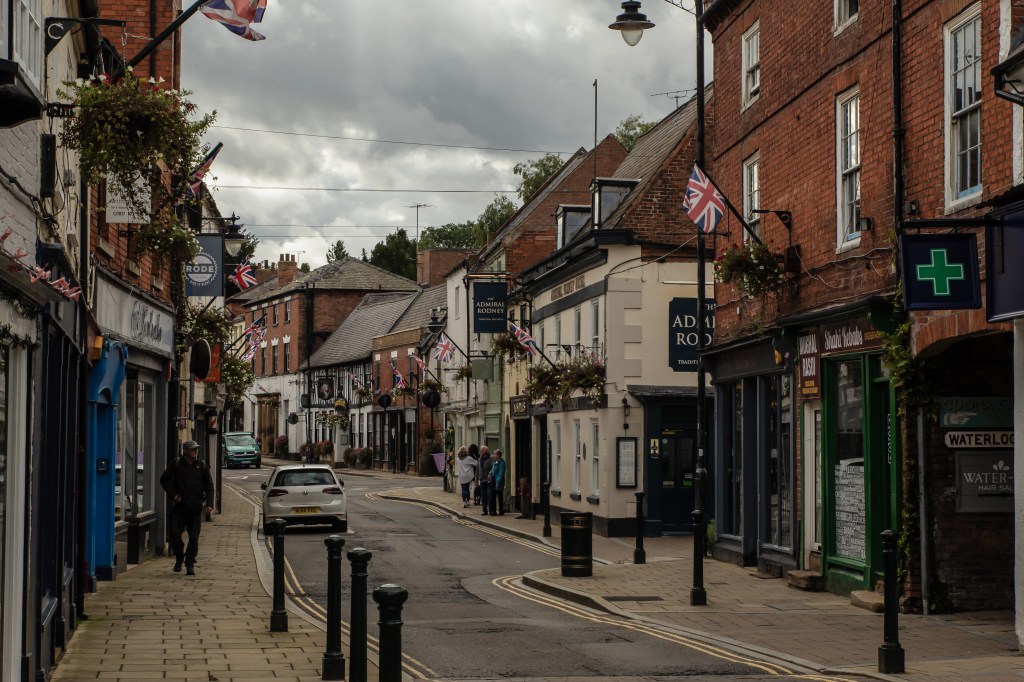
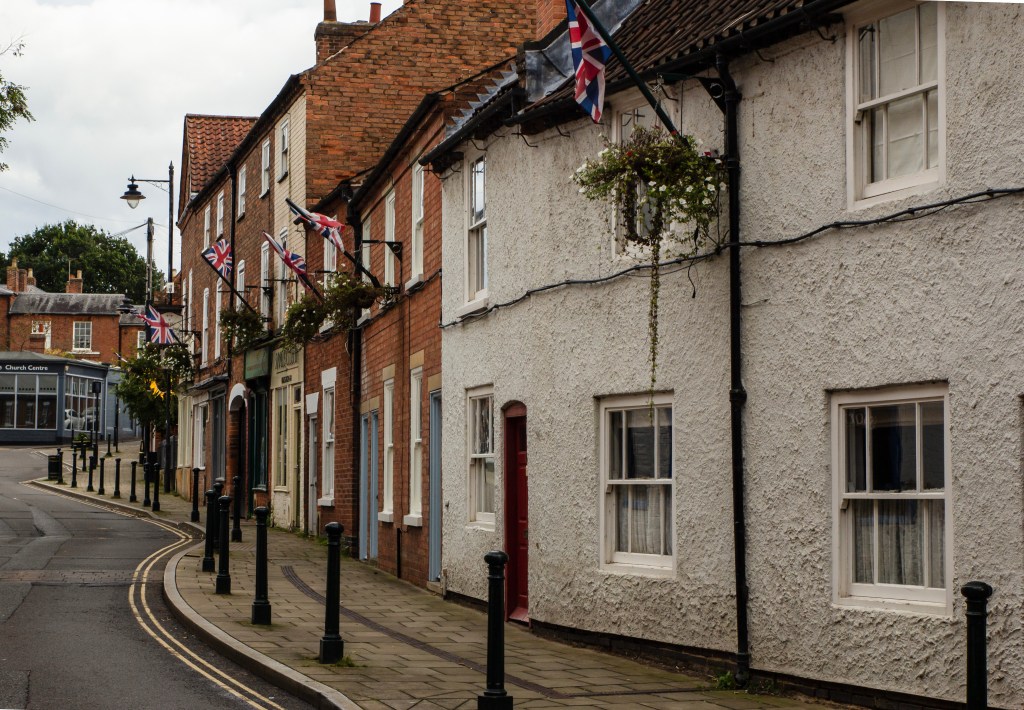
We had a wander round Southwell and a cup of tea in the Admiral Rodney before returning to Newark.
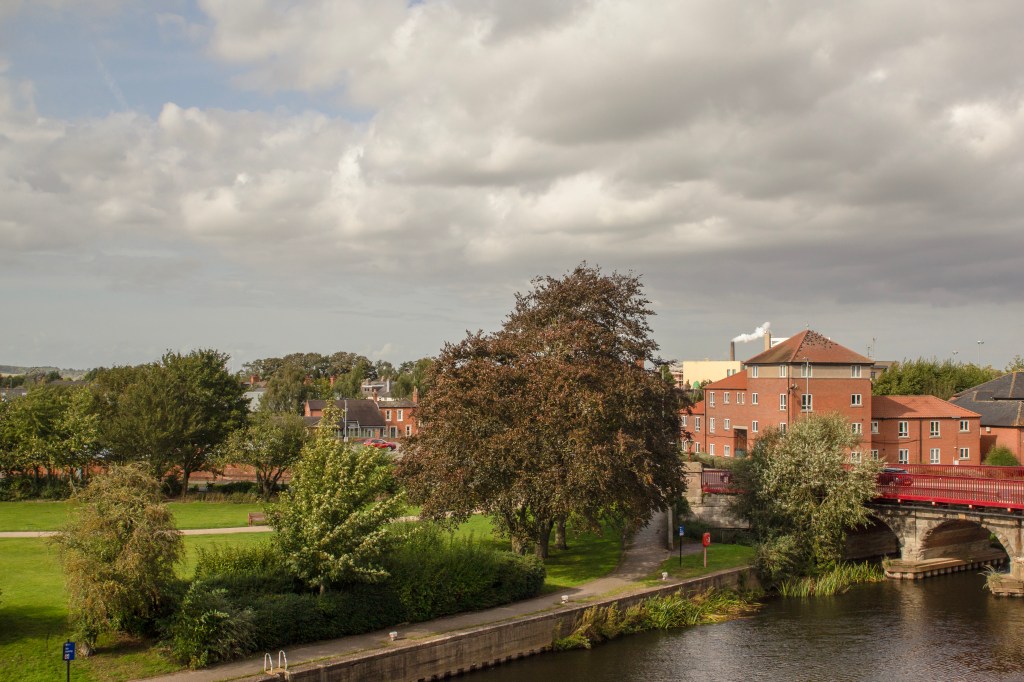
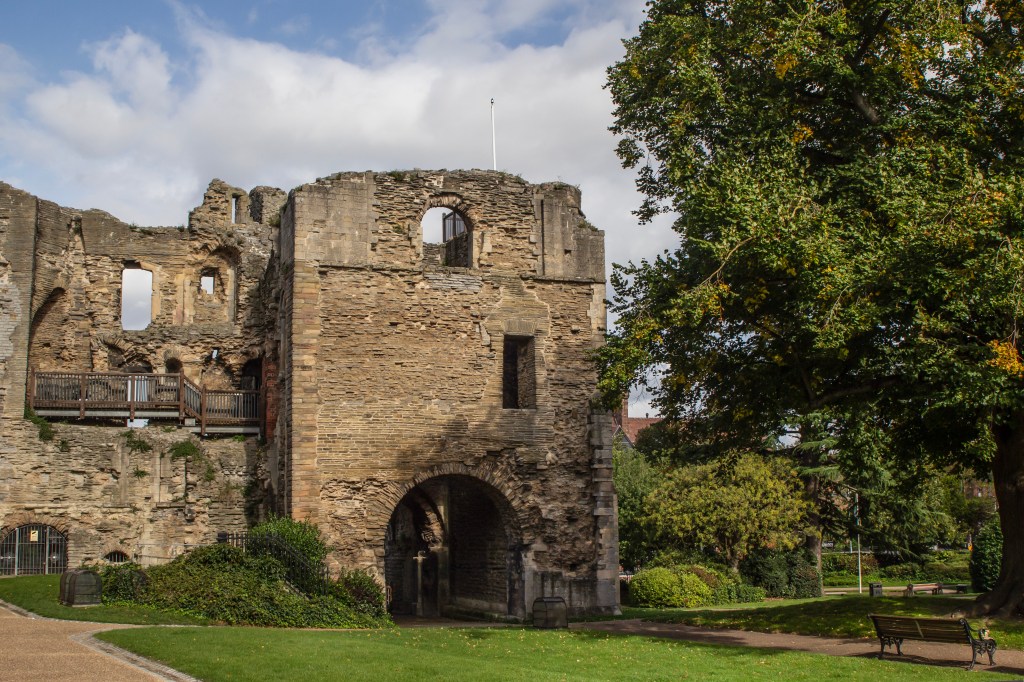
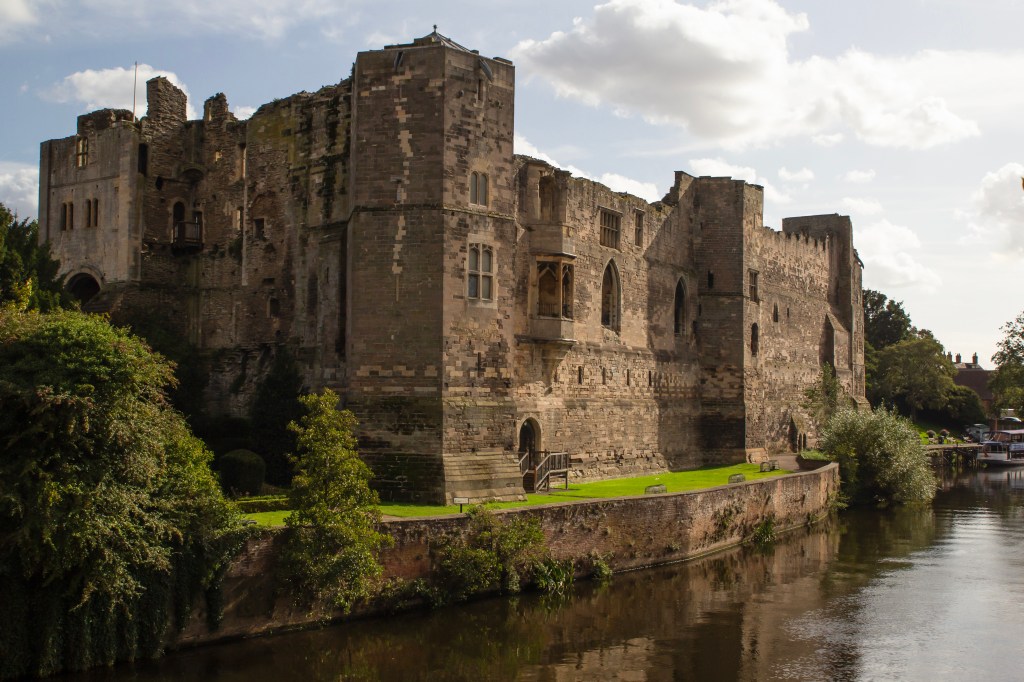
Another advantage of staying at King’s Marina was its proximity to a large Waitrose, so on Monday morning we did a big shop and in the afternoon, visited Newark Castle. Situated in a commanding position overlooking the river, it was a Royalist stronghold during the Civil War but allowed to become derelict afterwards.
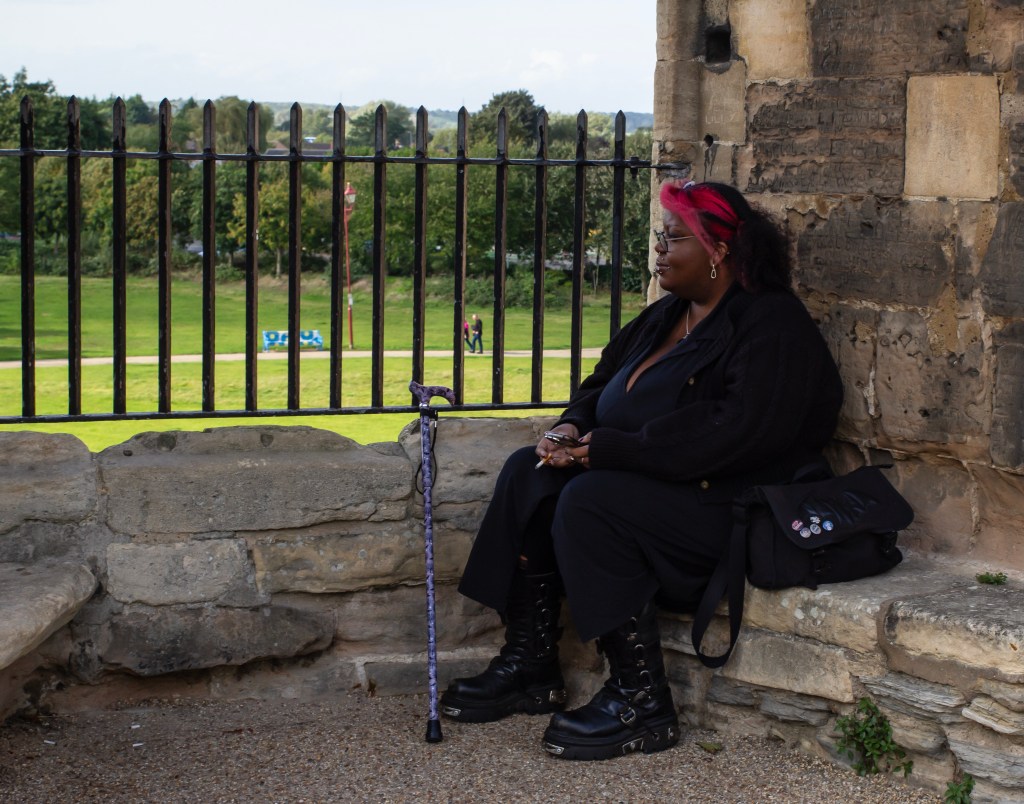
This lady very kindly let me take her photograph.
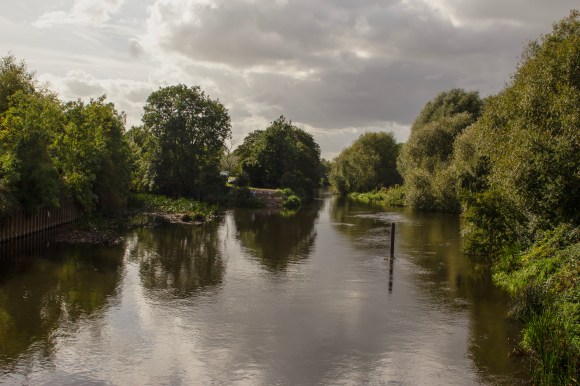
Just past the castle, the river becomes un-navigable and boats pass through a lock and a short cut, before re-joining the river.
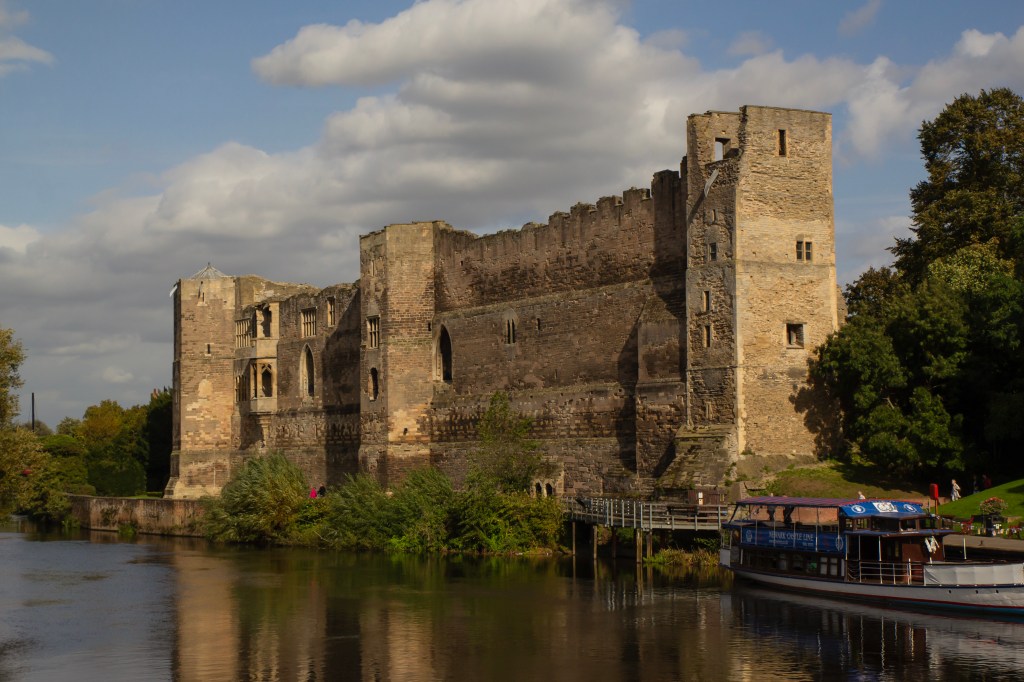
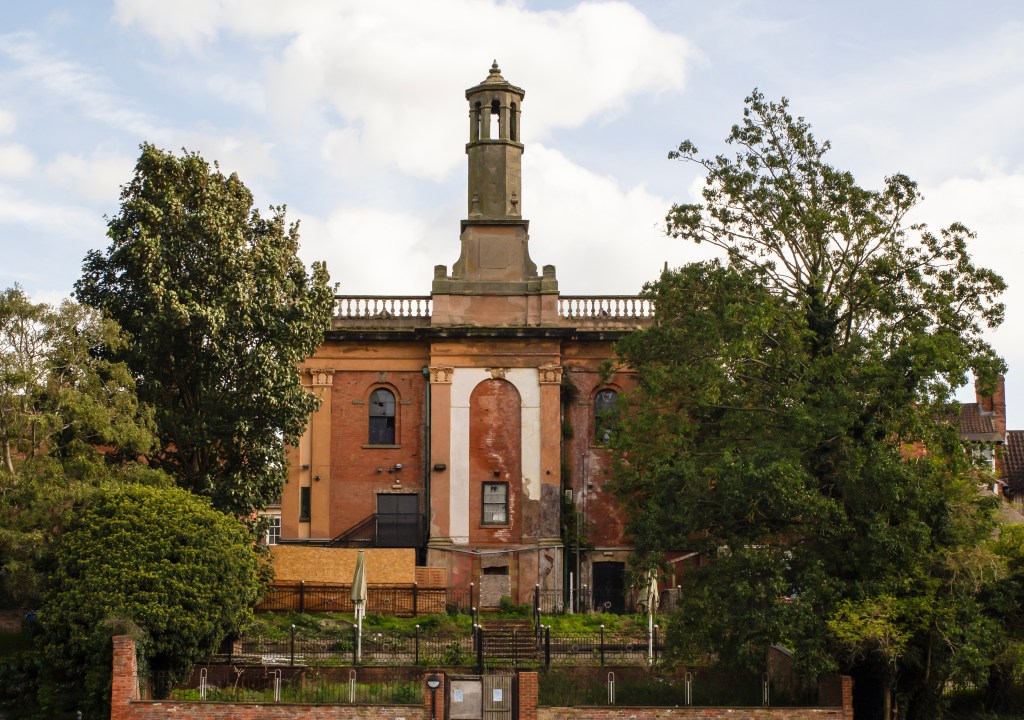
This fine building looked sadly neglected from the river. It has recently been re-opened as a nightclub.
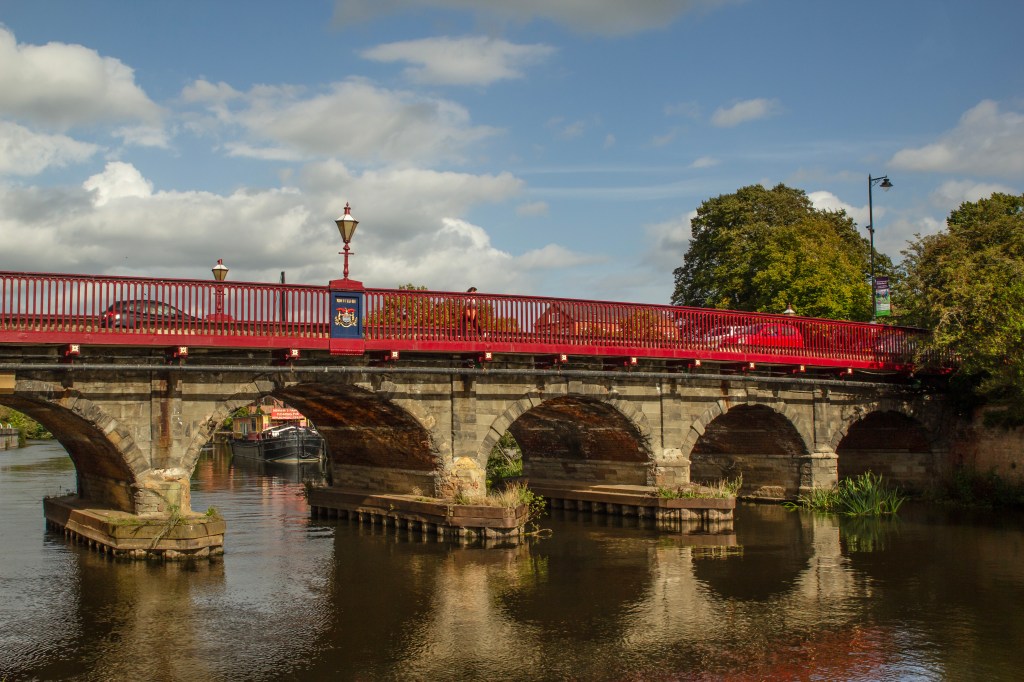
Trent Bridge was part of the Great North Road and dates back to 1775.
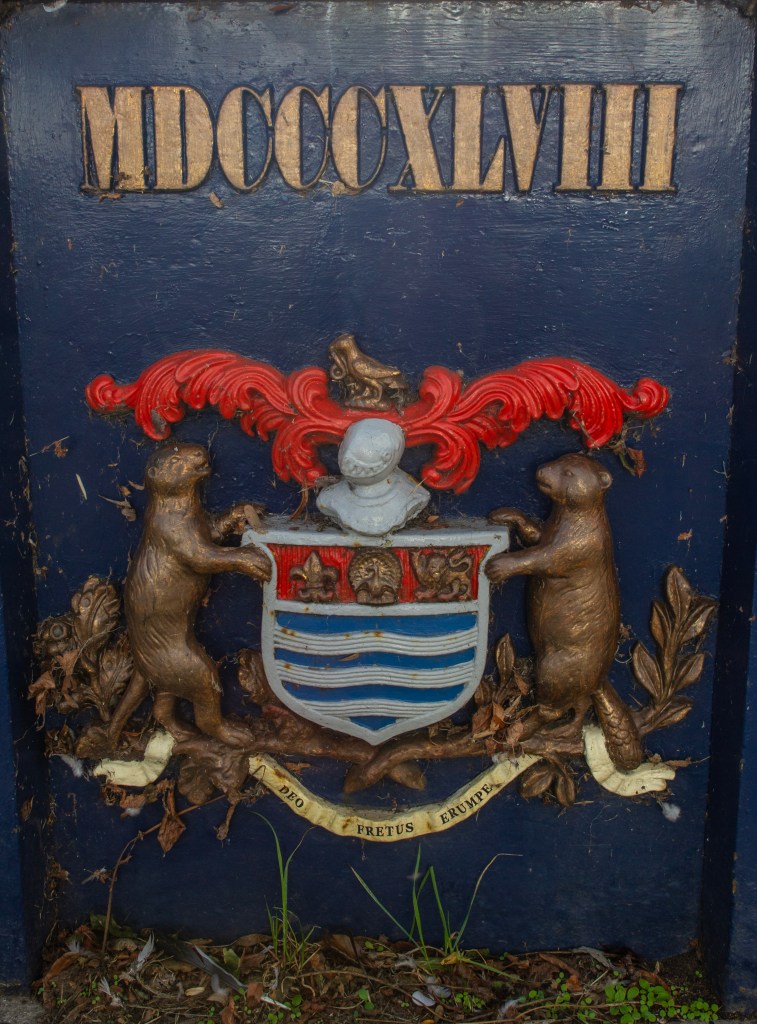
Newark’s town motto – a translation of the words of Mayor Smith in 1646, during the siege of Newark, to Lord Bellasyse, when Royalists were defending the town against Parliamentarians.
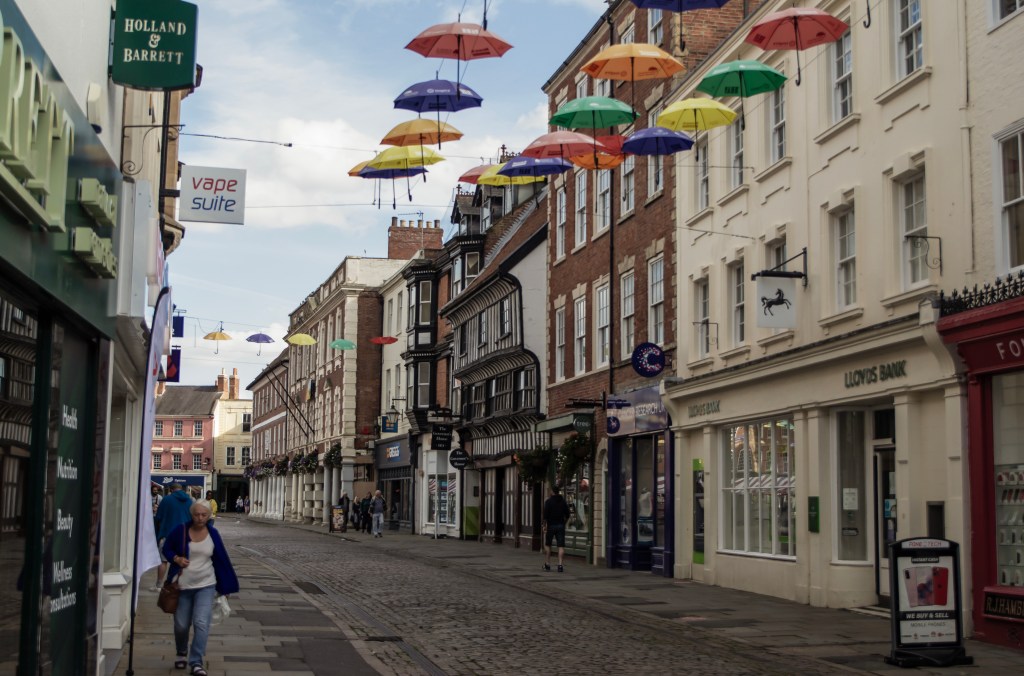
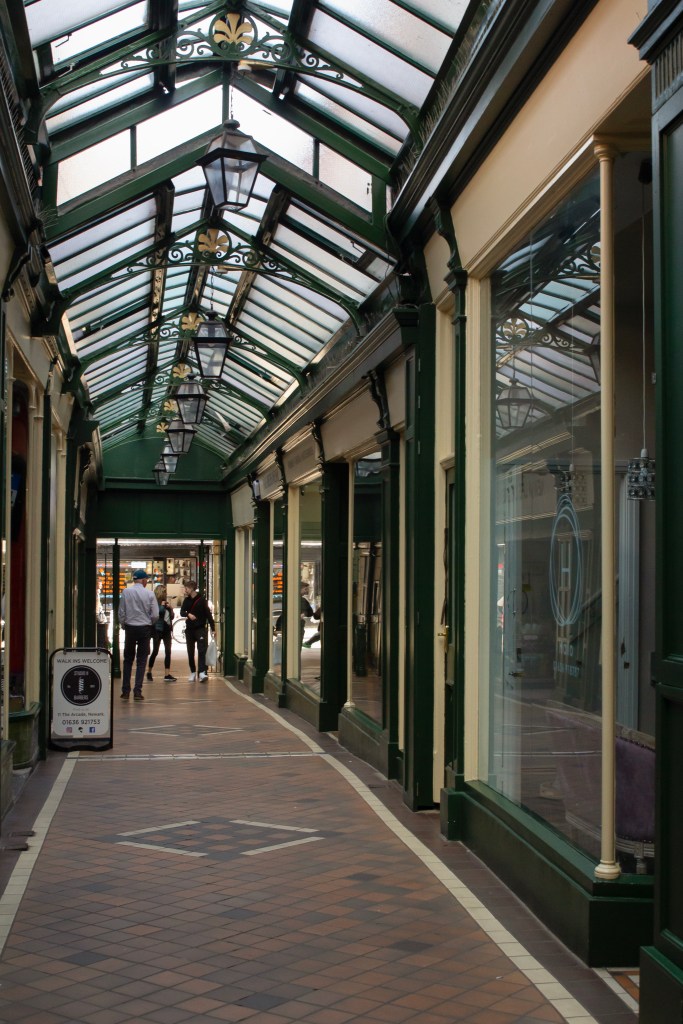
Tuesday 26th September
Newark to Fiskerton
It was my 74th birthday and perhaps because of this, Ian managed to resist the urge to leave Newark in the pouring rain and acceded to my request to wait till it stopped.
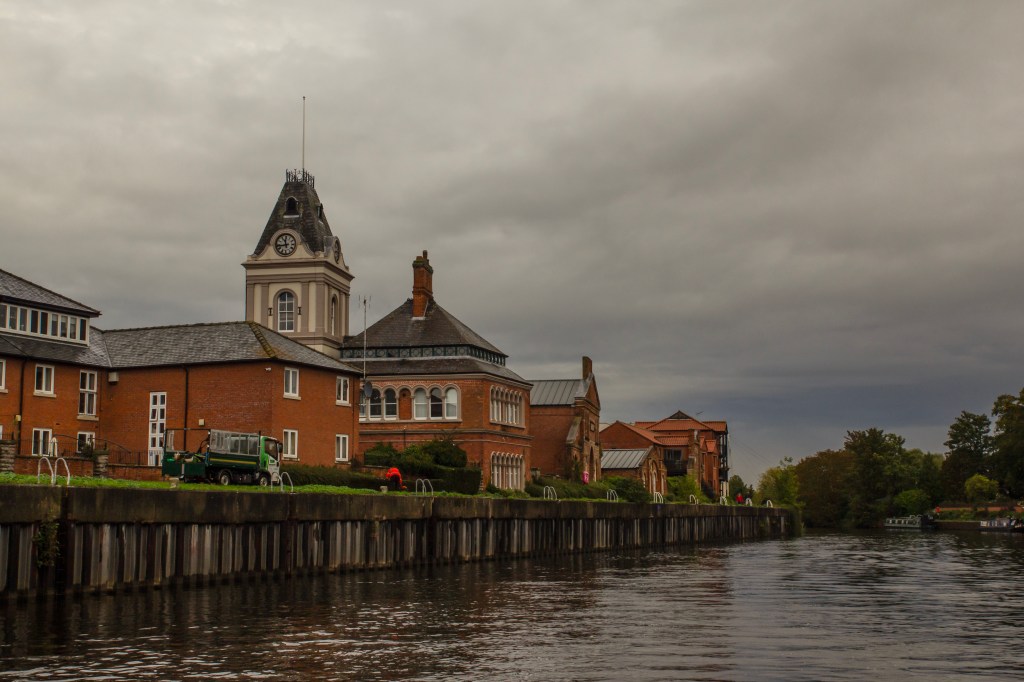
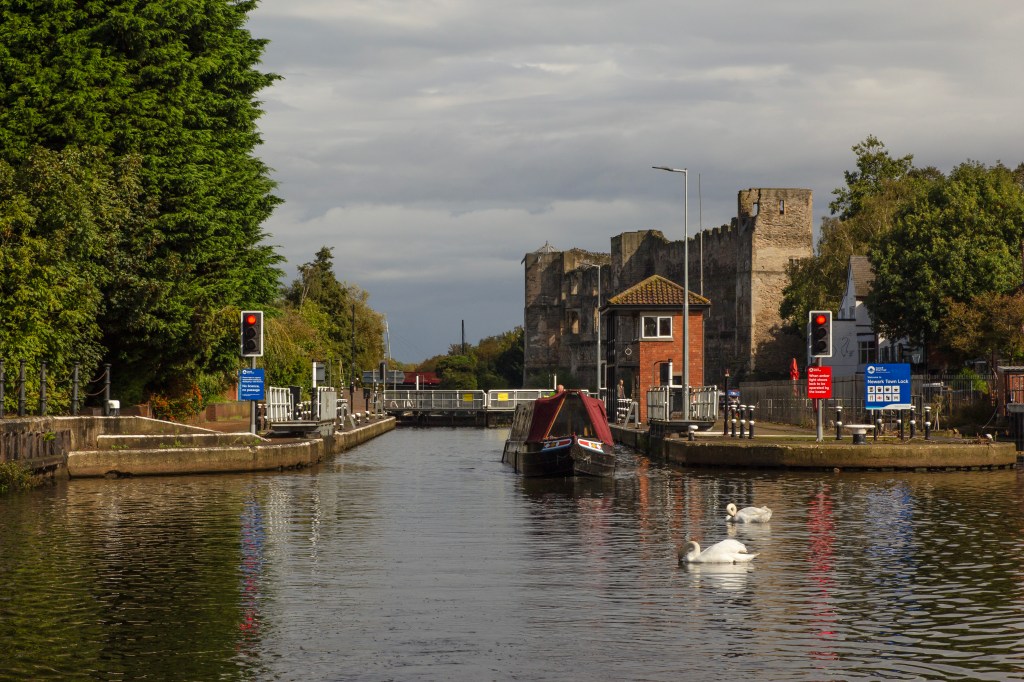
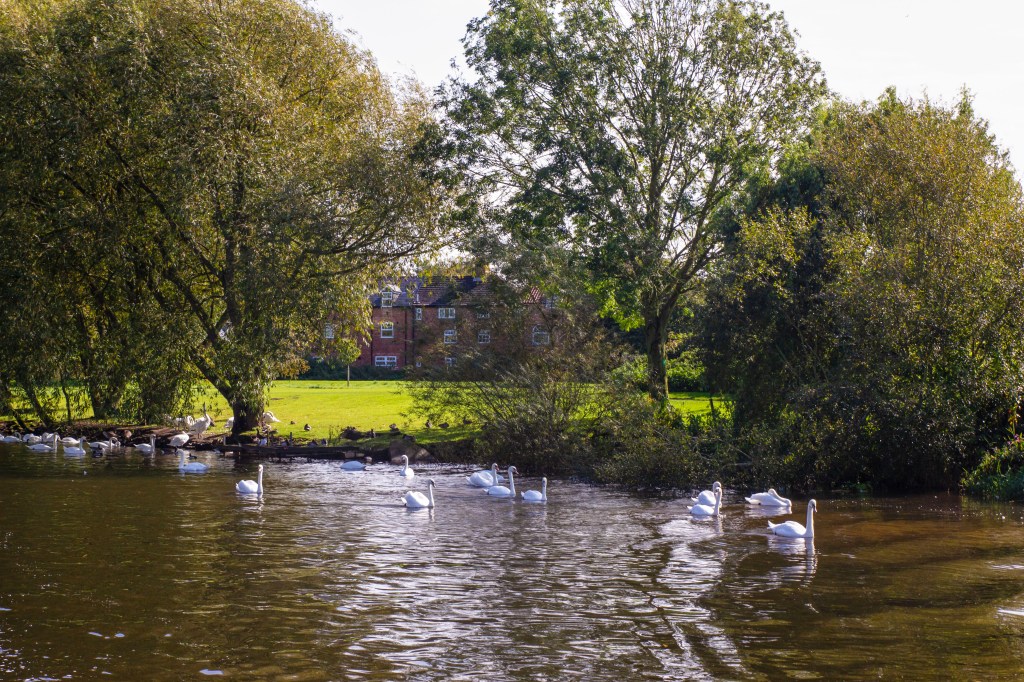
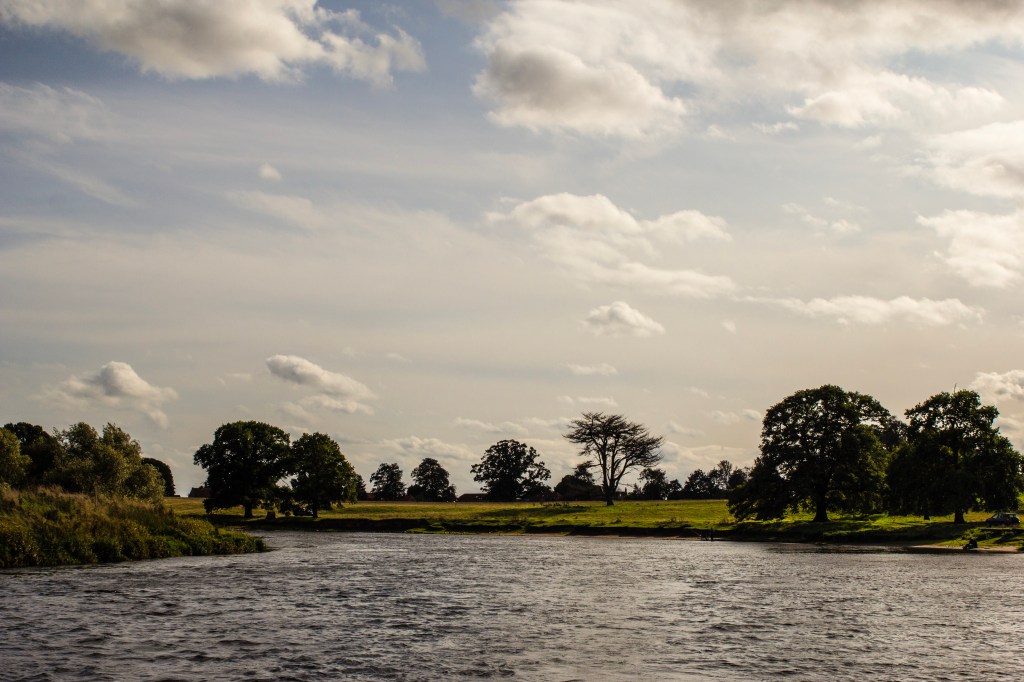
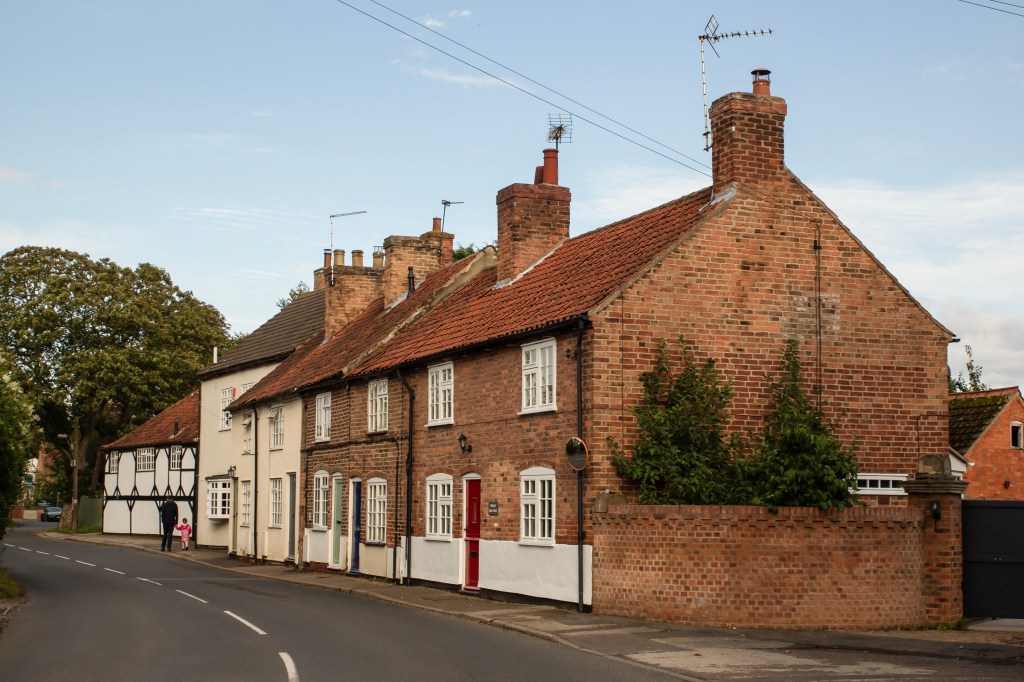
We were getting concerned about the approach of Storm Agnes, but found a safe mooring at Fiskerton with a floating jetty.
Wednesday 27th September
Fiskerton to Nottingham
By now it was clear that Storm Agnes posed much more of a threat to the western parts of the country than the east, but we still travelled under heavy grey skies.
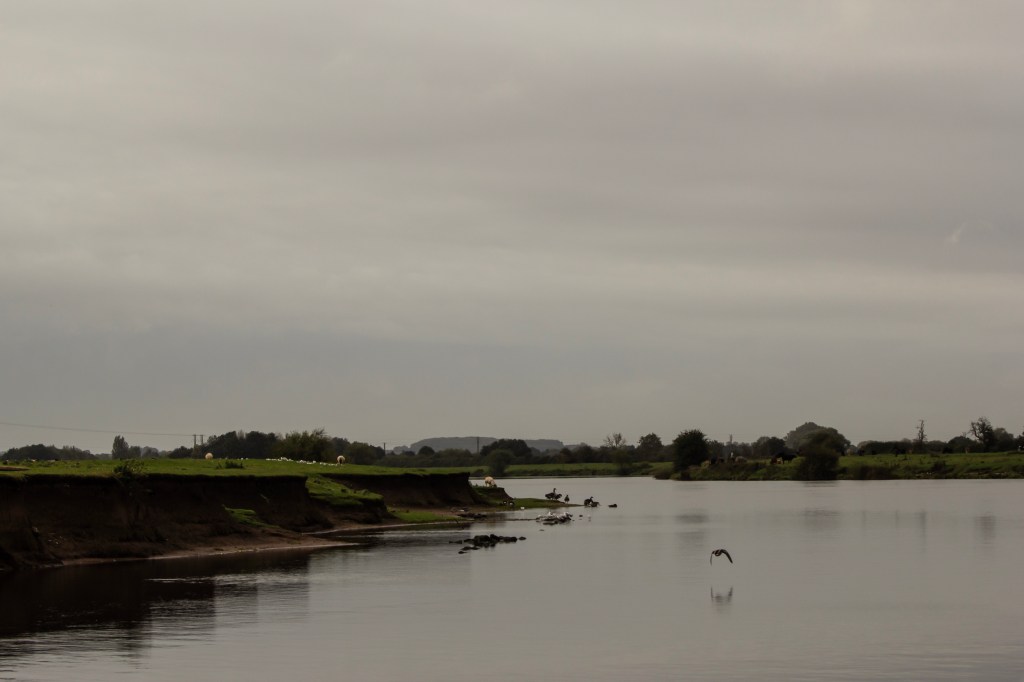
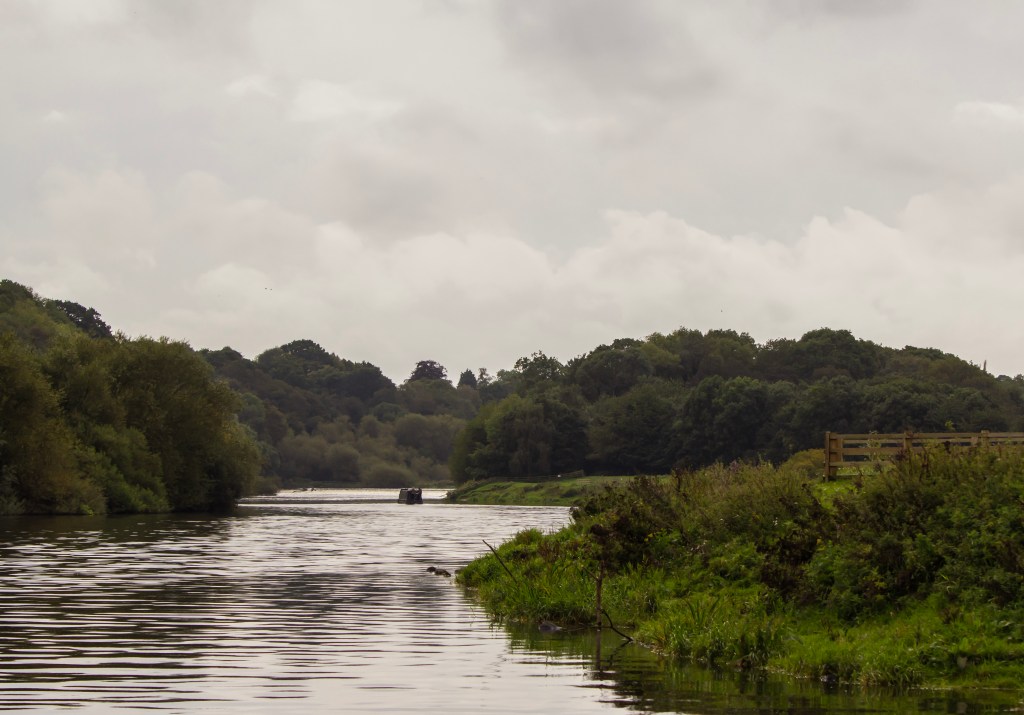
Just outside Nottingham, the university rowing teams were out in force.

The rain held off almost until we were in Nottingham city centre. After the tranquillity and vast scale of the river, the multi-lane roads with heavy traffic proved a sudden contrast.
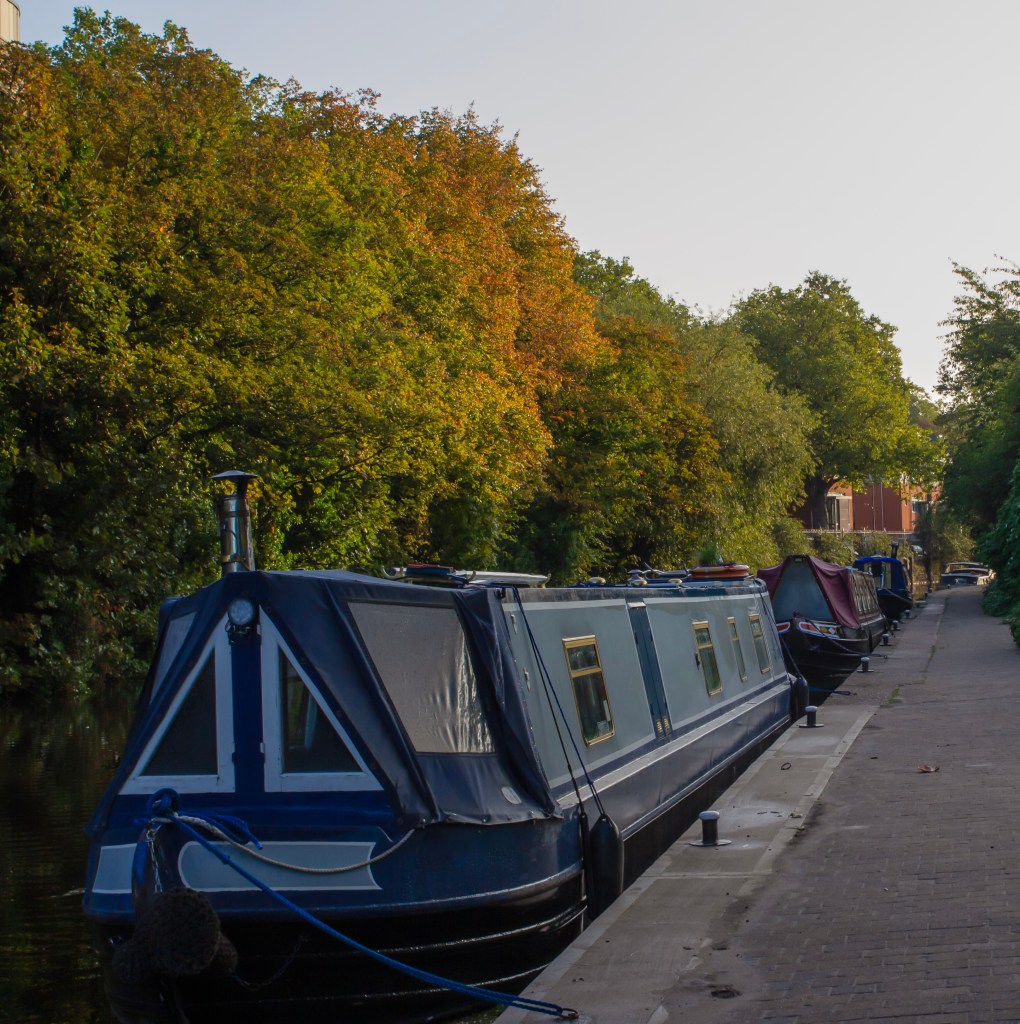
Just before Nottingham, you leave the River Trent and go on to the Nottingham & Beeston canal which runs for several miles through the city centre before joining the river again on the west side of the city at Beeston Lock. There were plenty of moorings available so we stopped along Tinker’s Leen, a green corridor where the River Leen used to pass before the canal was built.
Thursday September 28
Nottingham
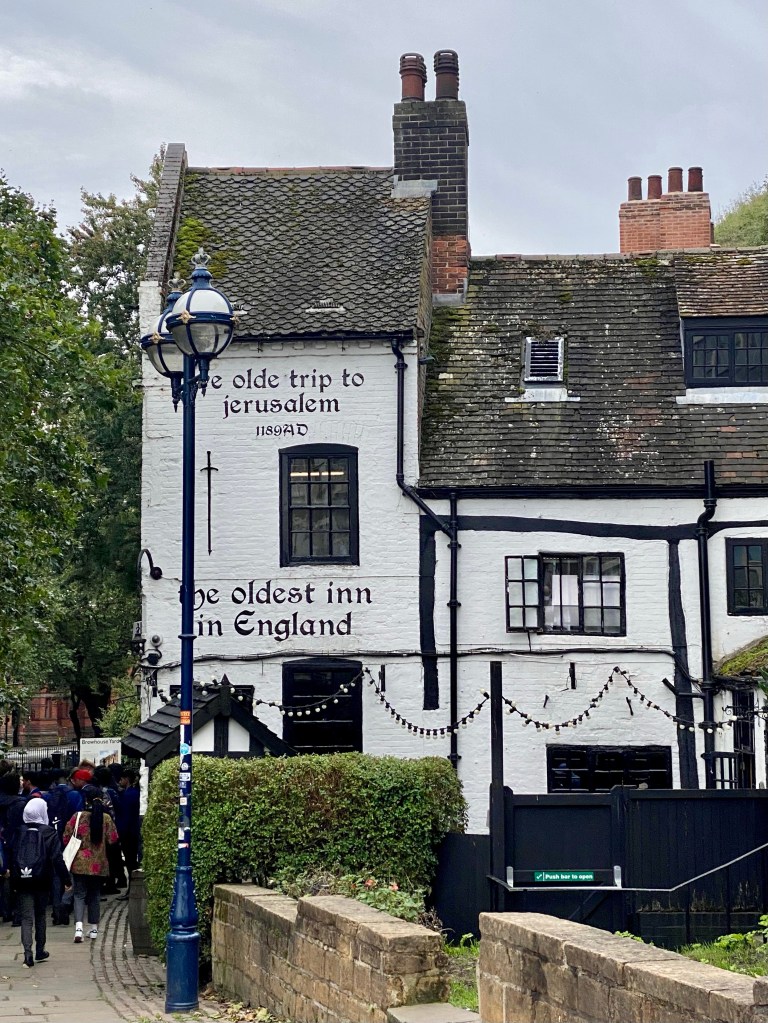
A small medical problem which I had been ignoring in the hope that it would go away by itself, could be ignored no longer and necessitated a visit to the city’s urgent care clinic. The problem was efficiently dealt with and although I didn’t feel up to much sight-seeing, the route to the chemist to collect the prescription did take us through the interesting and quite picturesque parts of Nottingham city centre, and we had lunch at the oldest pub in England, the Trip to Jerusalem, where Richard 1 dined before leaving for the Crusades.
Friday 29th September
Nottingham to Shardlow
It was a fine morning so before setting off we had a walk back up the canal to do a bit of photographying.

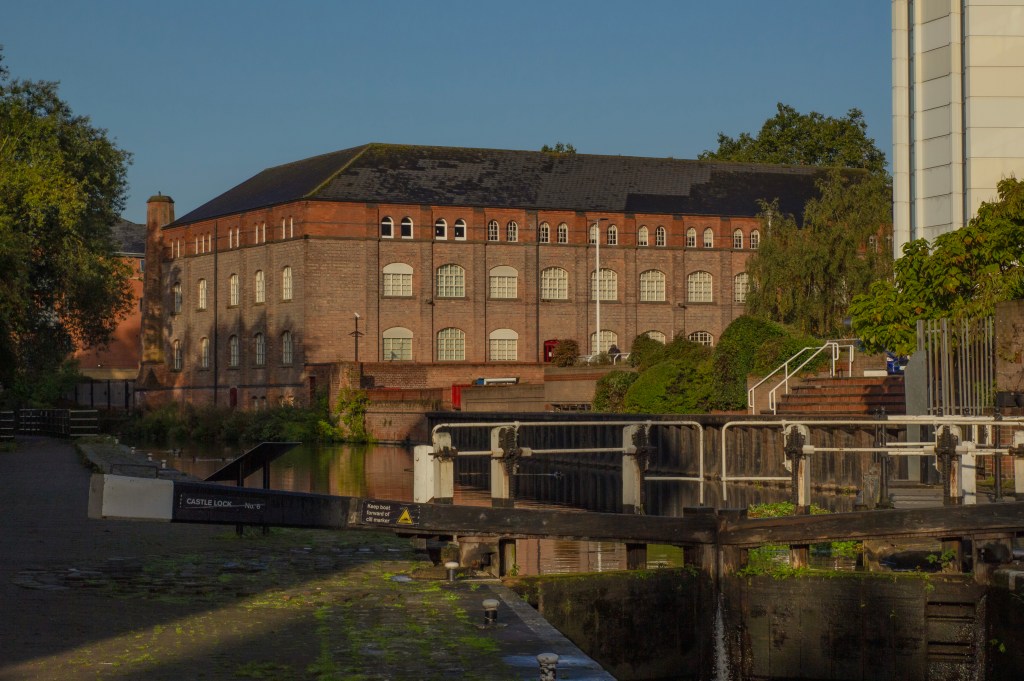
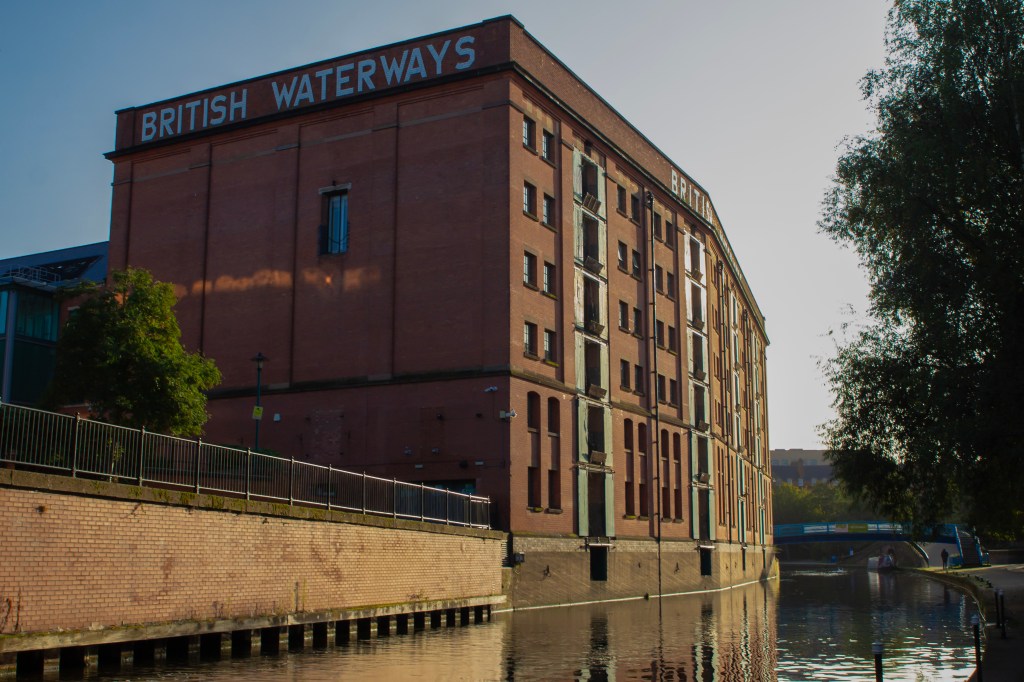

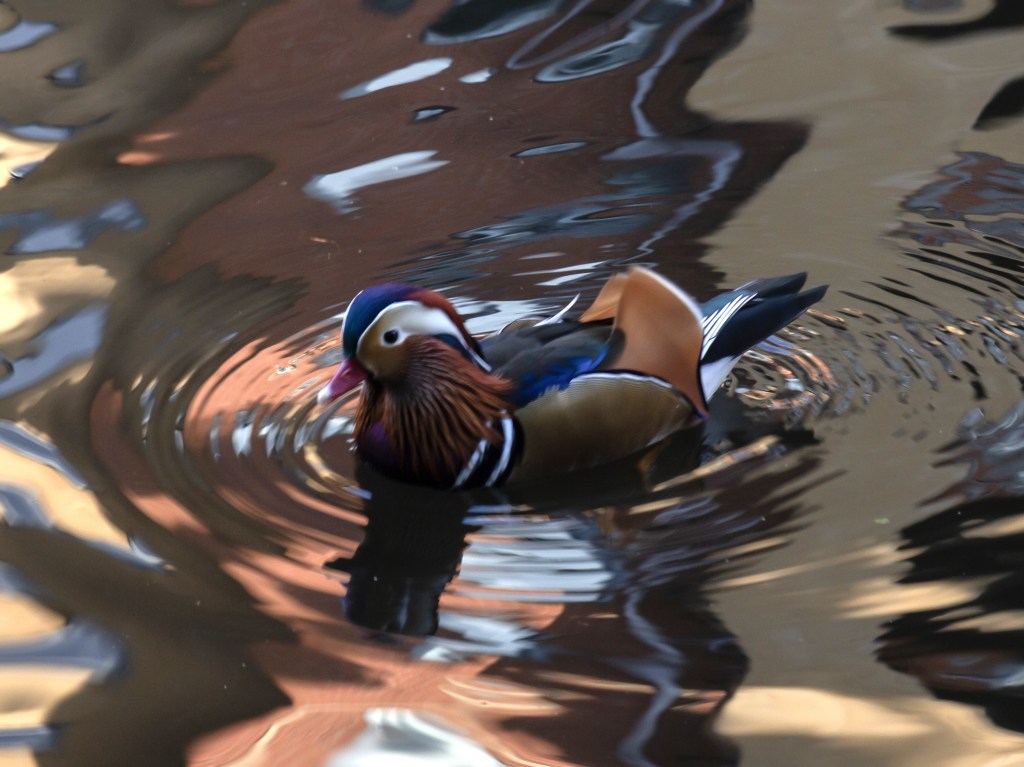

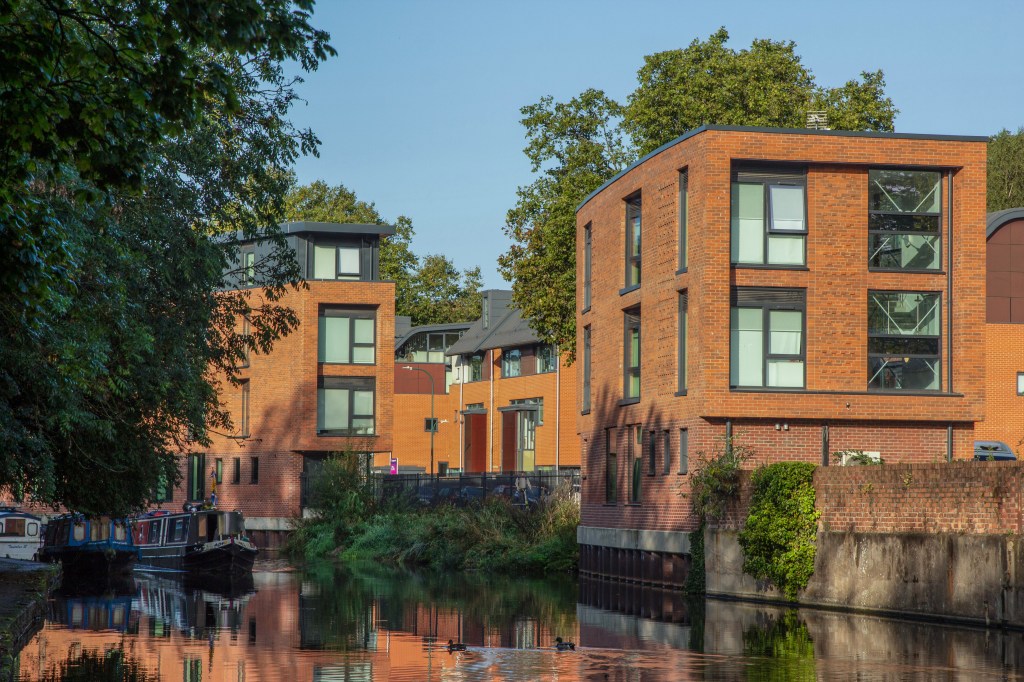
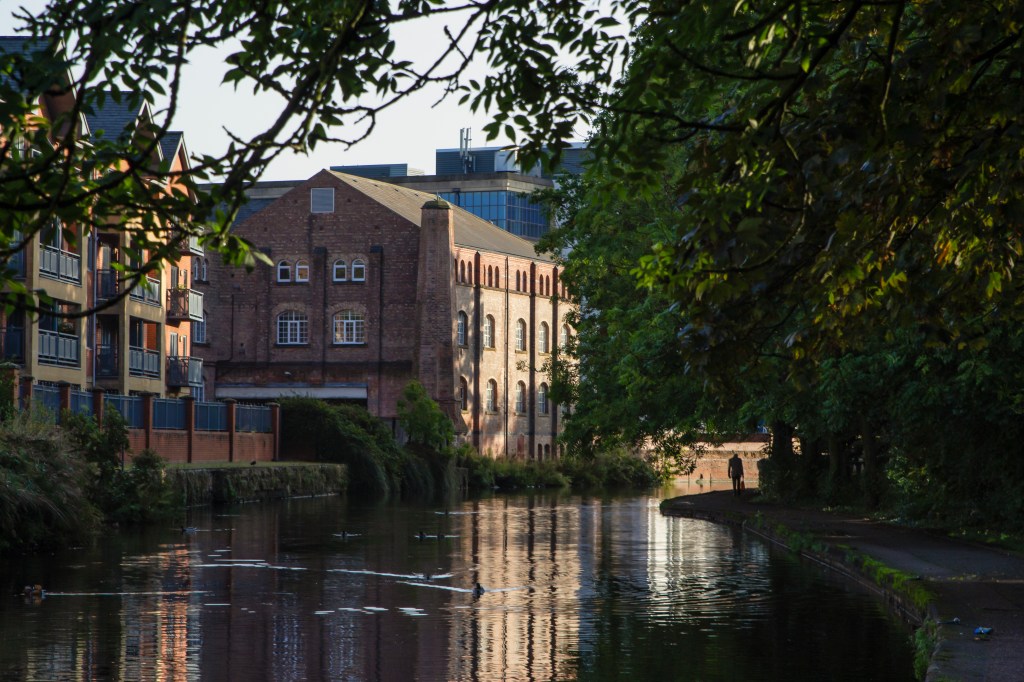
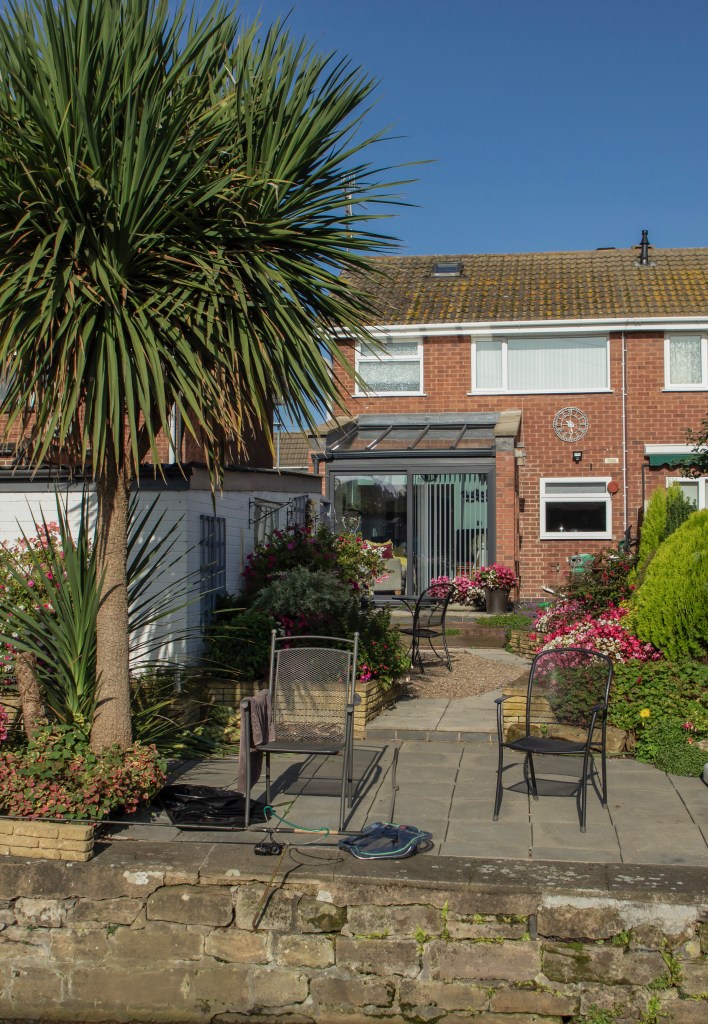
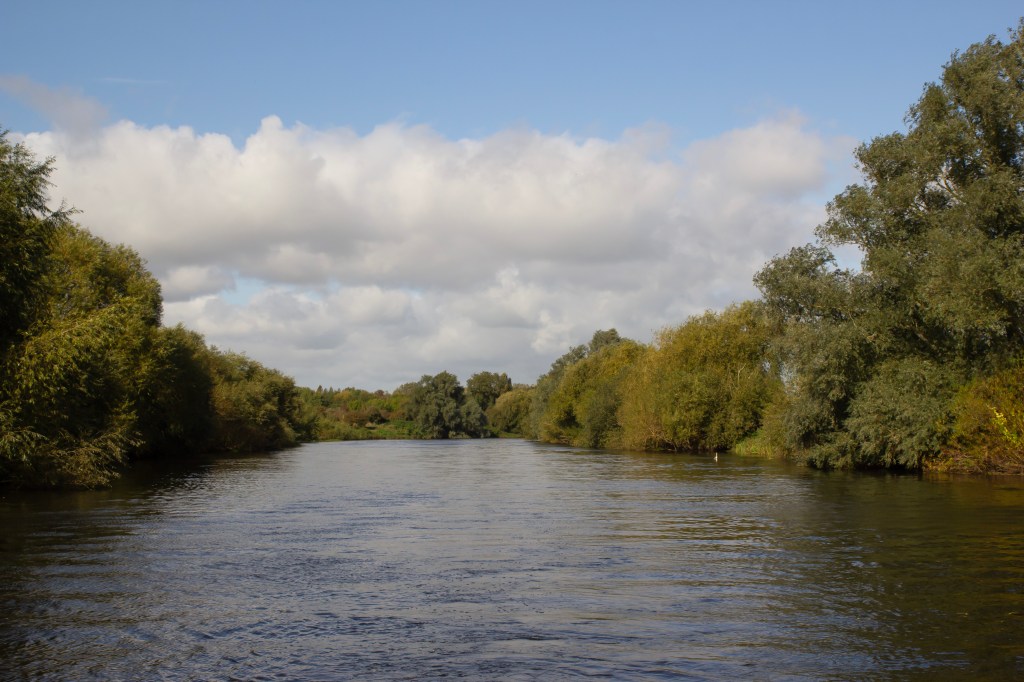
At Beeston Lock we rejoined the River Trent, travelling as far as Derwent Mouth where we left the river and got into the Trent and Mersey Canal.
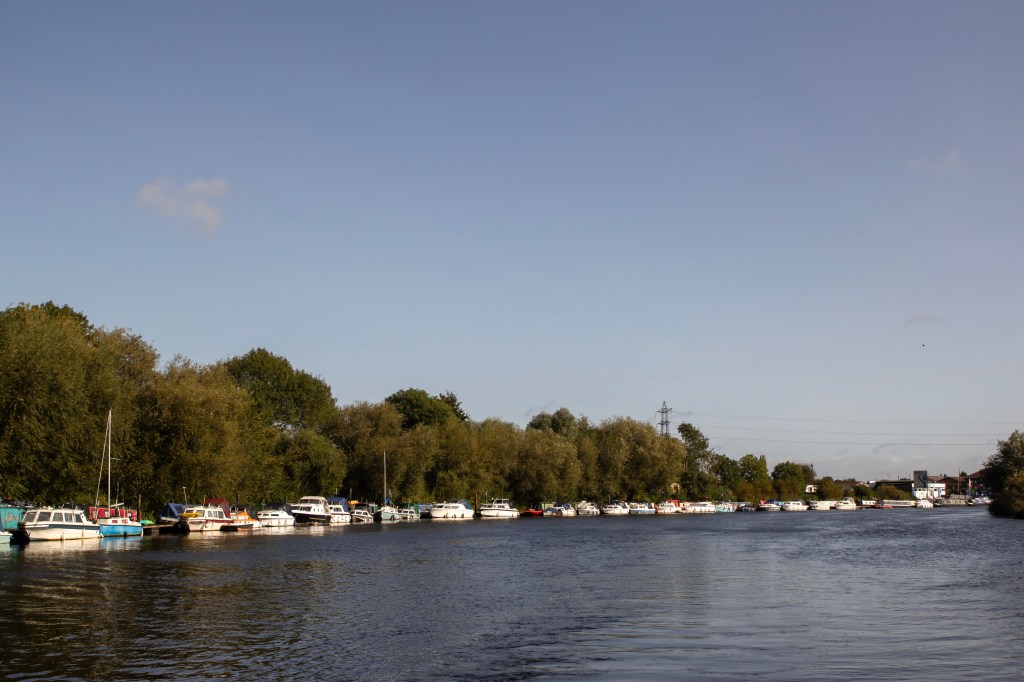

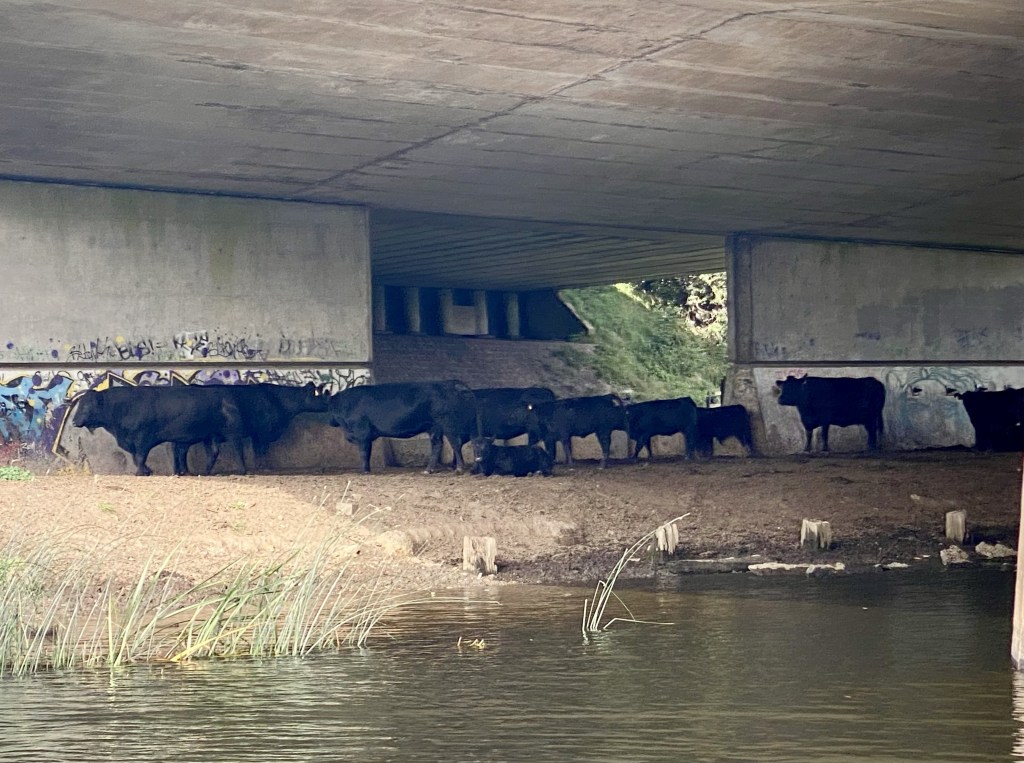
The locks on the T & M were nearly as heavy and arduous as those on the Calder & Hebble. At some of them, other boats were going through at the same time which made things easier, but even so by the time we moored up at Shardlow I was shattered. We were now in Derbyshire.
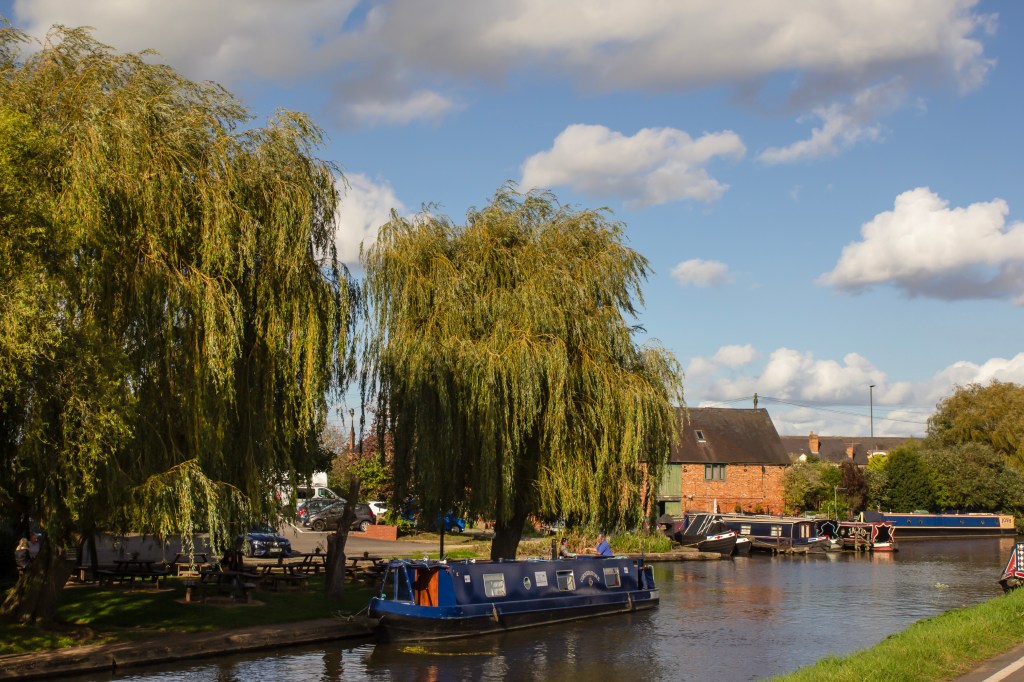
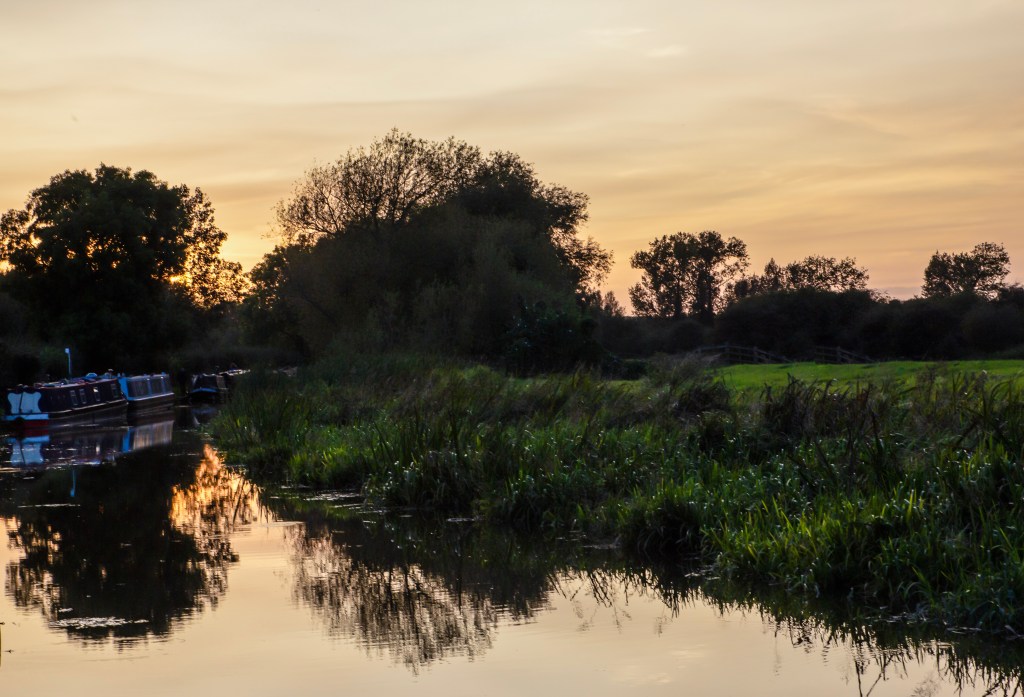
I was let off cooking dinner and we went out instead, to the Clock Warehouse, a short distance away, where a charming young man found us a table, even though we hadn’t booked and they were busy. The food was good too.
Saturday 30th September
Shardlow to Mercia Marina, Willington
The day started in sunshine and a lovely soft September light.
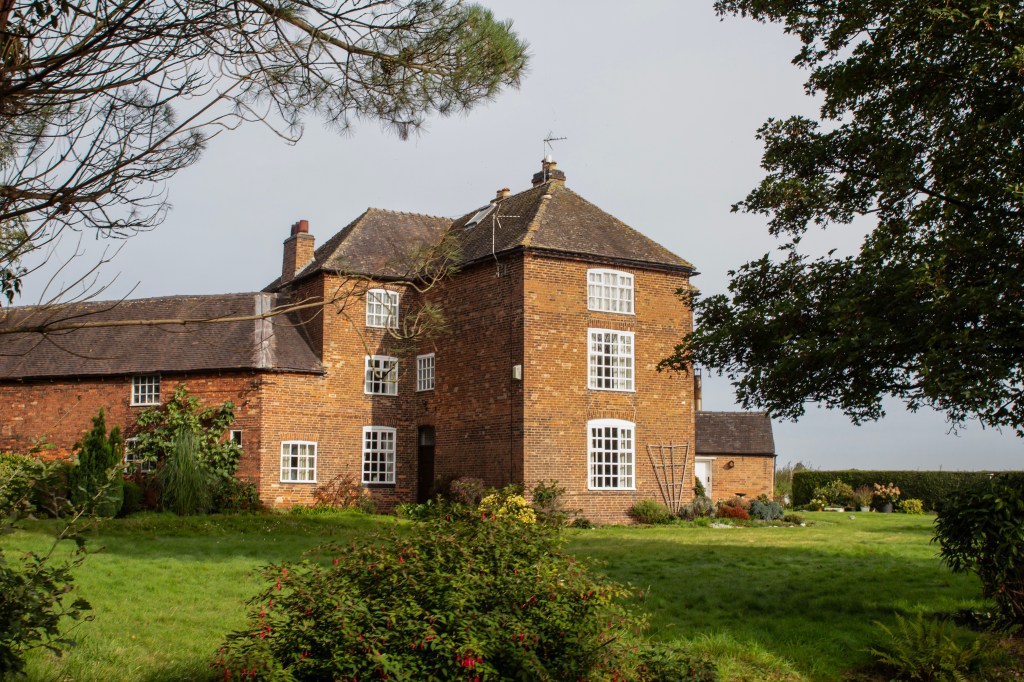
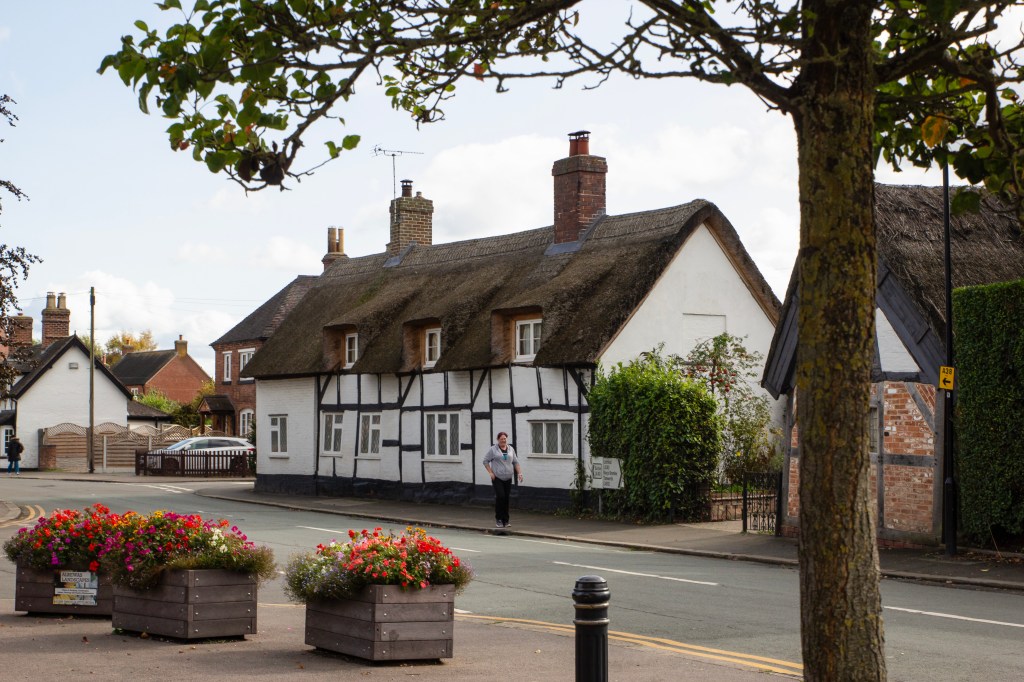
We passed a charming house at Weston, which was the only thing of note in the otherwise rather monotonous scenery.
But the forecast wasn’t good and by late morning it was overcast, and after lunch it started raining. Ian had decided that we would stop before the weather got too bad, and booked us in for a night at Mercia Marina, where we could have mains electricity and I could get the washing done without fear of draining the boat batteries, a constant source of anxiety despite the three solar panels he had put on the roof.
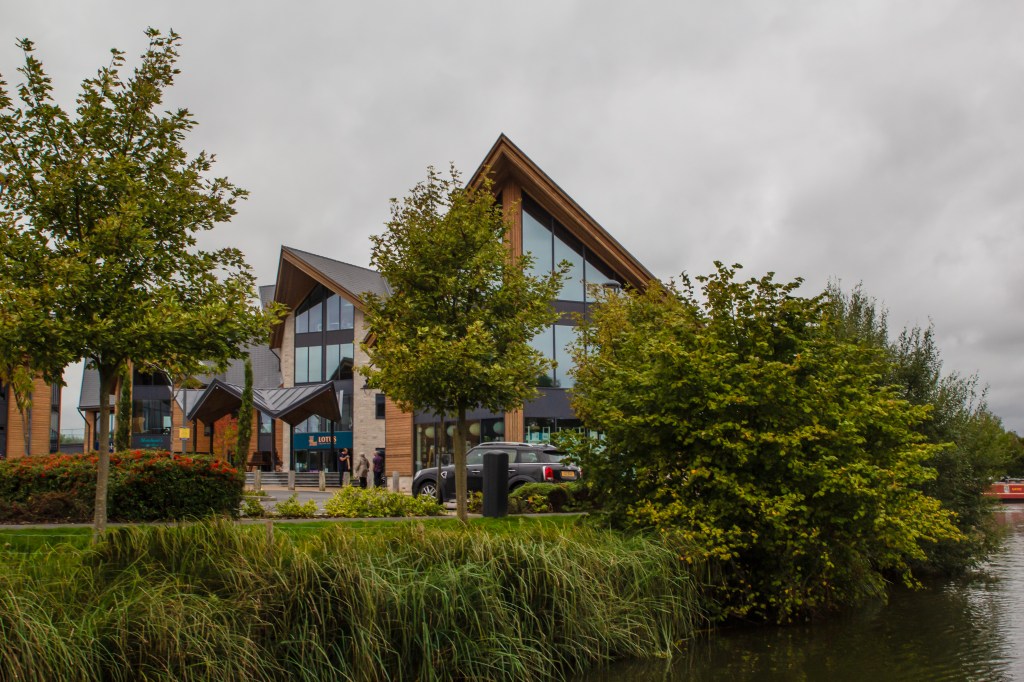
Mercia Marina was something else. It had modern, futuristic buildings and several upmarket shops, which we had been told about but didn’t venture into.
Sunday 1st October
Willington to Burton-upon-Trent
It was only a short hop up the canal when the rain started in earnest at lunchtime. Fortunately we were next to some C&R Trust moorings at Shobnall Fields in Burton, so we had a lazy afternoon watching the rain and playing Scrabble.
Monday 2nd October
Burton-upon-Trent to Branston
To our consternation, the laptop had refused to boot up yesterday and sent a persistent error message to the effect that it couldn’t access memory. Or something like that. This meant that I couldn’t upload my photos, process them or put them in the blog, never mind the concern that I might not be able to retrieve them.
Fortunately in Burton there were a number of computer repair places so after a visit to Shobnall Marina for diesel and a pump-out, we headed into Burton with the laptop.
Bravepath Computers had a look and confirmed the diagnosis. We left the laptop with the owner, Kab , and went off for a walk round the neighbourhood, returning an hour later to find the laptop fixed for a very reasonable cost. When Kab saw Ian getting out his phone to summon an Uber, he immediately said he was going out anyway and would take us back to Shobnall Marina.
An excellent start to the morning, but it didn’t last. We got to Branston Lock to find a notice from the Canal & River Trust to the effect that the lock was very slow to fill up because of a fault. It was worse than that. The lock wouldn’t fill up enough to allow the top gate to be opened at all, and there was a boat stuck in the lock, and two boats in front of us waiting to go through.
The combined strength of all the assembled crew wasn’t enough to move the gate. Eventually, someone had the clever idea of inserting a crowbar between the gate and the lock wall and levering on that as well. This allowed the water to equalise in the lock and the gate to be opened. This technique was further refined by inserting a block of wood there instead, and eventually we all got through.
We hadn’t gone far when the rain started again so we moored up for the night near Branston and I had a productive afternoon on the newly repaired laptop.
Tuesday October 3rd
Branston to Fradley Junction
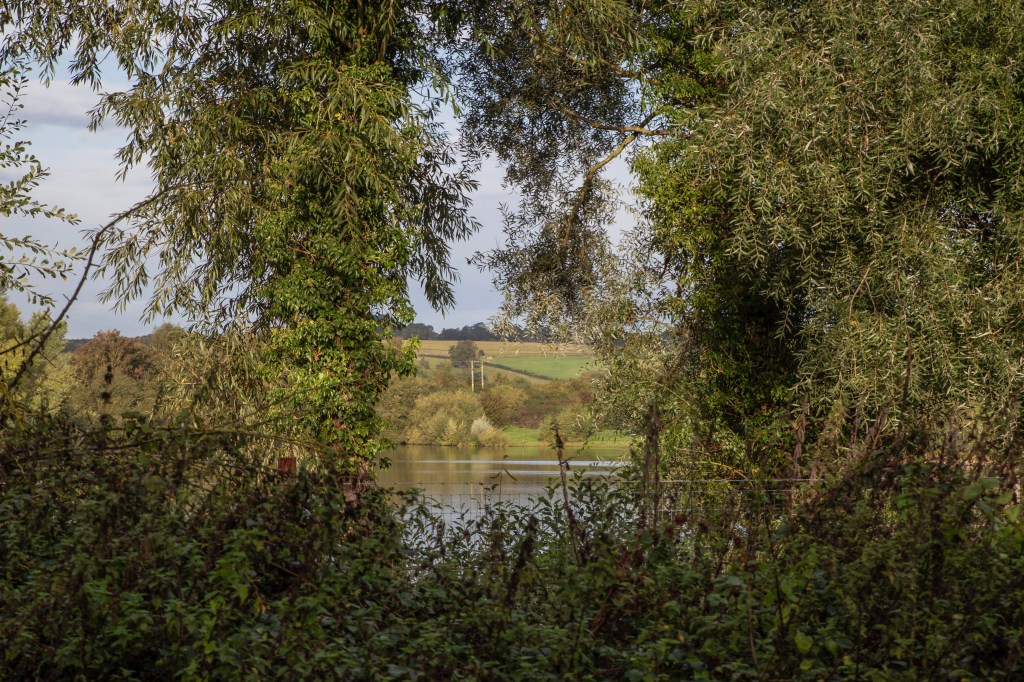
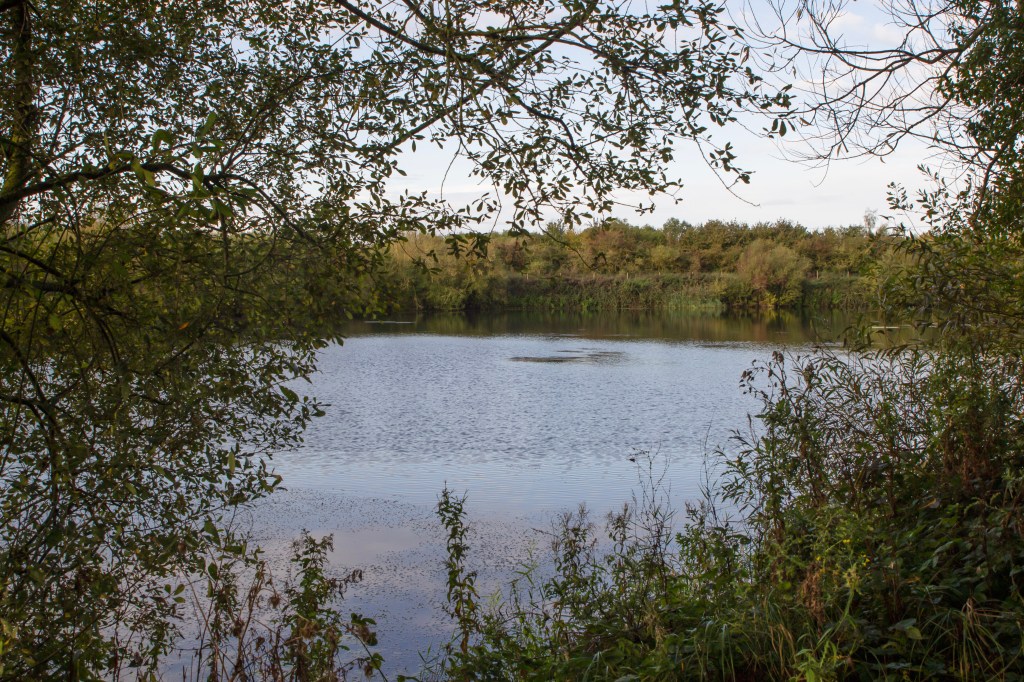
Just outside Branston, we passed through Branston Water Park and the picturesque Tatenhill Lock.
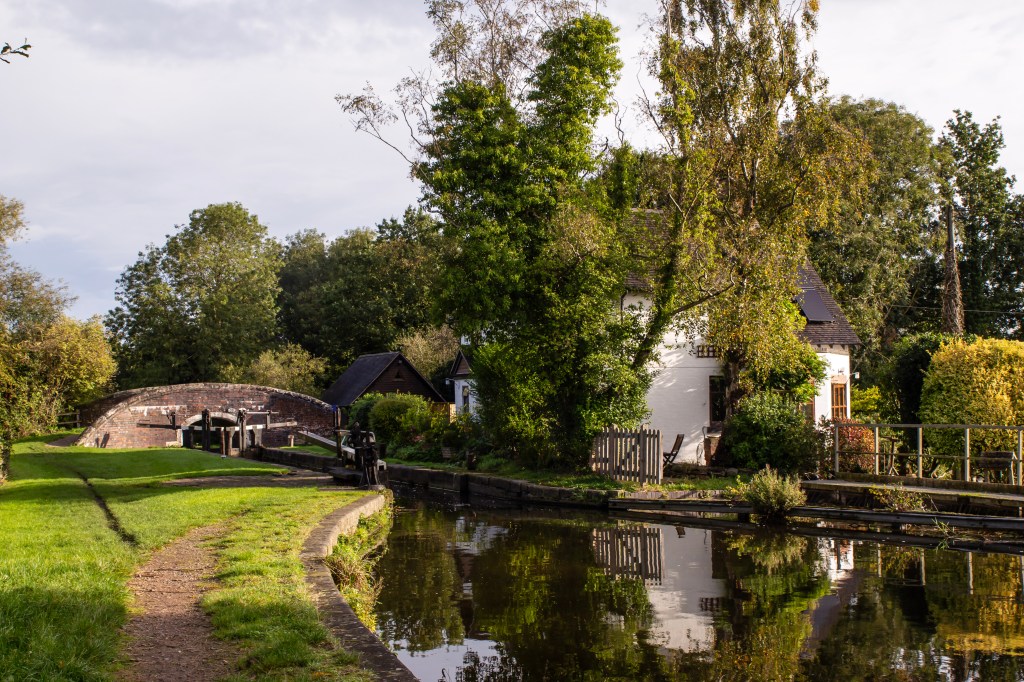


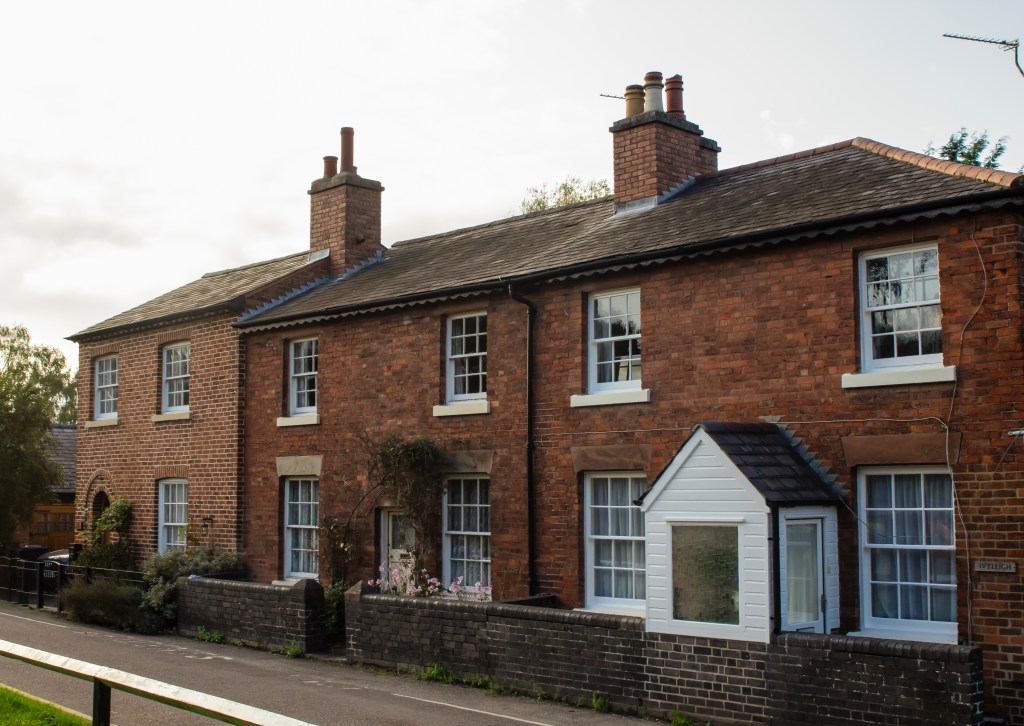
We were properly back on the canal network – Fradley Junction is where the Trent and Mersey is joined by the Coventry Canal and ultimately the canal network of Birmingham and the West Midlands.
Wednesday October 4th
Fradley Junction to Great Haywood Junction
We got off to an unusually early start, just in time to see the Canal & River Trust volunteer arriving at 8 o’clock and he kindly opened the first two locks for us. After that, we were on our own. The particular foible of this stretch of the Trent & Mersey is that although the paddles are easy to lift with the windlass, the gates themselves are often short, and are balanced in such a way as to make sure they stay closed, to avoid unnecessary loss of water. This means that although they are quite easy to close, opening them is a different matter and on a couple of occasions Ian had to get off the boat to come and help me open the gates. Who needs strength training when you live on a narrowboat?
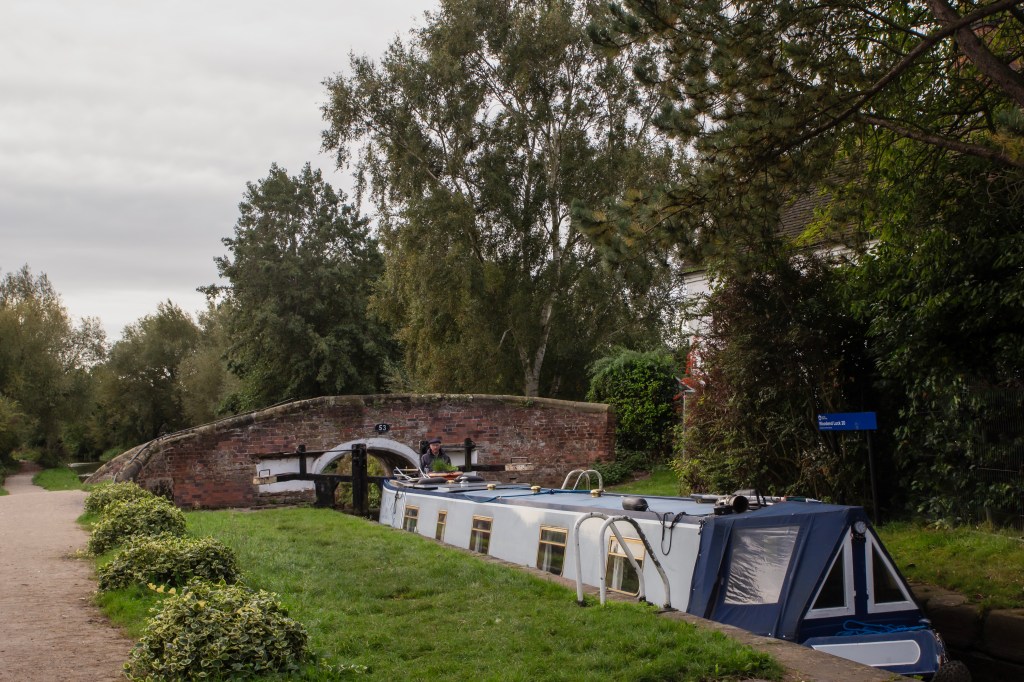
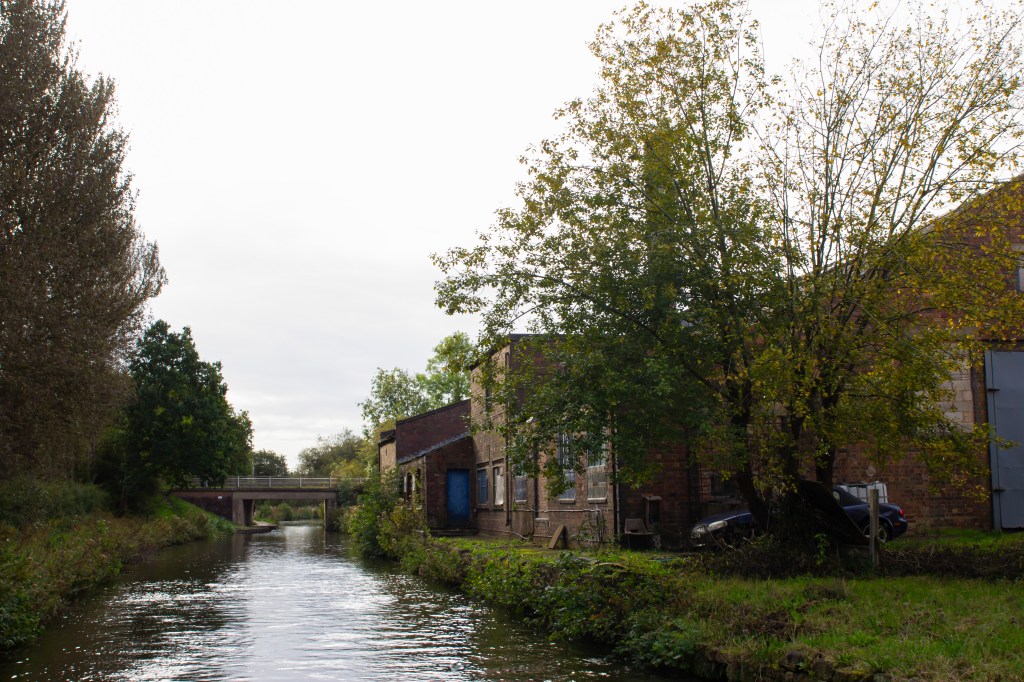
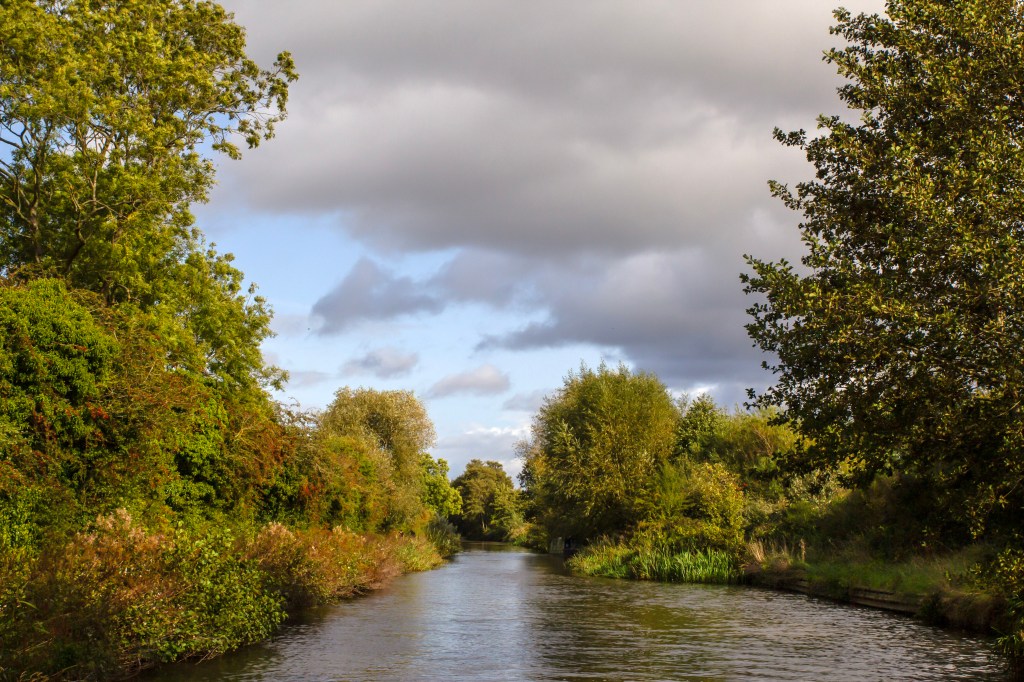
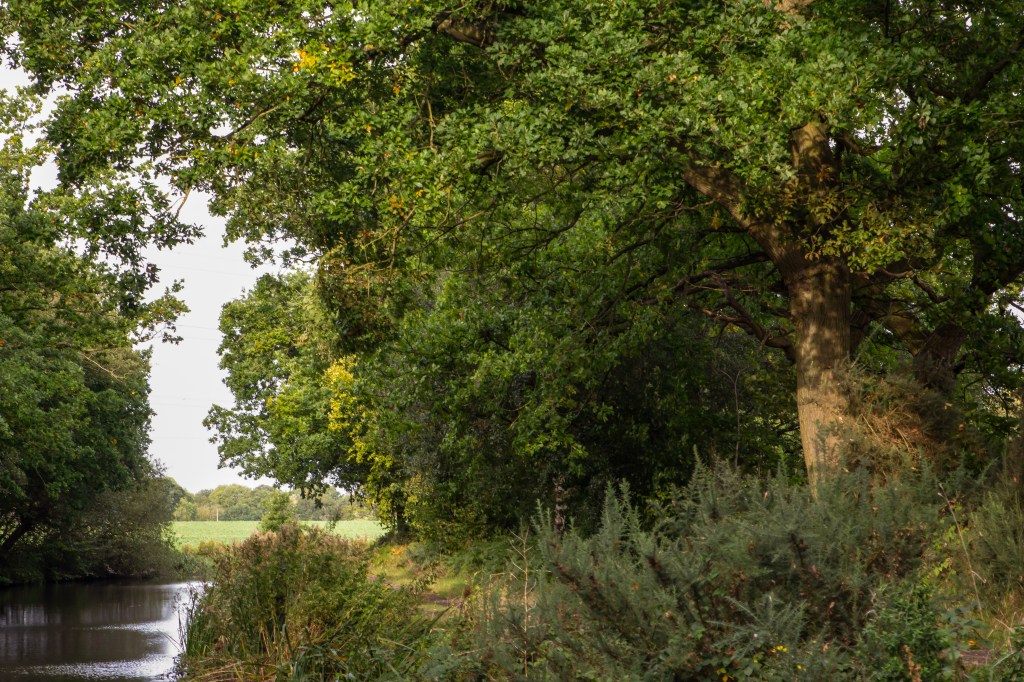
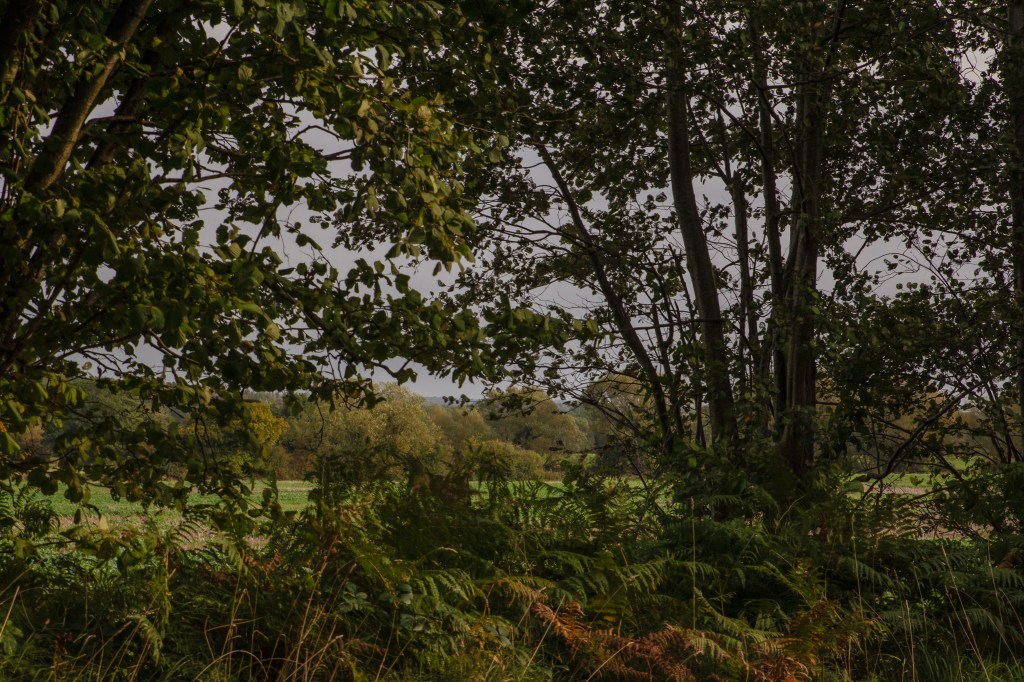
As we travelled, we left the flat East Midlands for the more undulating and wooded countryside of Staffordshire and the west. There were glimpses of sunlit fields through the trees and hedges lining the canal banks.
We stopped in Rugeley to go to a conveniently located Tesco and also visit Tool Station, Ian’s favourite retail outlet, where he acquired an esoteric, but apparently essential, implement to add to the large collection of tools already on board.
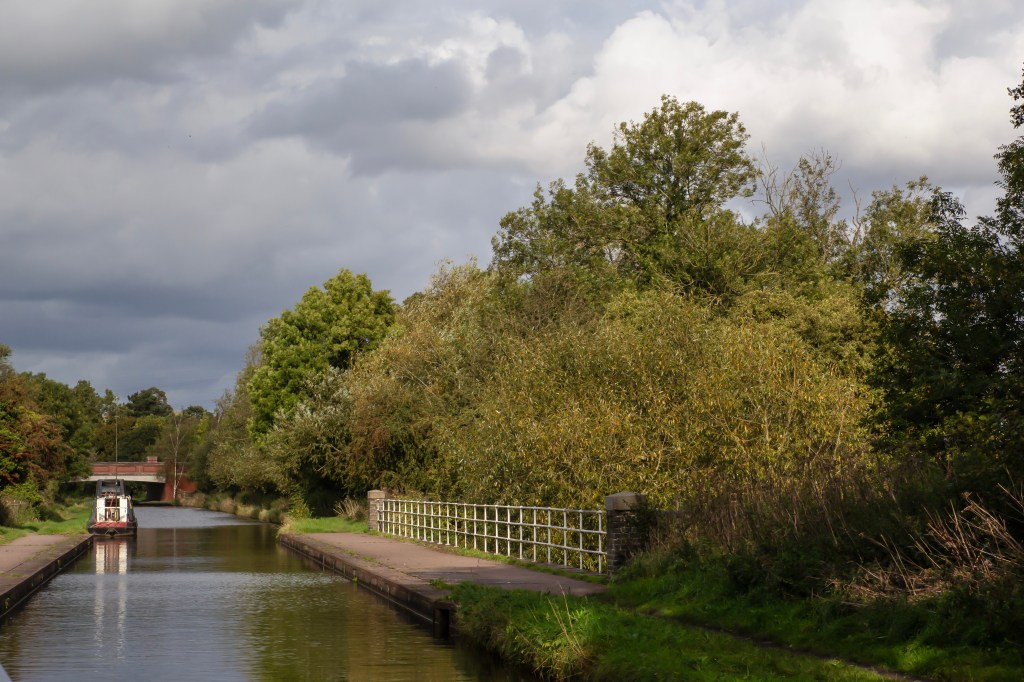
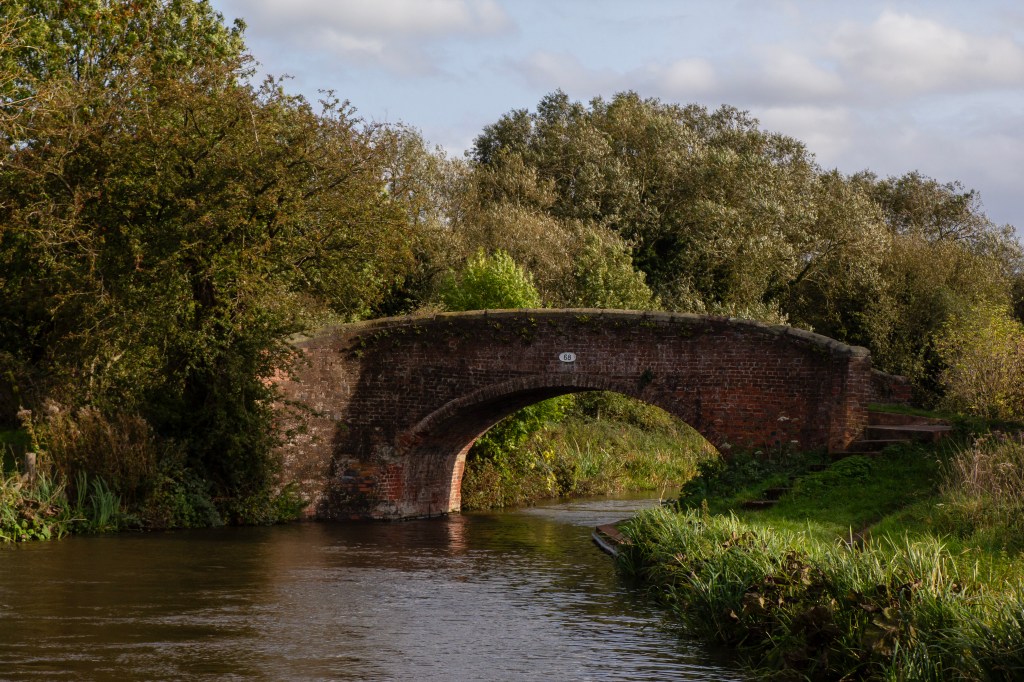
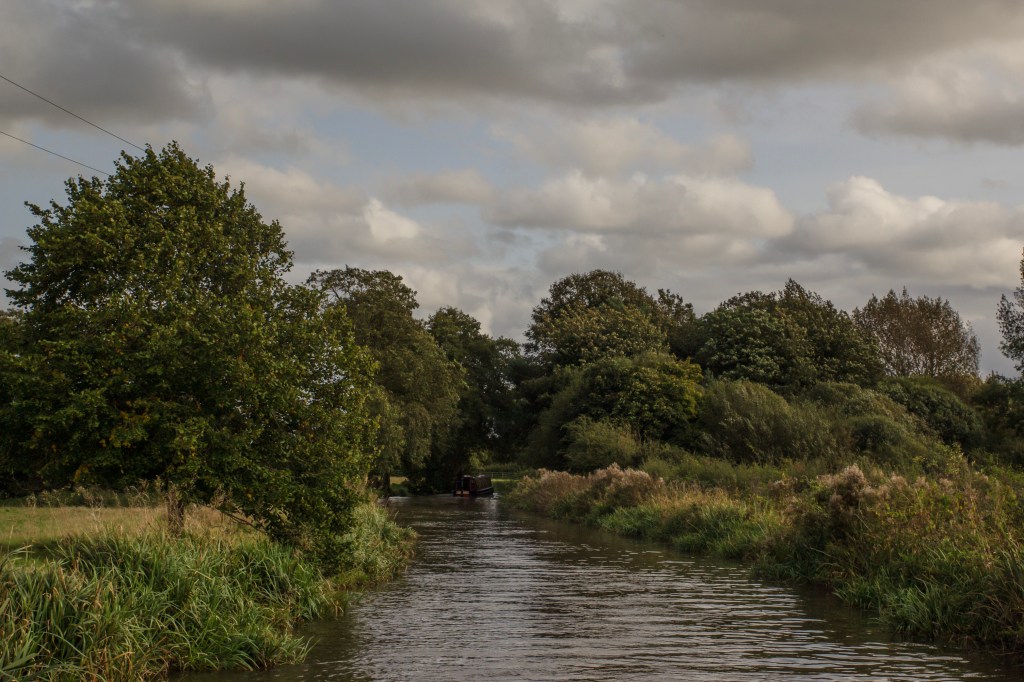
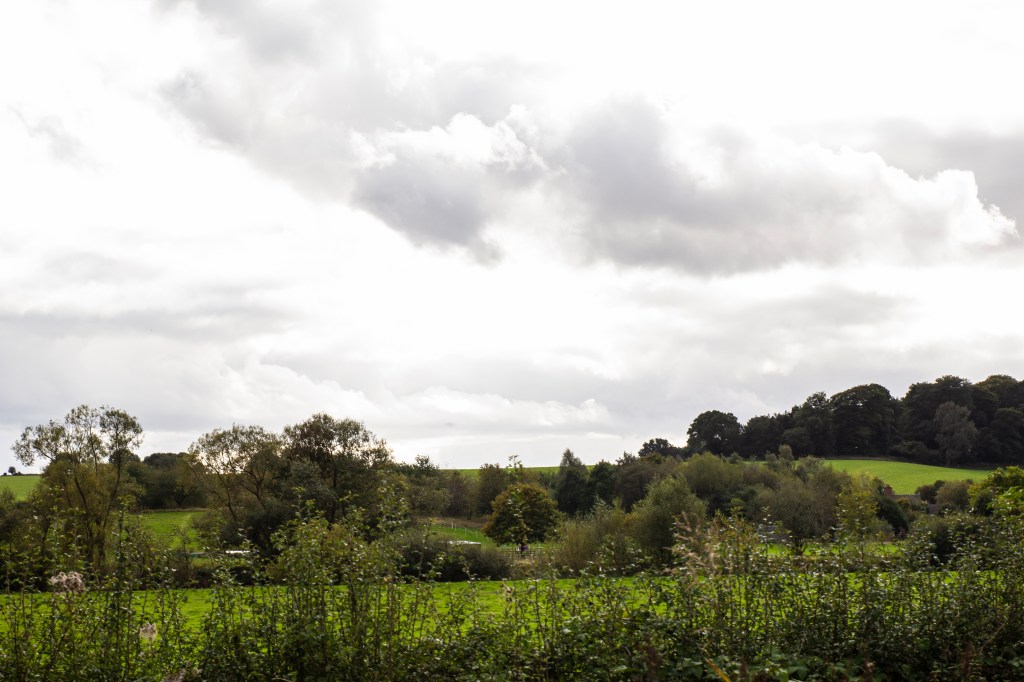
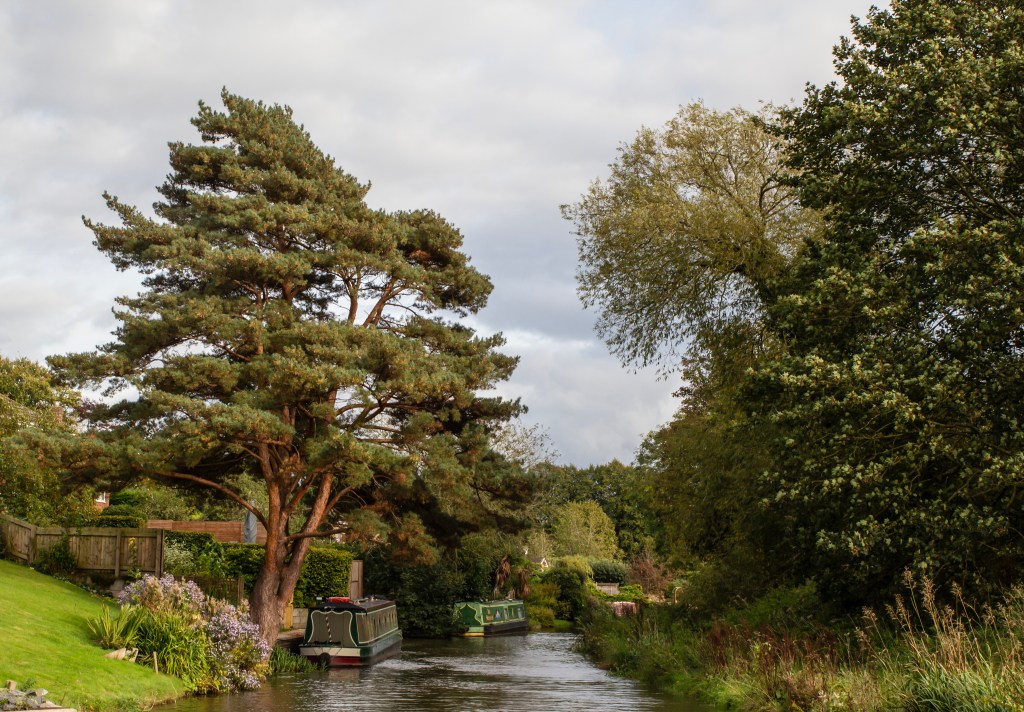
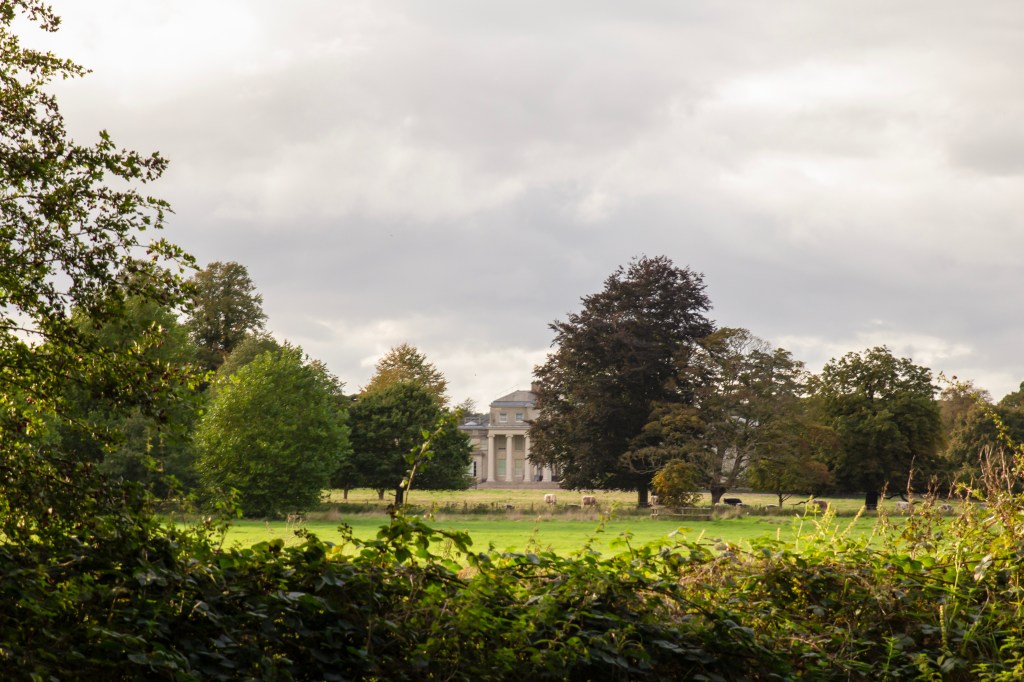
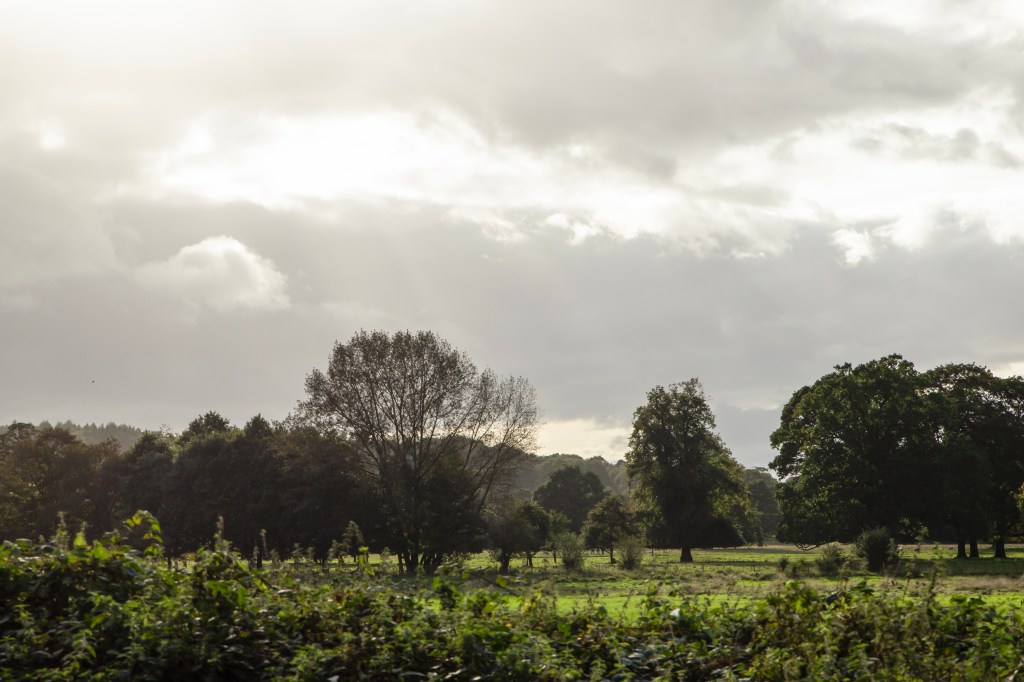
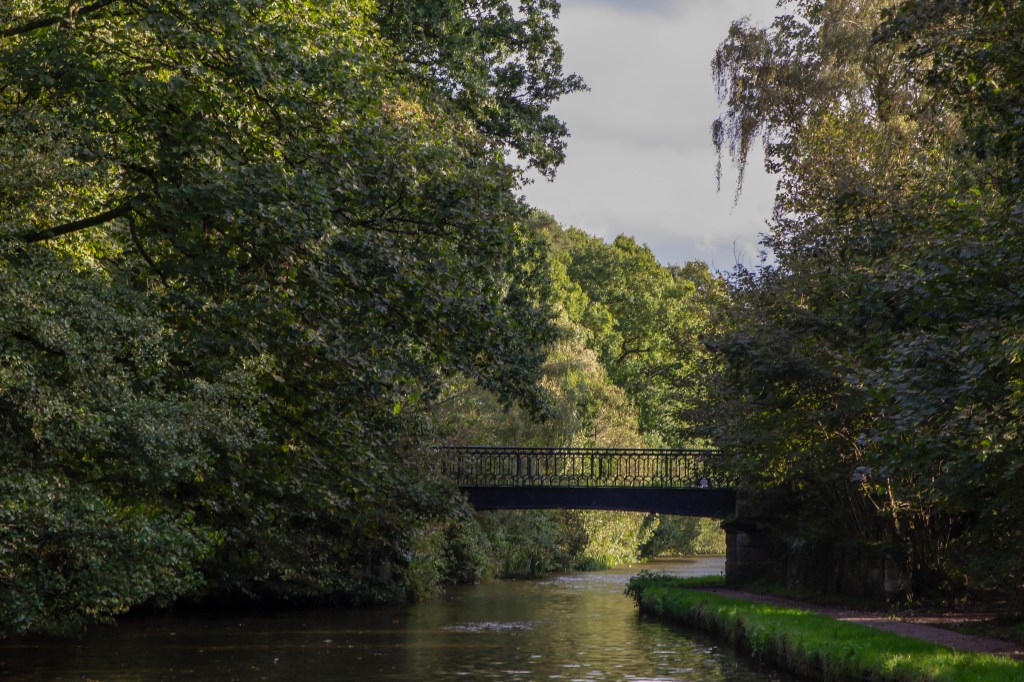

Great Haywood, where we stopped, is at the junction of two great canals, the Trent & Mersey and the Staffordshire & Worcestershire. Tomorrow we would be leaving the T & M and heading south to Wolverhampton.
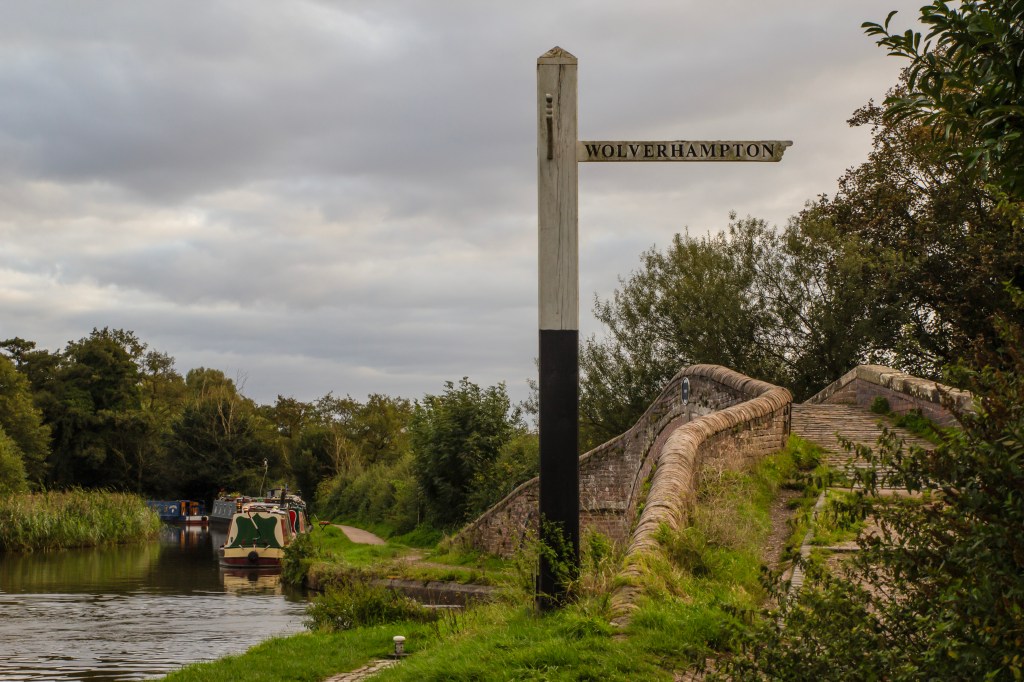
Thursday October 5th
Great Haywood to Tixall Wide
Another dismal weather forecast was proved correct and in view of the persistent drizzle Ian decided that after getting water at Great Haywood, we would just go round the corner and tie up at Tixall Wide, where the canal opens out and seems more like a lake.
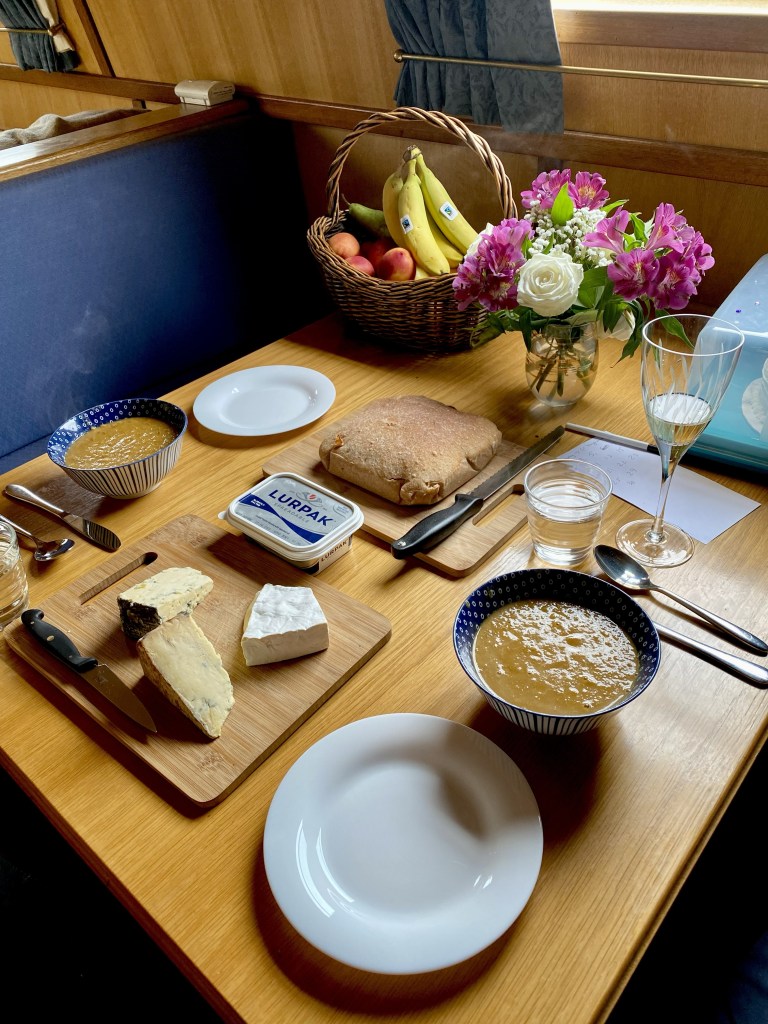
I had a productive morning in domestic goddess mode, making bread and lentil soup for lunch, while Ian carried out manly jobs on the engine.
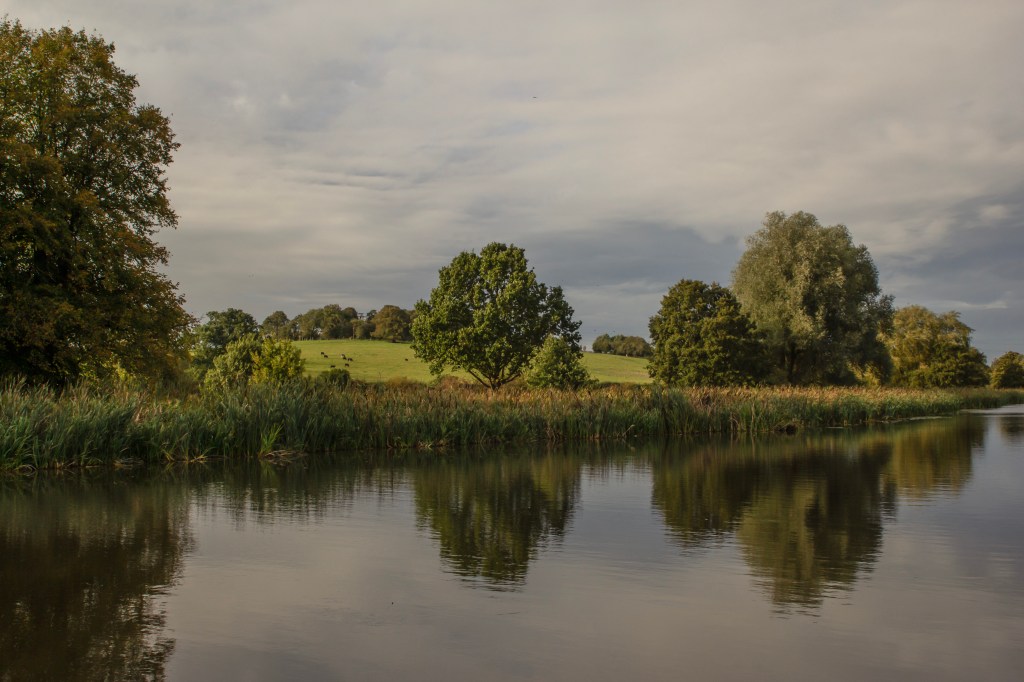
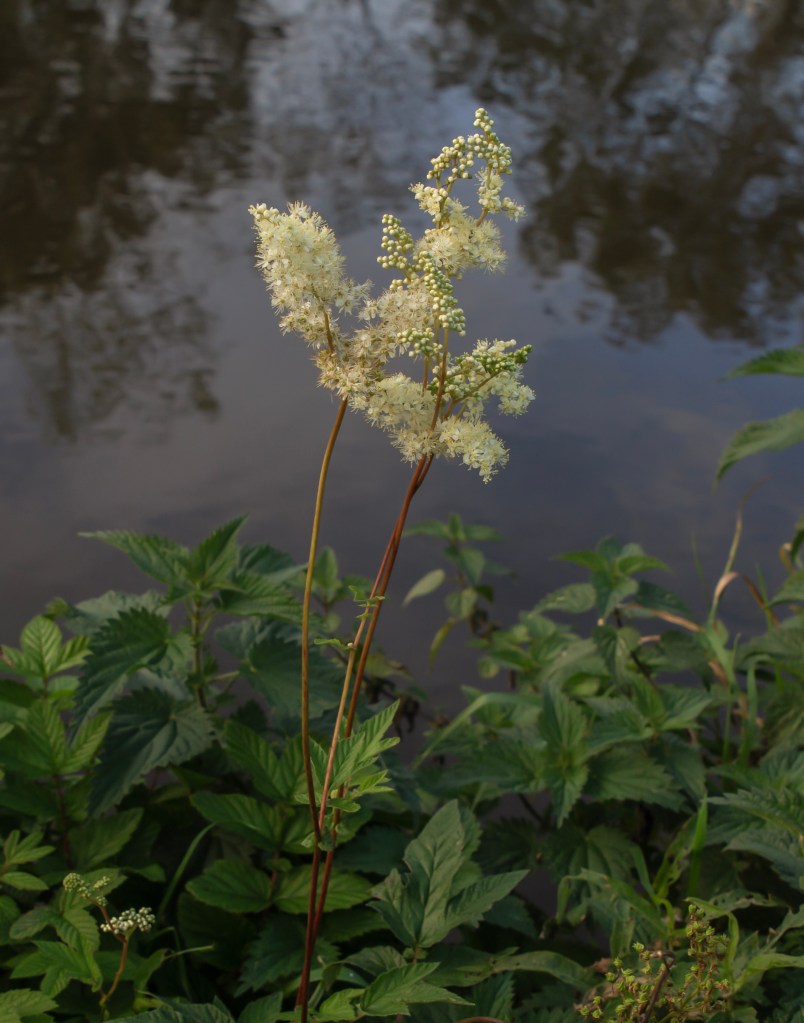
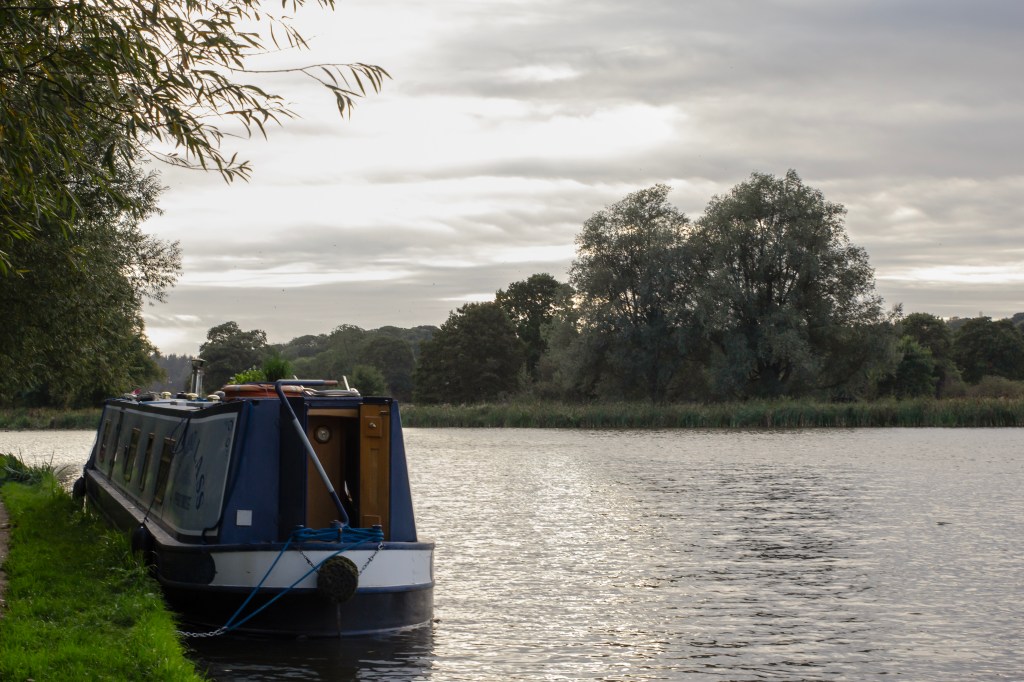
In the late afternoon the sky began to clear and we walked a little way up the towpath to take the view of Tixall Wide.

Tixall Gatehouse is all that remains of Tixall Hall, which was demolished in 1927. Mary Queen of Scots was imprisoned there for two weeks.

Friday October 6th
Tixall Wide to Gailey
It wasn’t raining, but it wasn’t sunny, as we had been led to hope by BBC weather. The canal takes a wide loop near Stafford before turning south towards Wolverhampton, and we were pleased to see a large working party (of volunteers as I later learned) engaged in opening up a link into Stafford town centre, which would add interest to the route and should be a good thing for the town commercially.

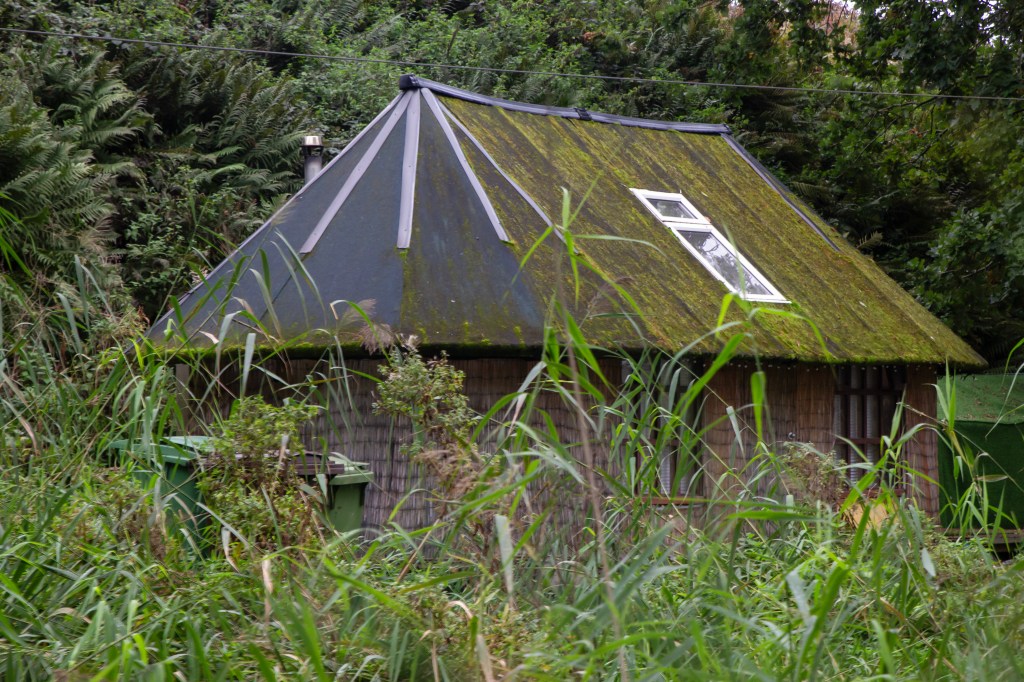
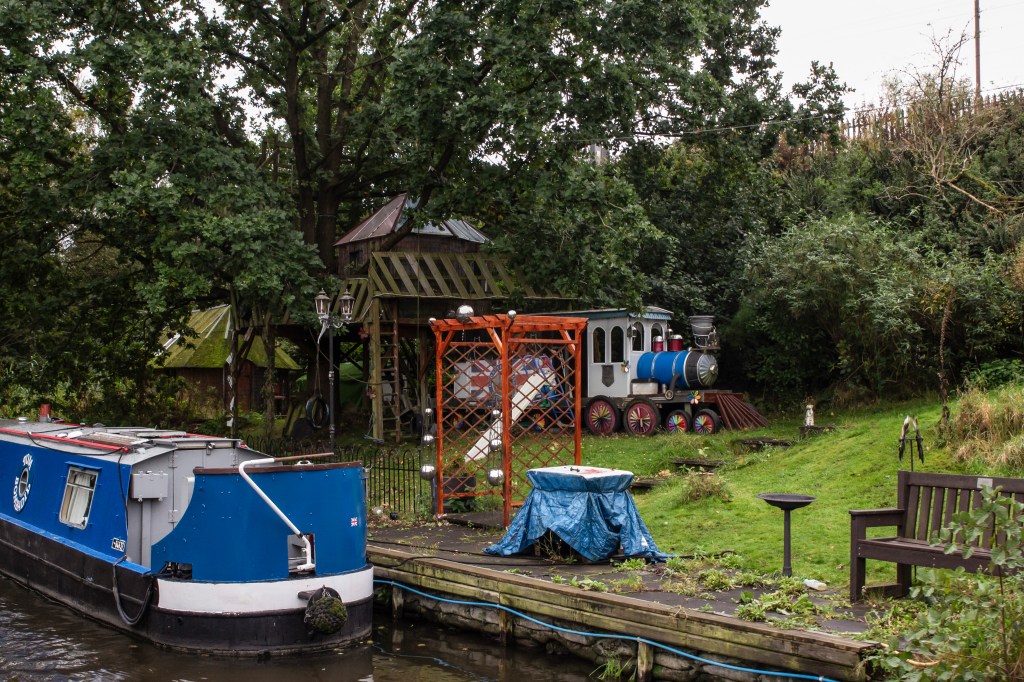
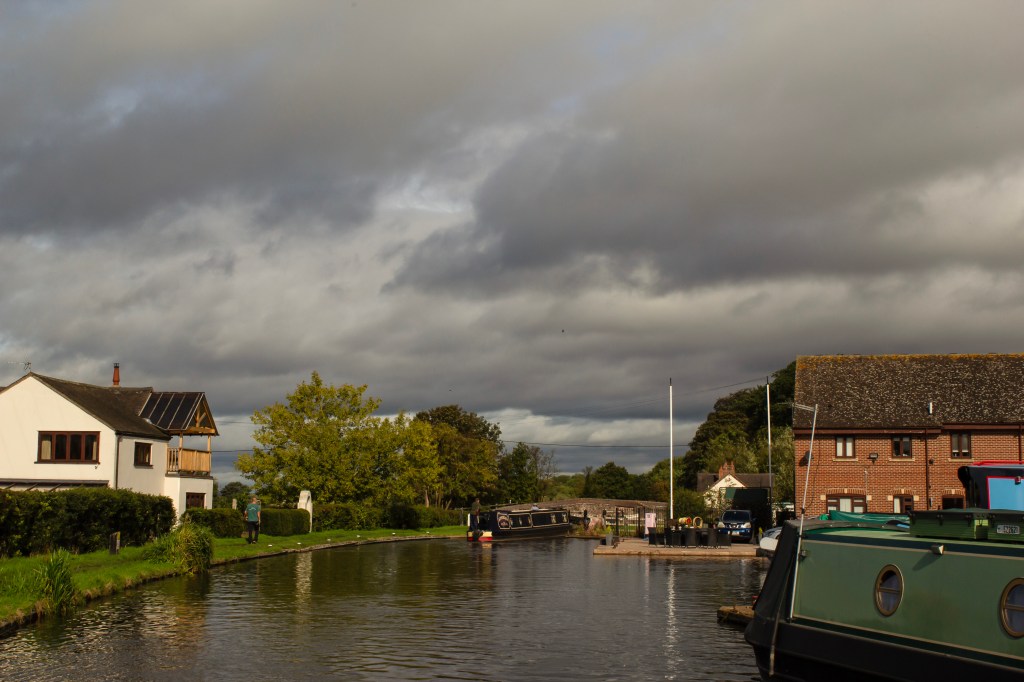
Just south of Stafford, we noticed this unusual house on the canal bank. Its owner was clearly a committed royalist, perhaps harking back to civil war days when Stafford was a Royalist stronghold, and possibly a fan of Thomas the Tank Engine as well.
Saturday 7th October
Gailey to Brewood
Susie’s birthday and she was coming to pick us up from Brewood to take us back to Newport for the night so we could join in the celebrations.
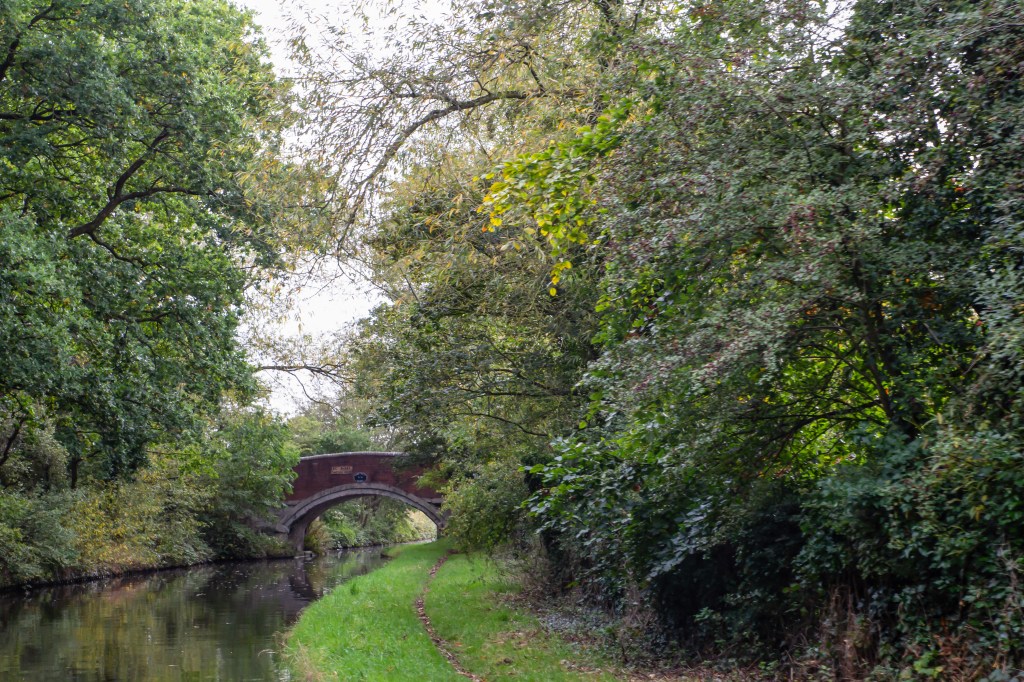
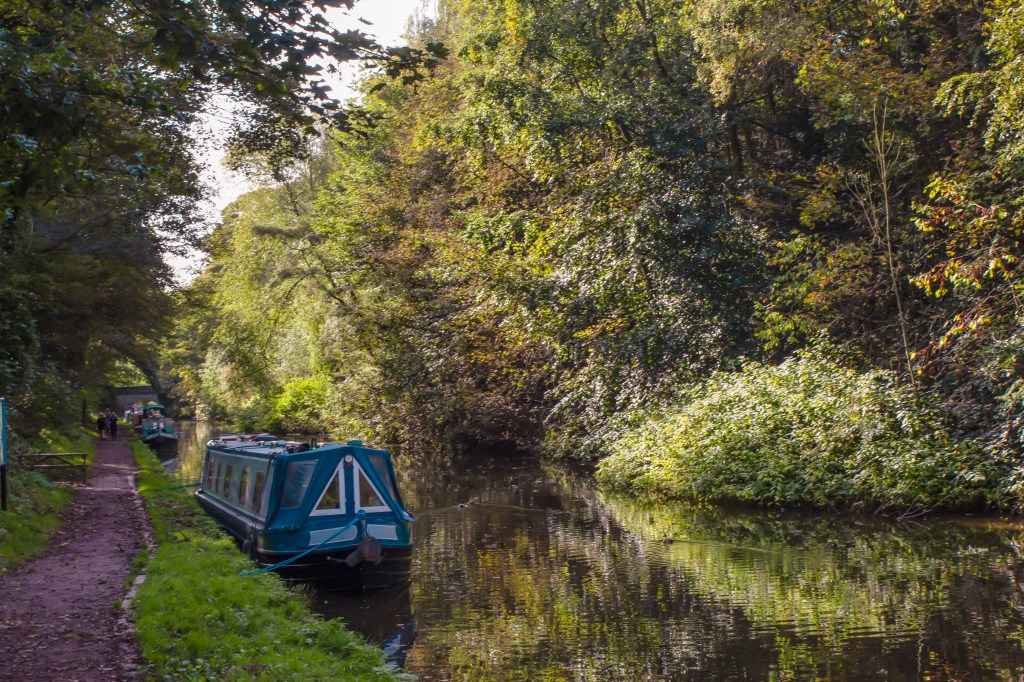
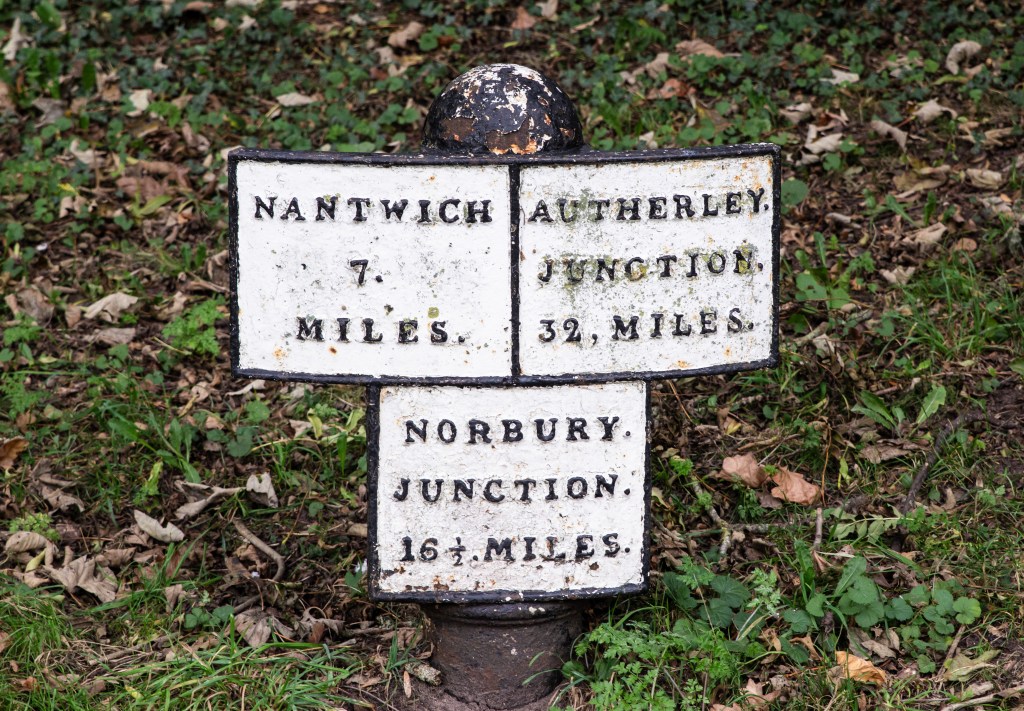
It was some distance to Brewood via Autherley Junction, where we would leave the Staffs & Worcs and get onto the Shropshire Union Canal. James Brindley’s method of following the contours resulted in many twists and turns of the waterway, but the upside was that there were no locks, which was what Brindley wanted to avoid in his construction methods.
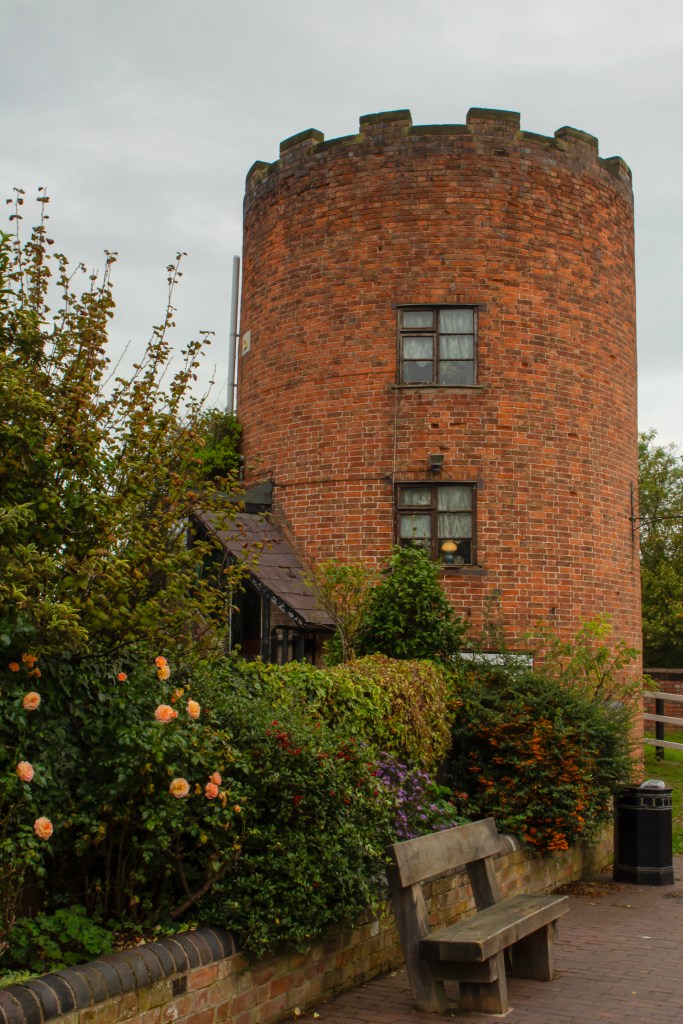
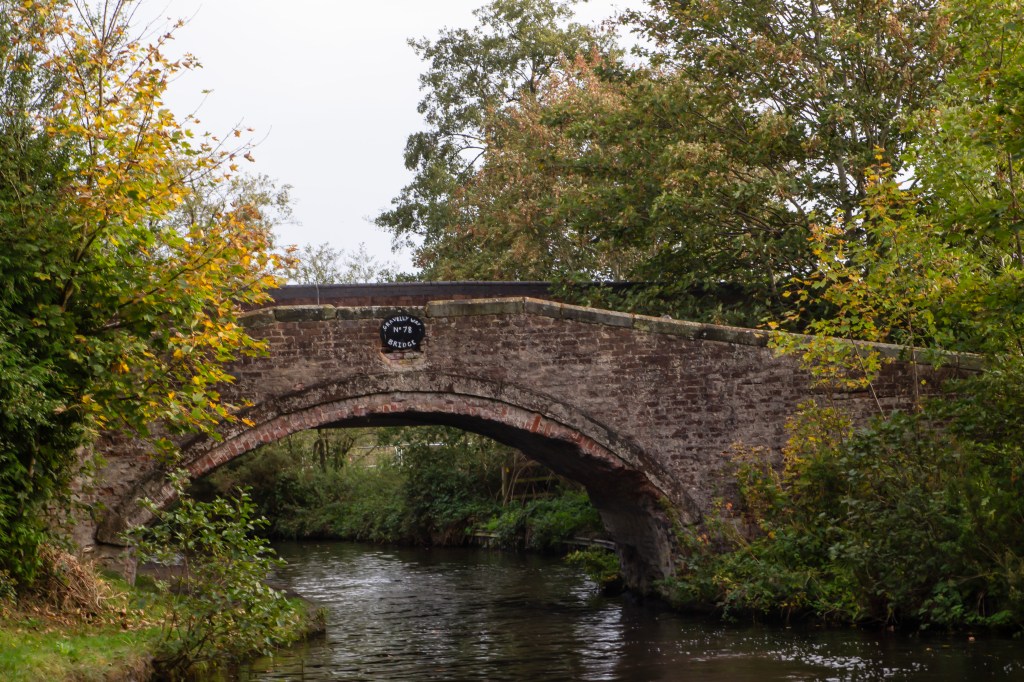
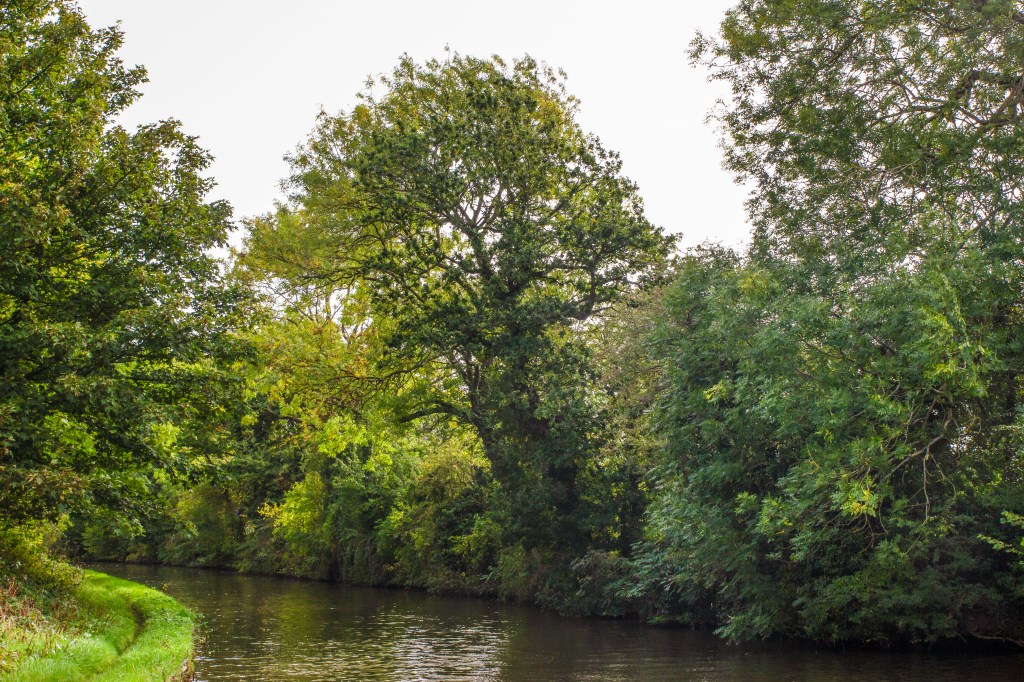
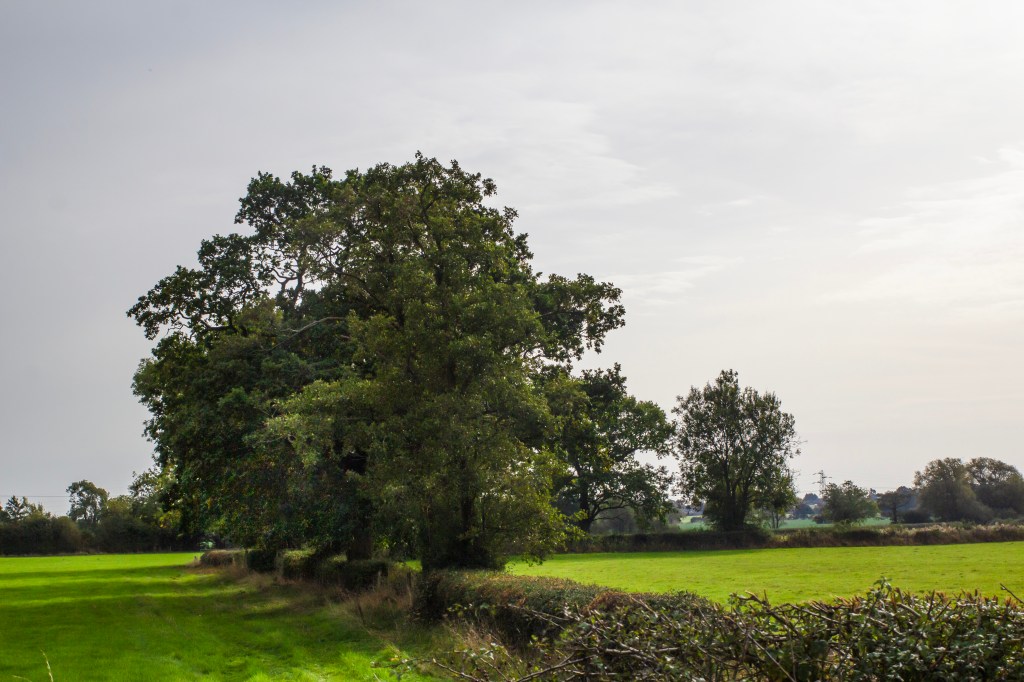
At Moat House Bridge the canal widens slightly, where Brindley incorporated a medieval moat into the canal. There is little evidence of it now, and impossible to think that planning authorities would contemplate such a manoeuvre today.
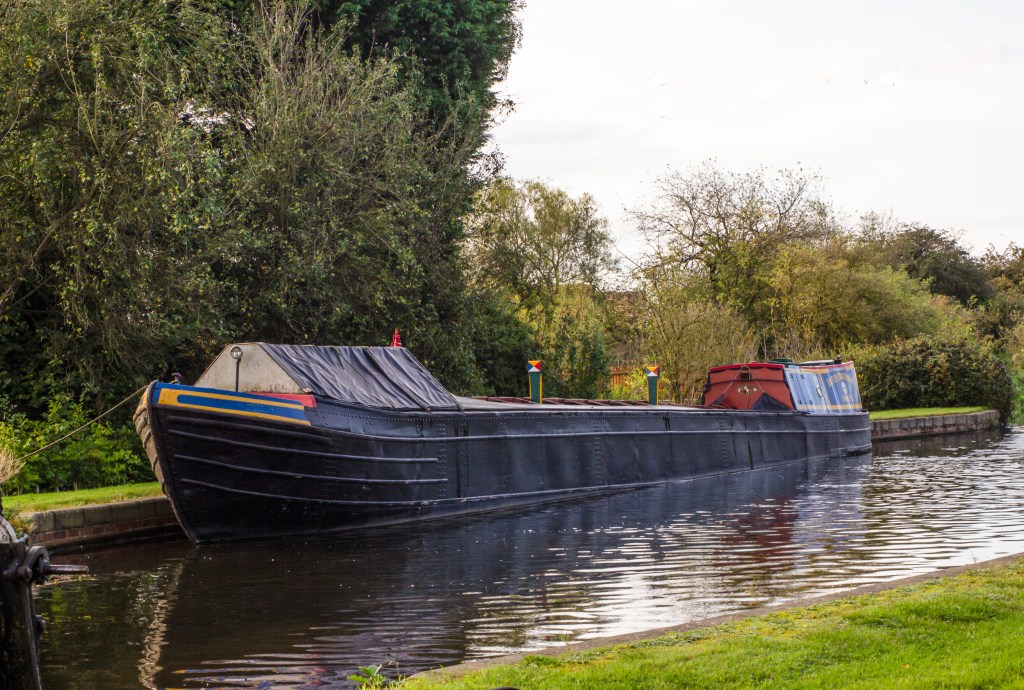
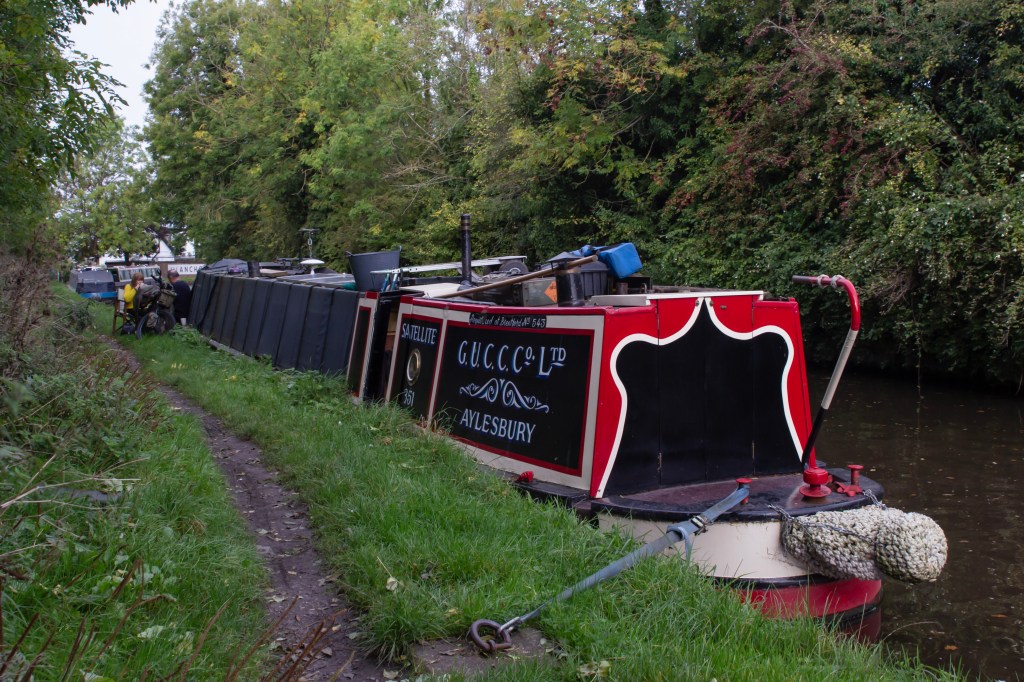
It’s always interesting to look at other boats on the water and this one caught my eye – an old boat which had been used as a working boat in the past. We tied up so I could go and ask the owners, who were having their morning coffee on the towpath, if I could photograph their boat. The engine room was in full view, with various tools and implements lying around, and I made the mistake of asking them if they were restoring it.
‘Restoring it? What’s the matter with it?’ But they let me take a photo anyway.
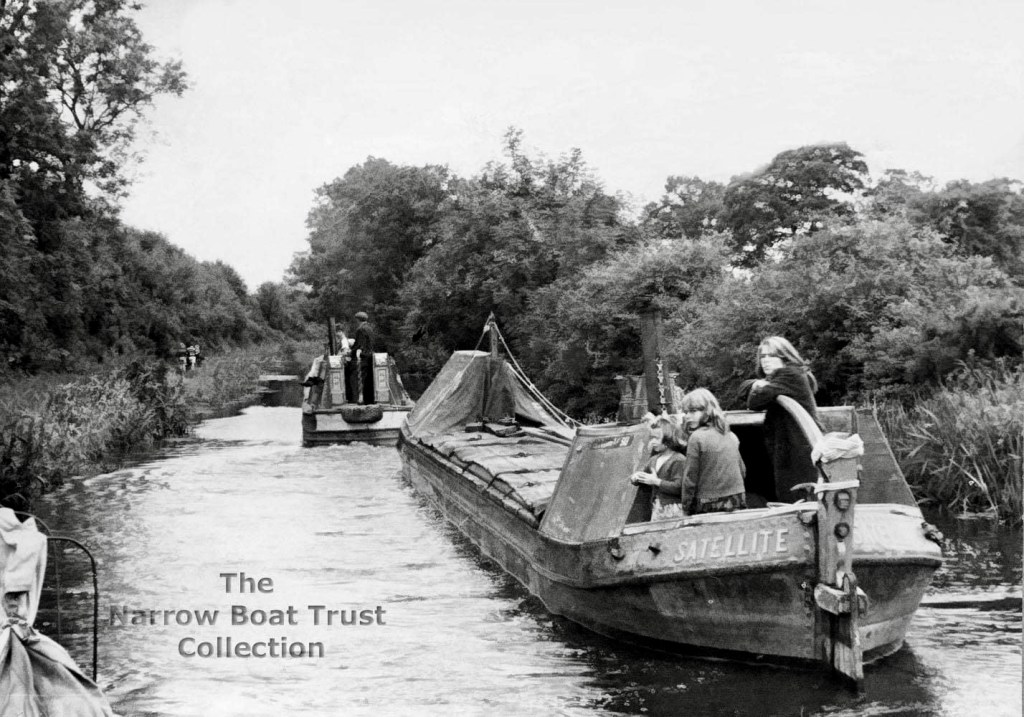
NbSatellite was built in 1935 by Harland and Wolff. The original working boat was cut in half and motorised by a previous owner, with the fore end retaining the name Satellite, and the stern end being named Ganymede.
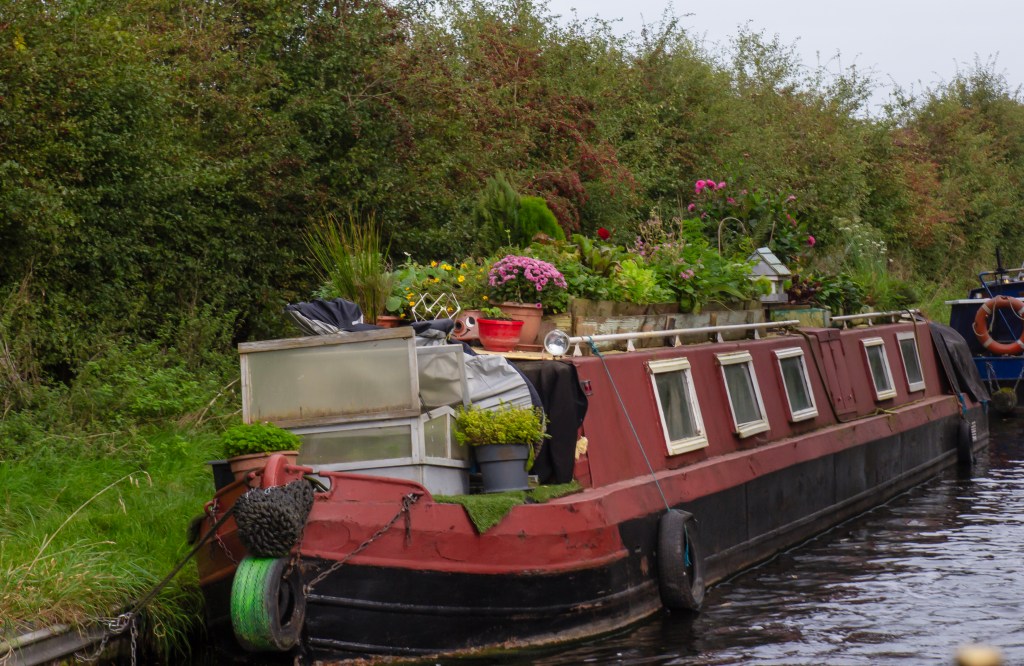
Not far from Autherley Junction, we passed through a narrow, straight ravine known as Pendeford Rockin. The sandstone had presented something of a problem to James Brinkley’s workers and the canal is only wide enough for one boat. You would never imagine you were travelling through the suburbs of Wolverhampton.
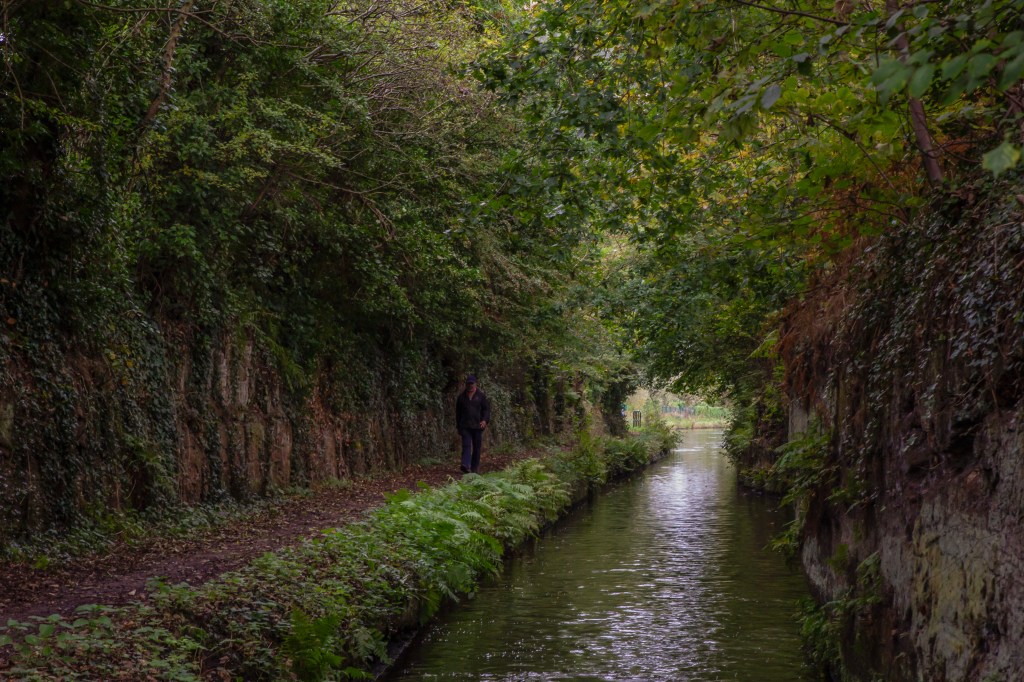

We left the Staffs & Worcs at Autherley Junction, to head north on the Shropshire Union Canal.
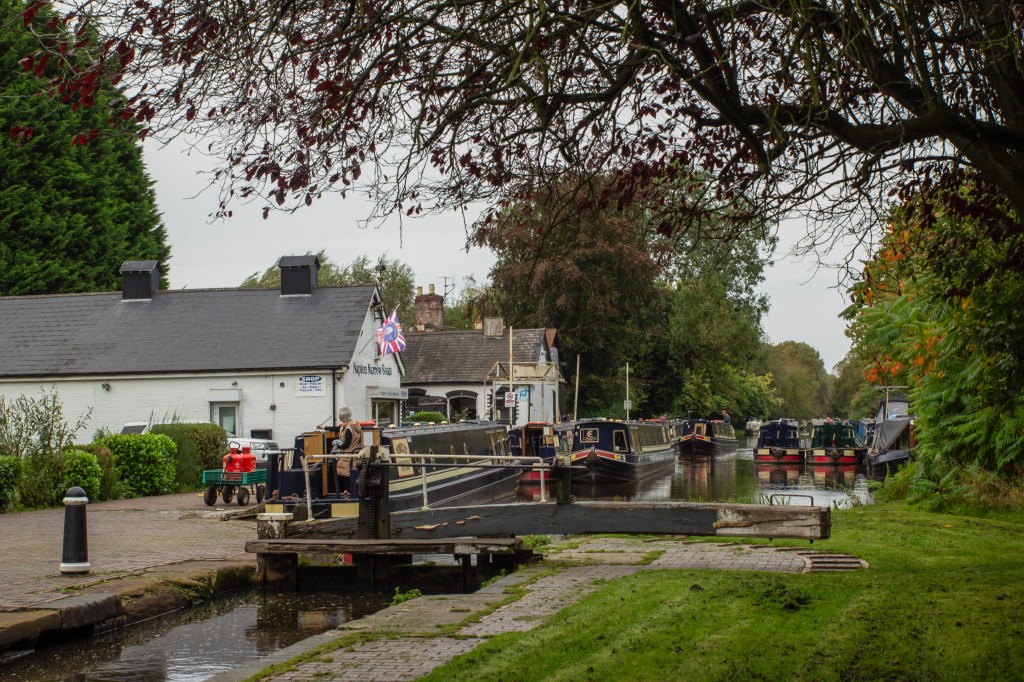
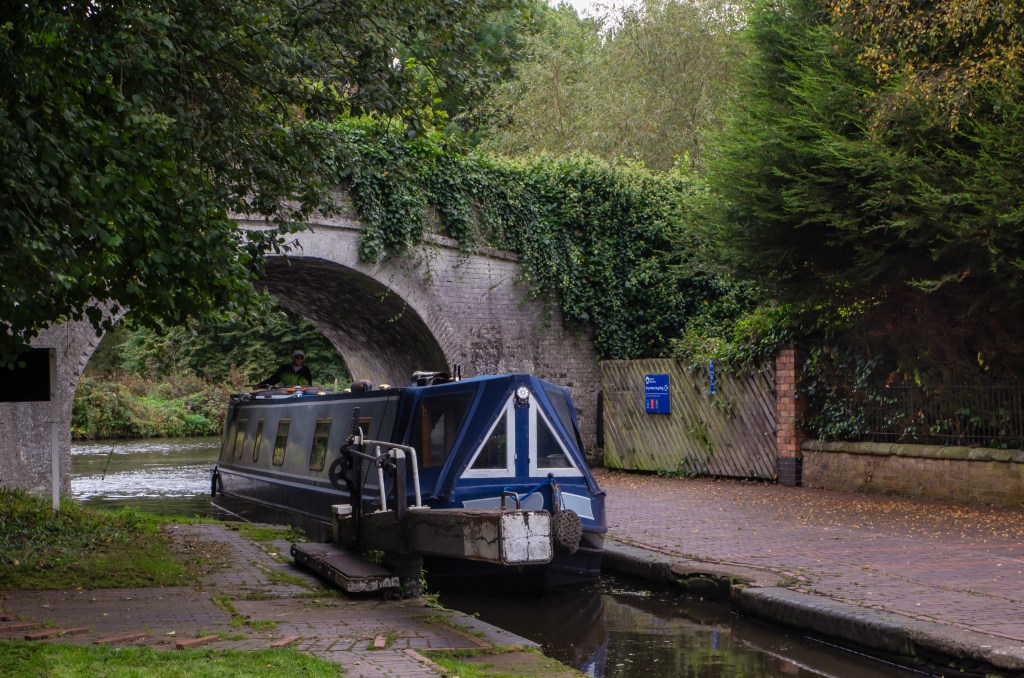

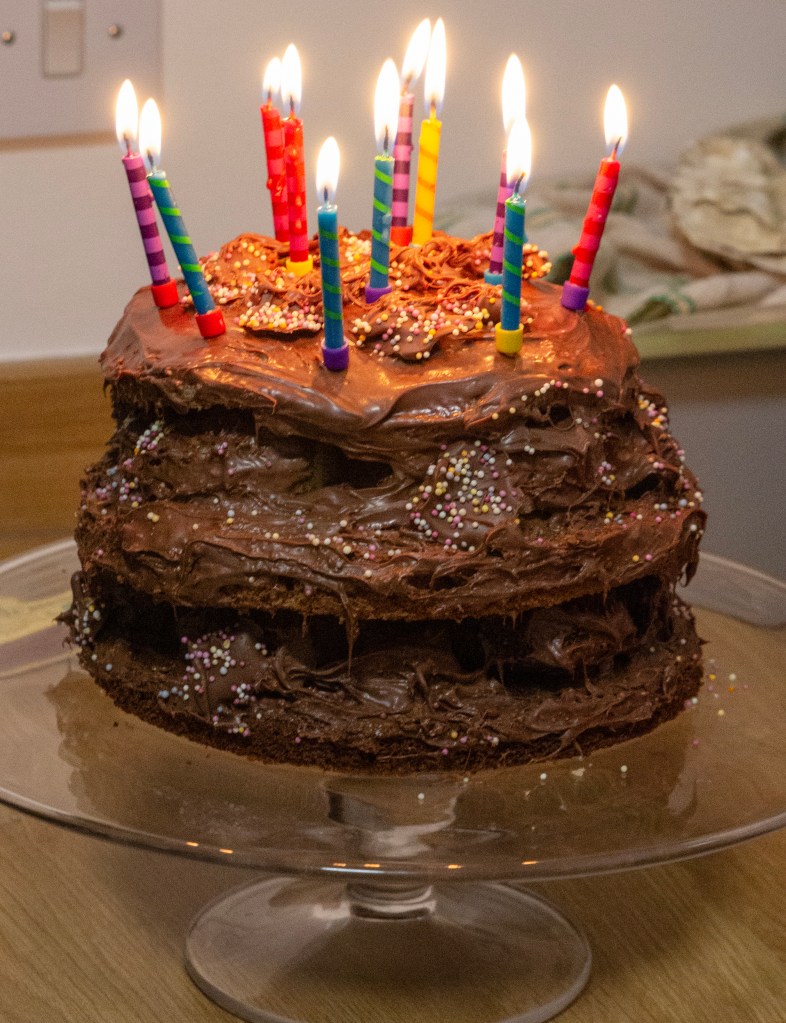
Susie’s birthday was celebrated with champagne, an Indian takeaway and….cake!

Sunday October 8th
Brewood to Gnosall
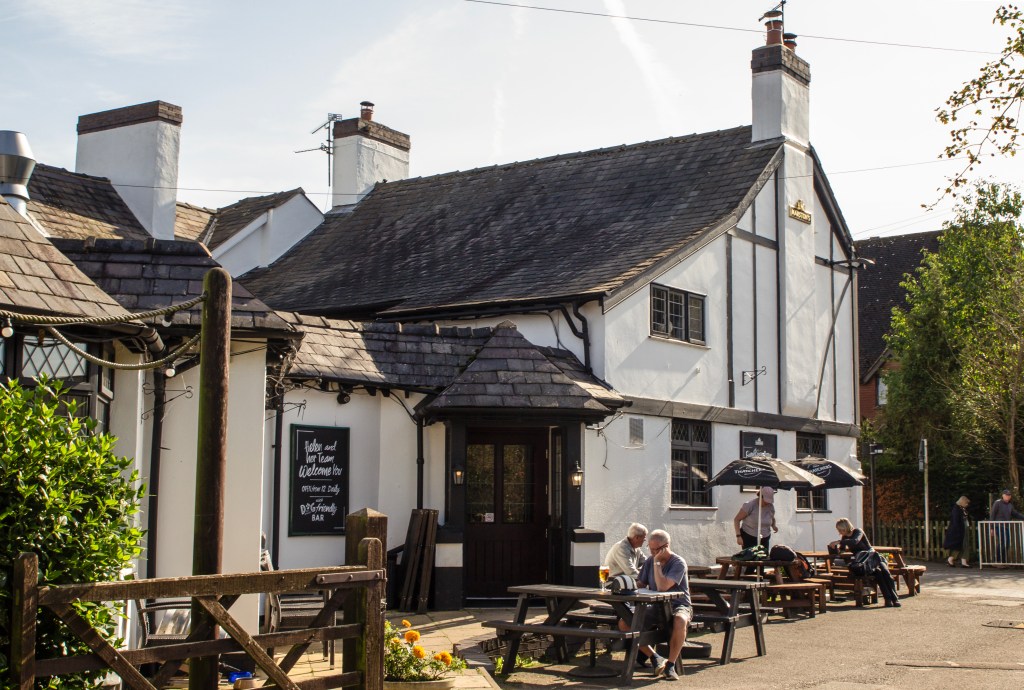
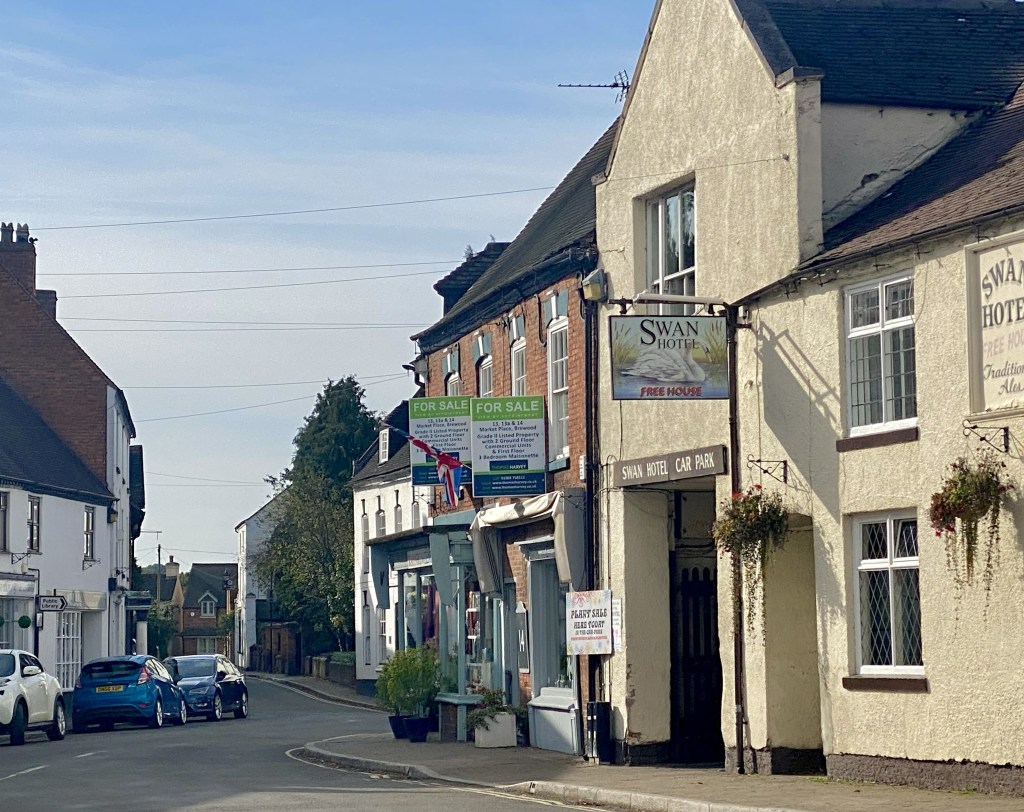
We had lunch in the Bridge Inn and a quick shop in Brewood before a short afternoon cruise up the canal to Gnosall.

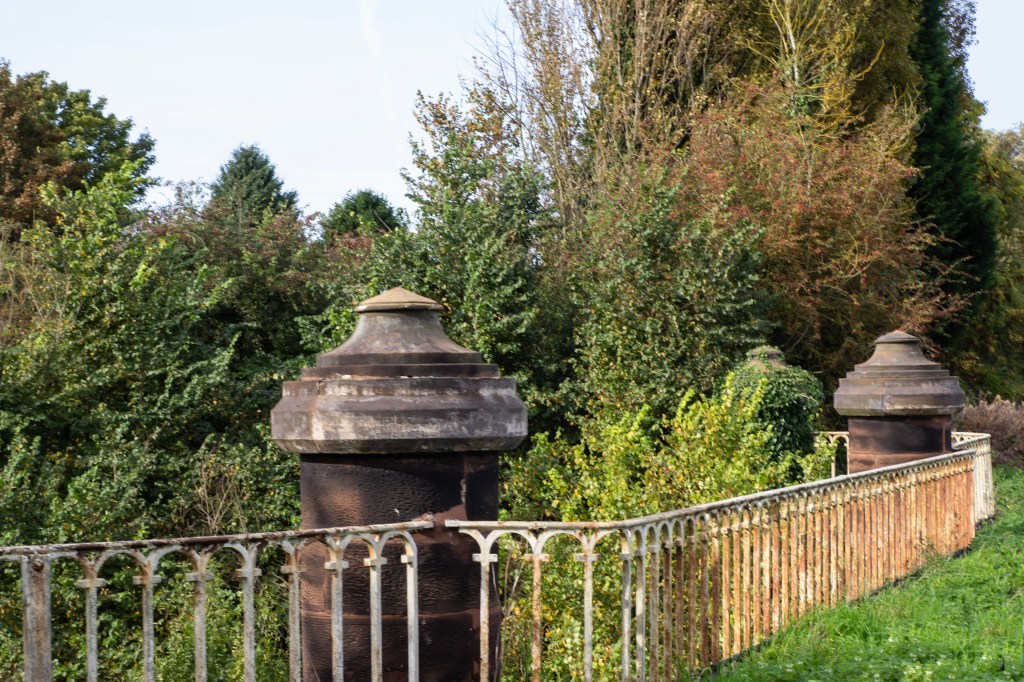
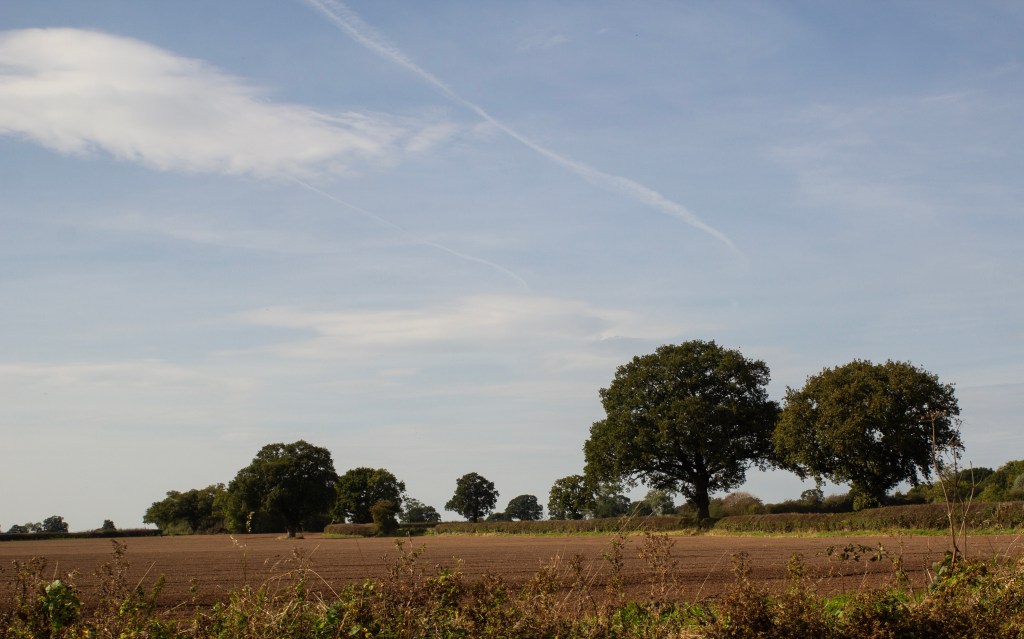

We moored up just south of Gnosall.
Monday October 9th
Gnosall to Tyrley
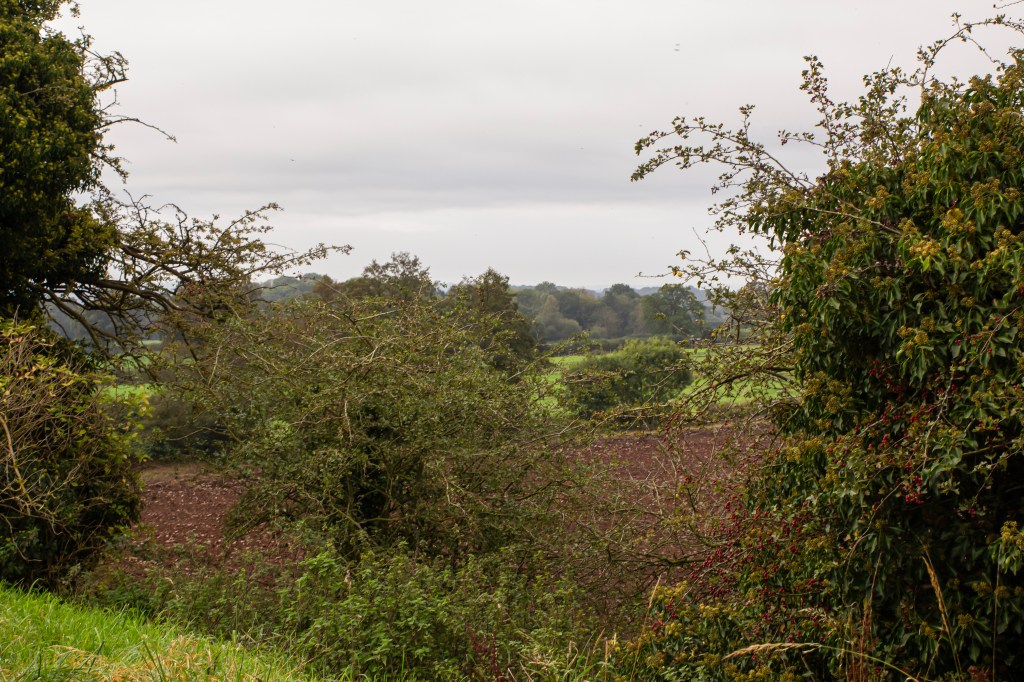
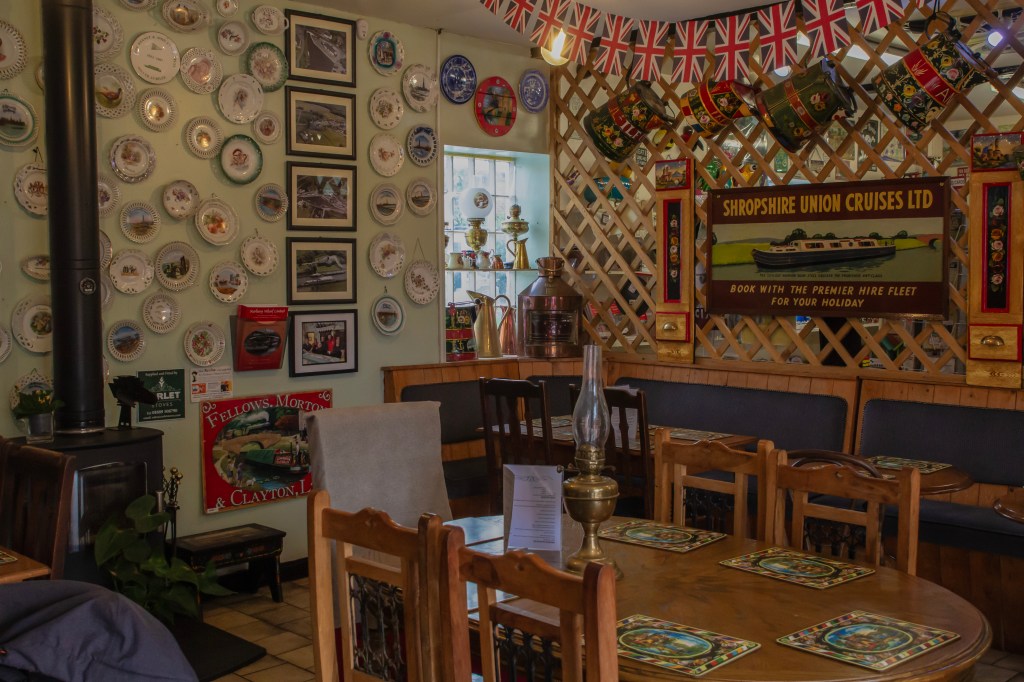
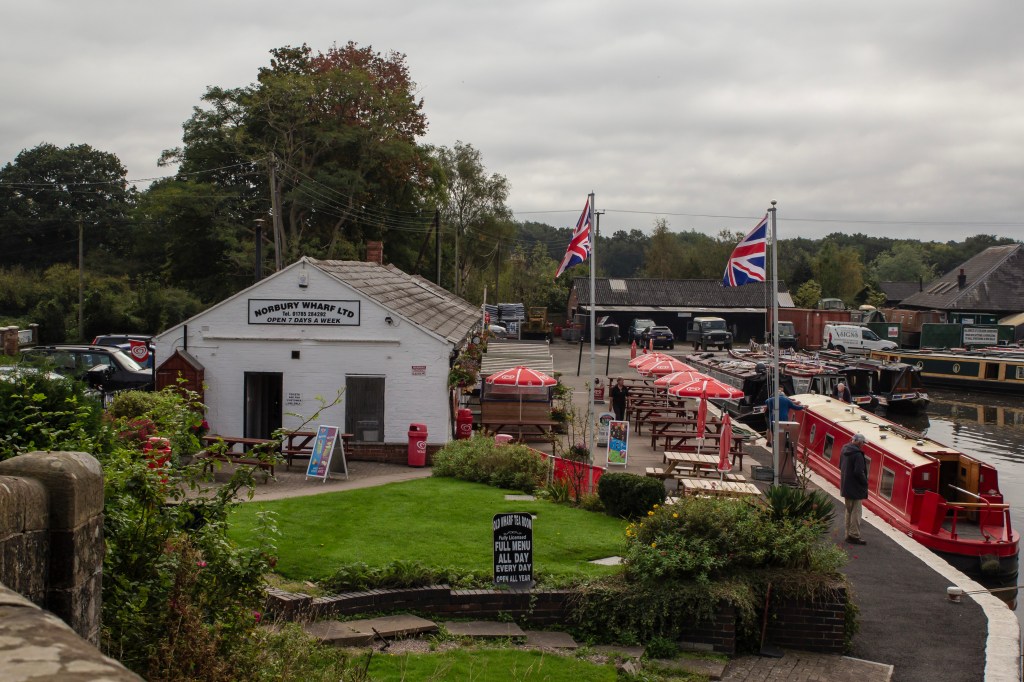
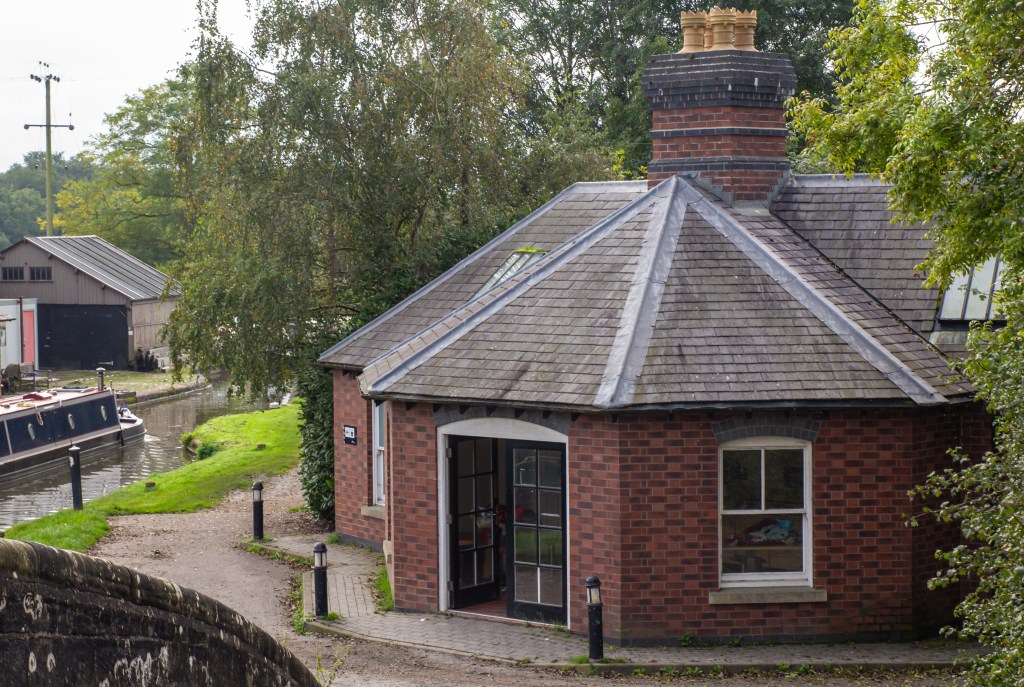
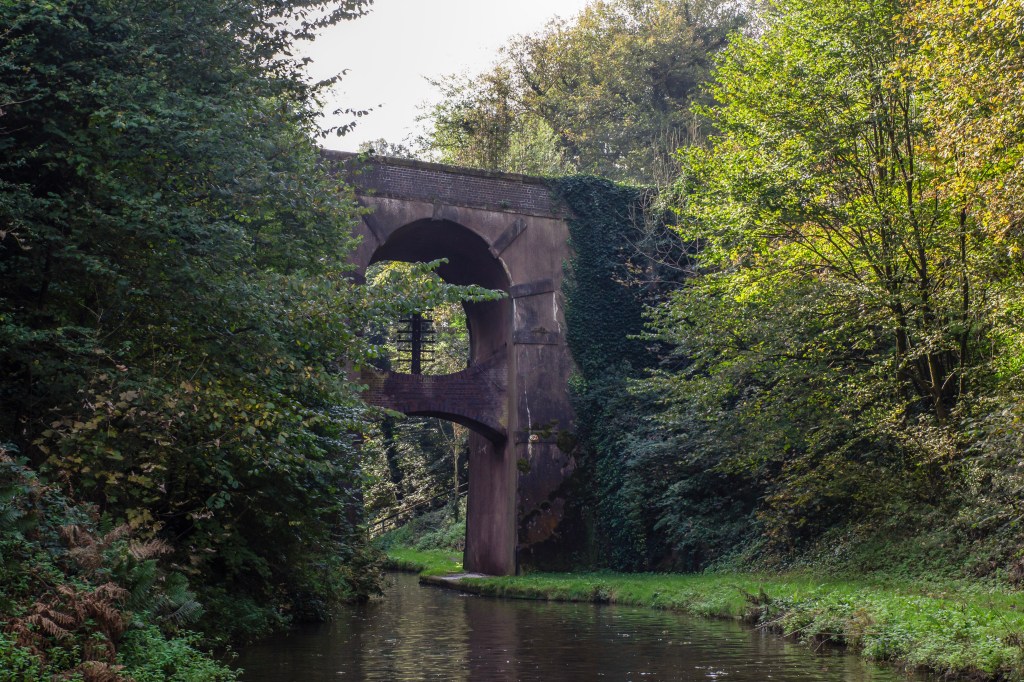
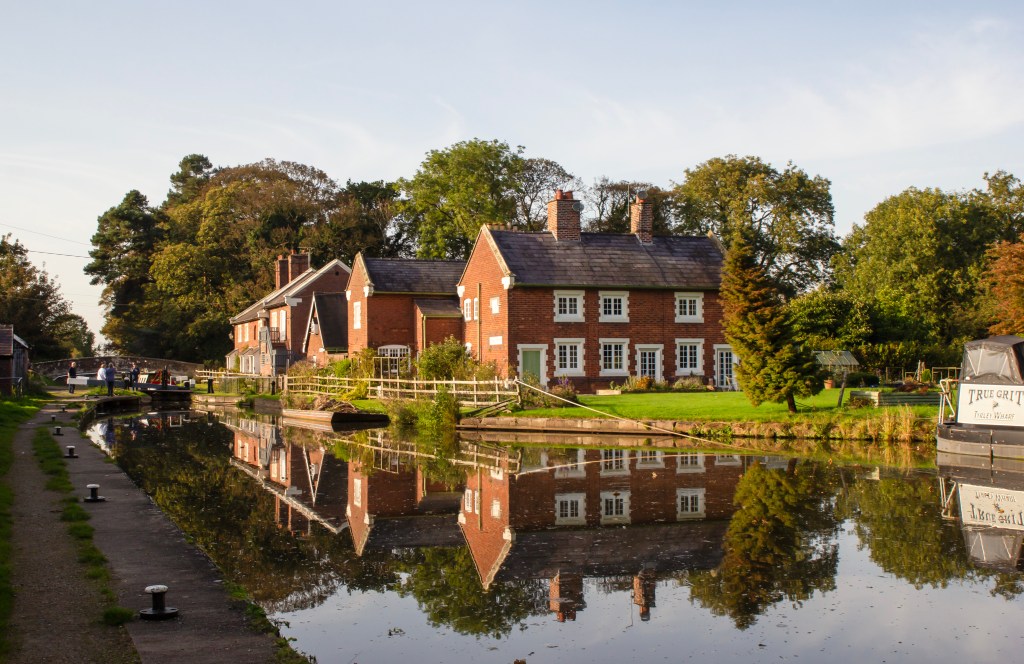
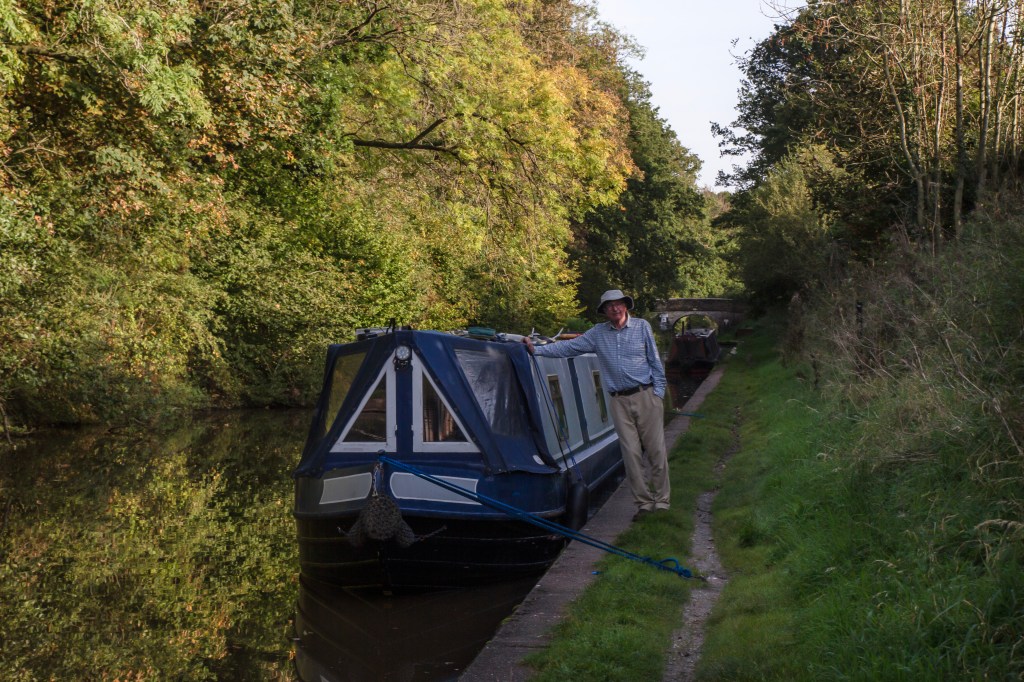
There are no locks between Gnosall and Tyrley Wharf, so it was a leisurely cruise with a stop for coffee at the Old Wharf Tea Rooms, Norbury Junction. Norbury was once an important place, linking the Shropshire Union Canal with Newport and Shrewsbury, and is still a busy place.


Tuesday October 10th
Tyrley to Audlem
The weather forecast for the next day was unremitting, heavy rain. So we wanted to cover as much distance as we could, to avoid having to travel in adverse conditions the following day.
I was up early taking a photograph of the new moon.

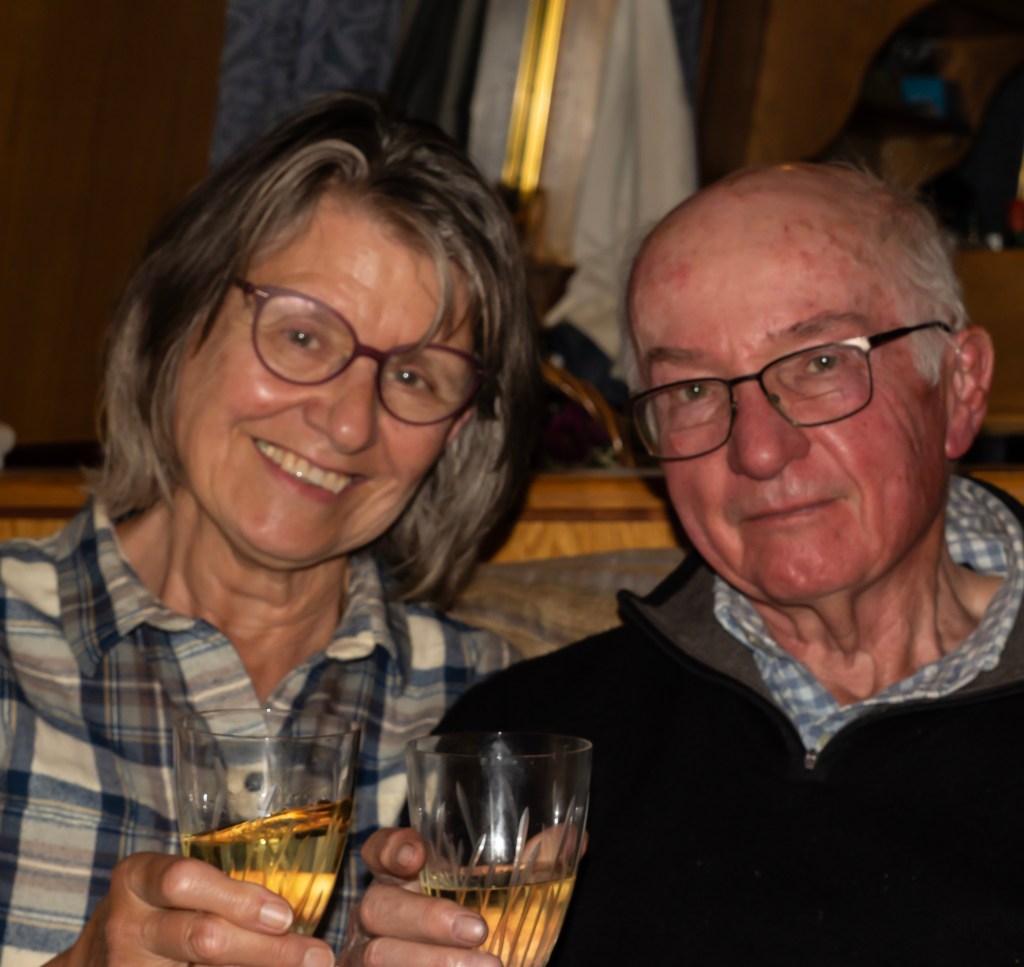
The five Tyrley Locks mark the start of the long descent to Cheshire and our destination at Swanley Bridge Marina, near Nantwich. I’d managed to leave my camera battery charger at Susie’s, and she very kindly brought it to Market Drayton for me, and took a rare photo of us on board DL.
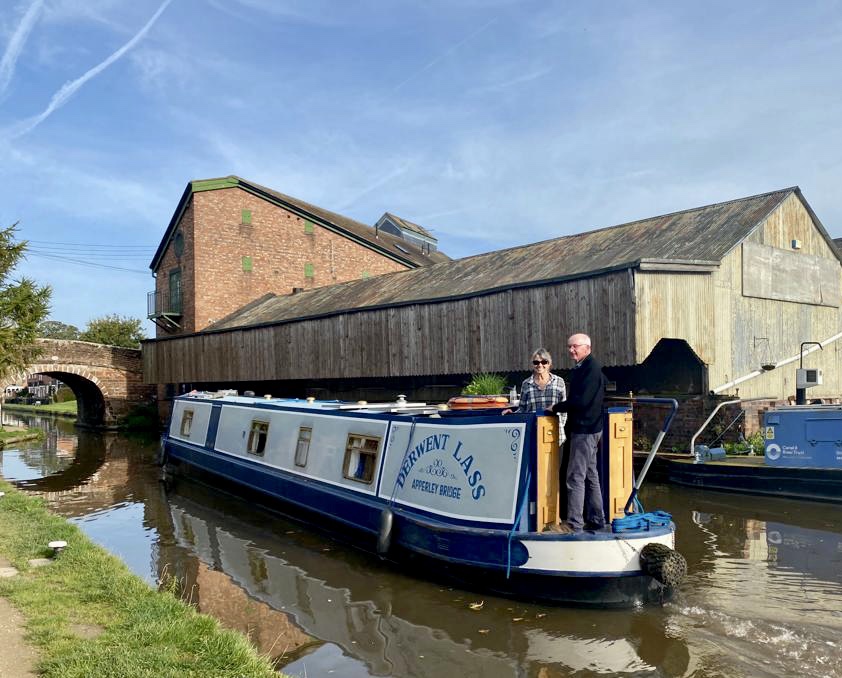
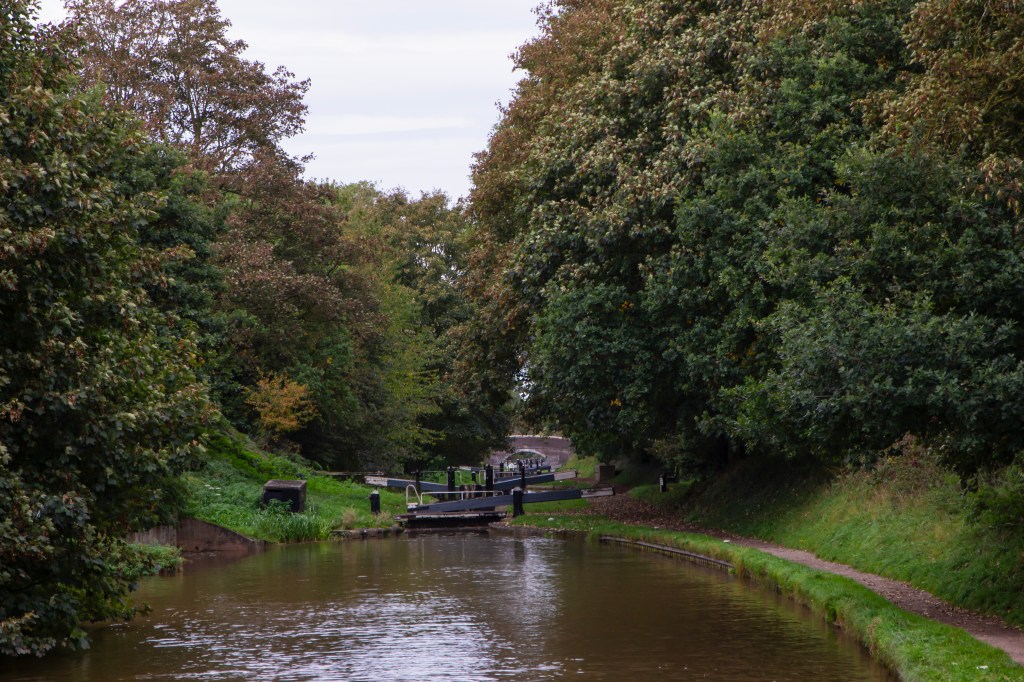
The morning sunshine didn’t last, and as we progressed through five more locks at Adderley, followed by the first eleven of the fifteen locks of the Audlem flight, it became progressively more overcast and windy, a portent of Wednesday’s weather. Including a grocery shop in Market Drayton, it had been a rather tiring day.

Thursday 0ctober 12th
Audlem to Swanley Bridge
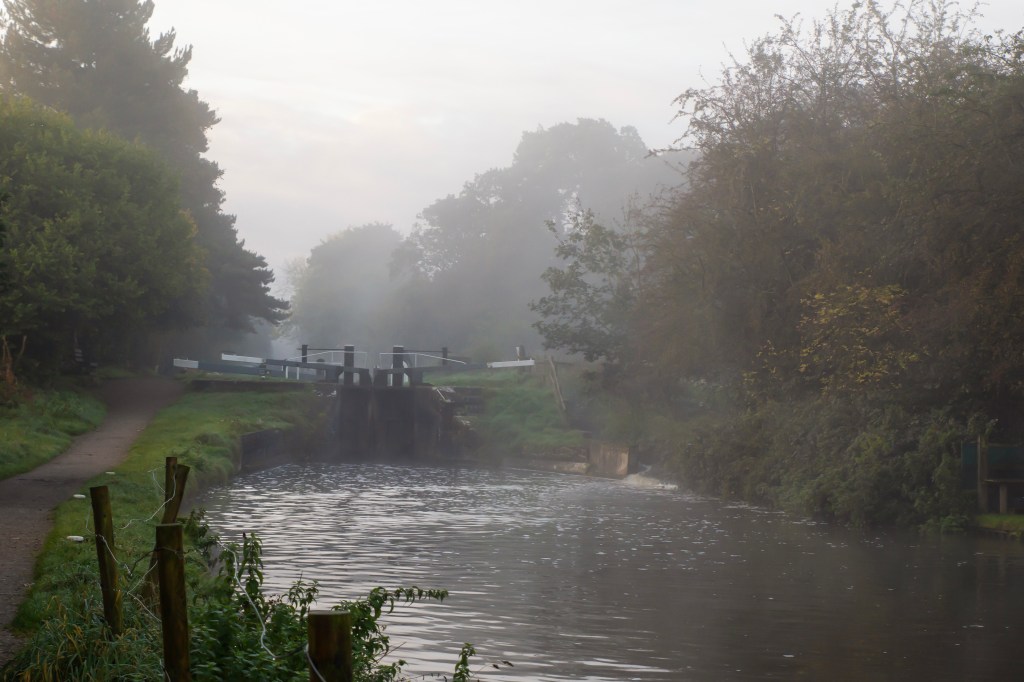
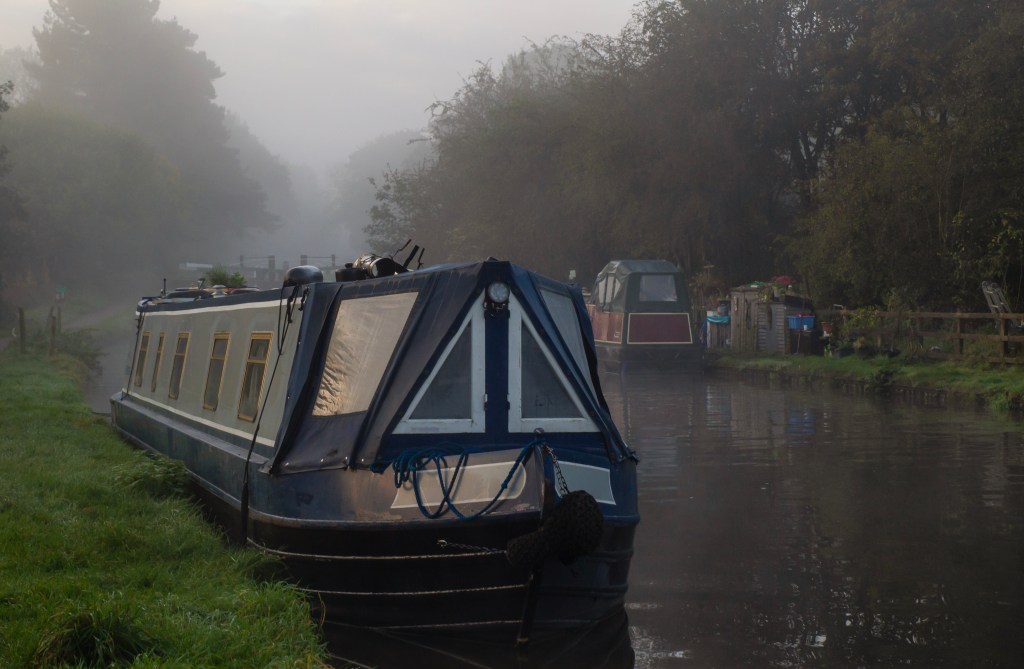
We woke to a misty autumnal morning, and the last day of the trip. There were four more locks on the Shroppie, then at Hurleston Junction we would join the Llangollen Canal. After the four Hurleston Locks, it was only a short distance to Swanley Bridge.

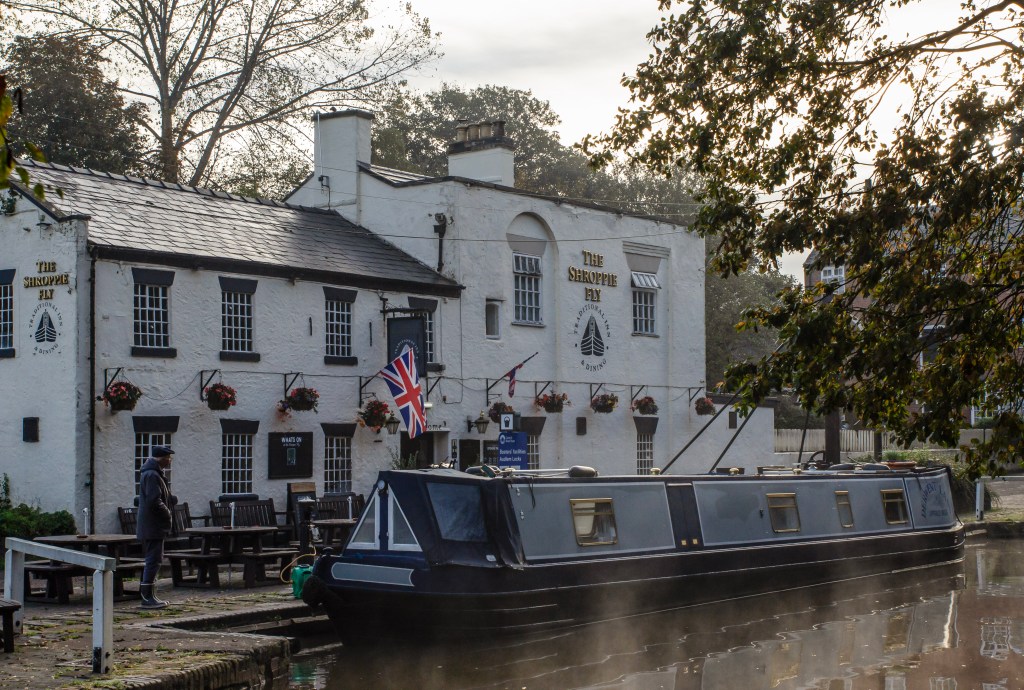
We stopped at the Shroppie Fly to take on water but sadly were too early for coffee.
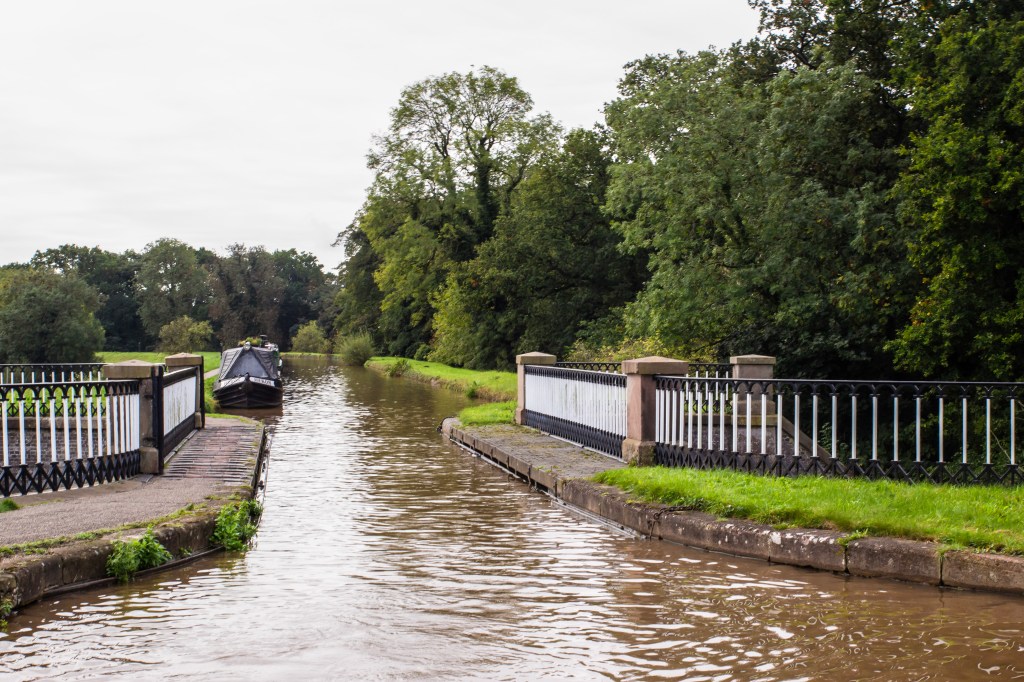


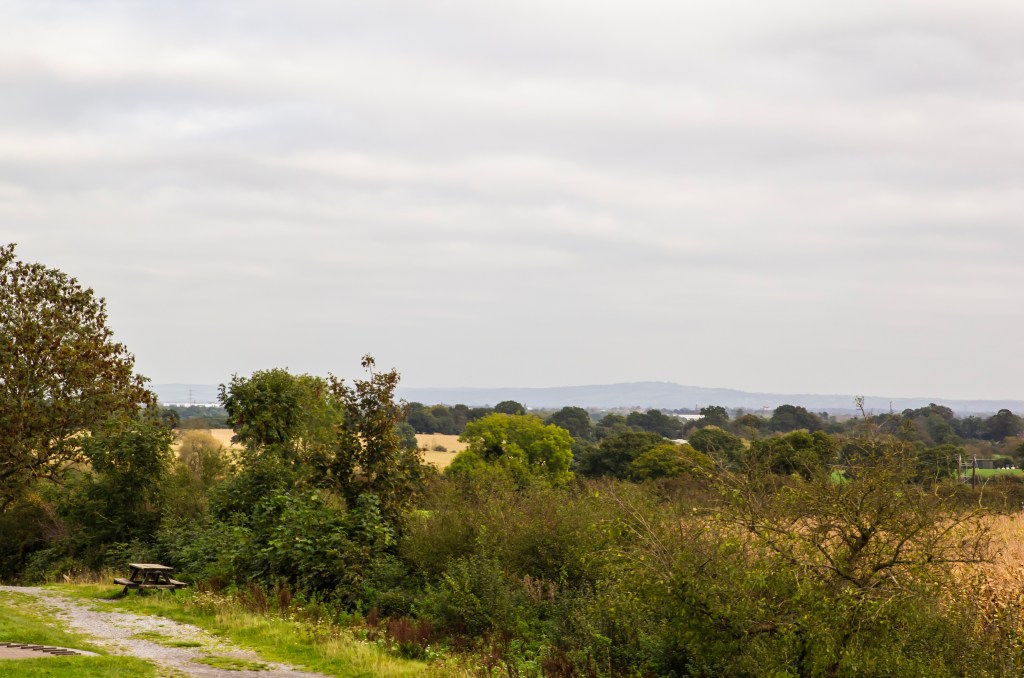
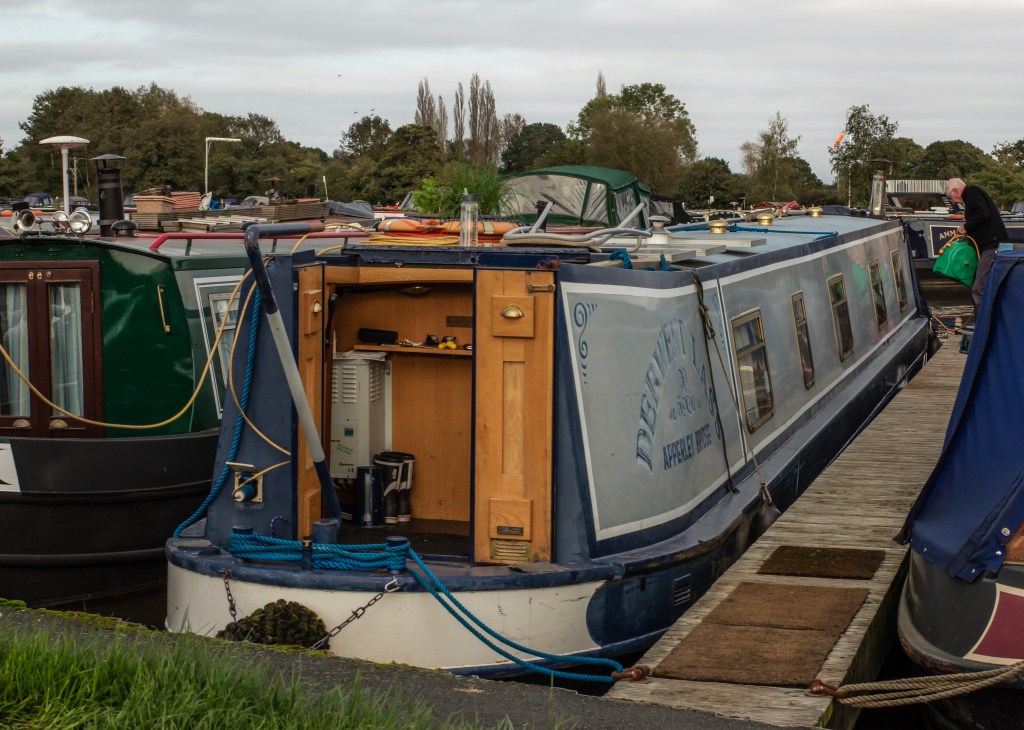
The end of the trip. Our journey from Mirfield to Swanley Bridge had taken just over seven weeks. We’d travelled 300 miles, been on nine different canals, and three different rivers, including the mighty River Trent. It was another feather in the Captain’s cap.
 Narrowboating in Yorkshire
5 replies on “Journey South”
What a wonderful account and such a nostalgia fest for me as I grew up in Nottingham. So many places which knew well as I was growing up. Did you see the carvings in the Chapter House at Southwell? They were always a treat when we visited and I used to keep track of each of the surprising things I found.
You phots are stunning. I really miss those flatlands of the East Midlands (and the Lincolnshire fens where all my father’s people farmed). I’m not familiar with the final part of your journey so that was a huge pleasure too.
I’m going to share this on Facebook for my school friends who still live thereabouts.
LikeLike
So glad you liked it and the photos! We saw the Southwell Leaves in the Minster – just stunning as the whole building was, and the staff so informative and courteous.
LikeLike
Hope you spotted the dragon – and identified the plants. It was those that sparked my interest when I was about ten.
LikeLiked by 1 person
Must confess I missed the dragon! Will just have to go back! We need to go back to go to Mr Straw’s house in Worksop – it was fully booked when we wanted to go.
LikeLike
I’m looking forward to the next instalment.
<
div dir=”ltr”>
<
blockquote type=”cite”>
LikeLiked by 1 person