Monday 17th April 2023
Bank Newton to Foulridge
After a bit of a hiatus caused partly by the need to recover from my total hip replacement, and partly by cold weather, we were able to resume our boating activities.
This time, Bob and Shirley took the boat to Leeds and then turned west on the Leeds-Liverpool Canal. We met them just past Gargrave, and they plied us with tea and fat rascals before leaving for home.
We woke early to grey skies and mist. Ian wanted to go further west, to Foulridge, the highest point of the Leeds-Liverpool, before turning round to go back to Leeds. We were moored just below the Bank Newton flight of six locks, which remain padlocked until 10am when a Canal & River Trust person comes to unlock them.
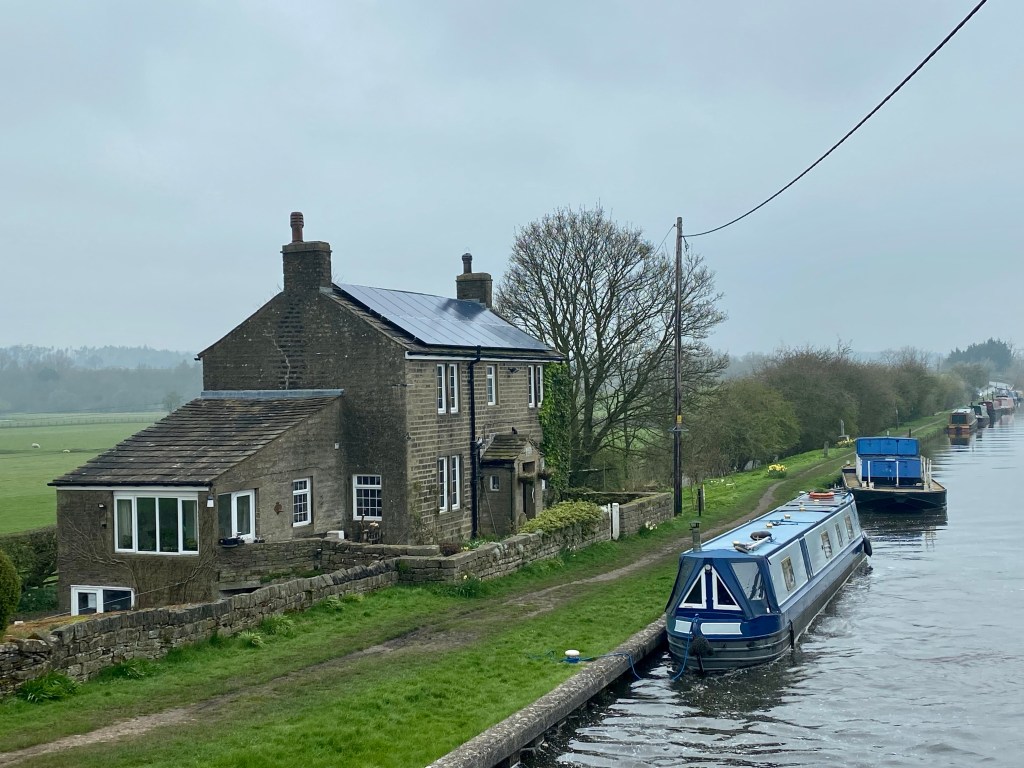
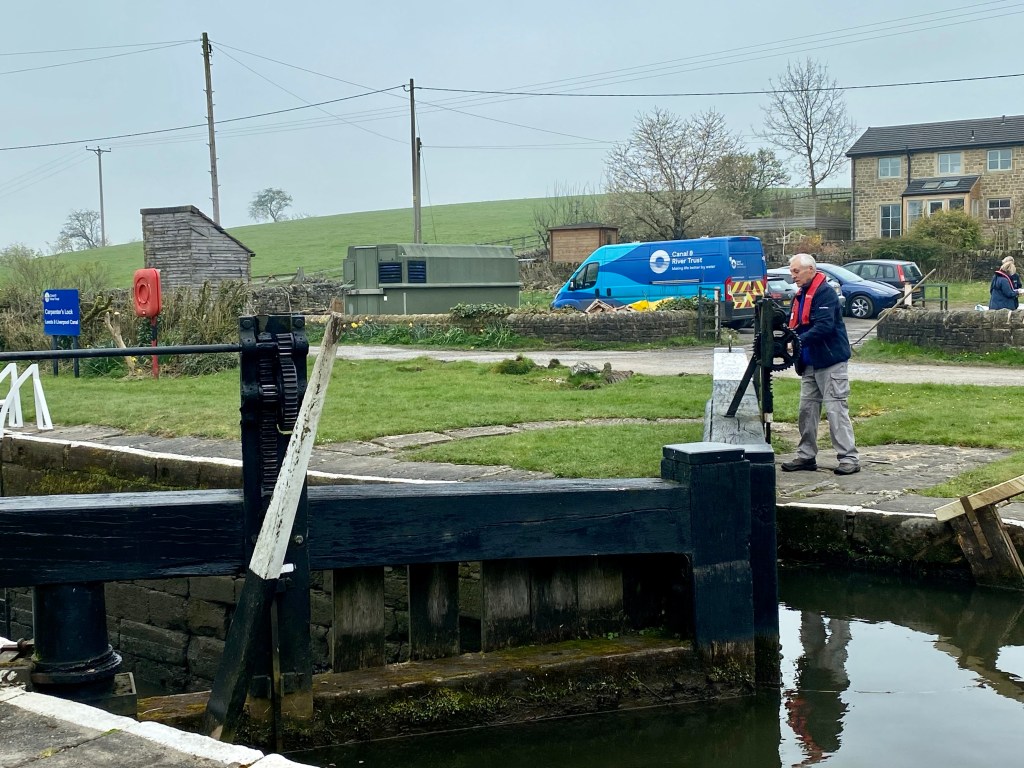
By 10 o’clock several Trust people, all volunteers, had appeared and were ready to help us go up the locks. This was just as well, because there was yet another variation of lock-winding gear to contend with. The bottom paddles had to be opened, only with extreme difficulty, by lifting a piece of wood which apparently rotated another piece of wood, deep below the surface of the water, which then opened the paddles to allow water into the lock.
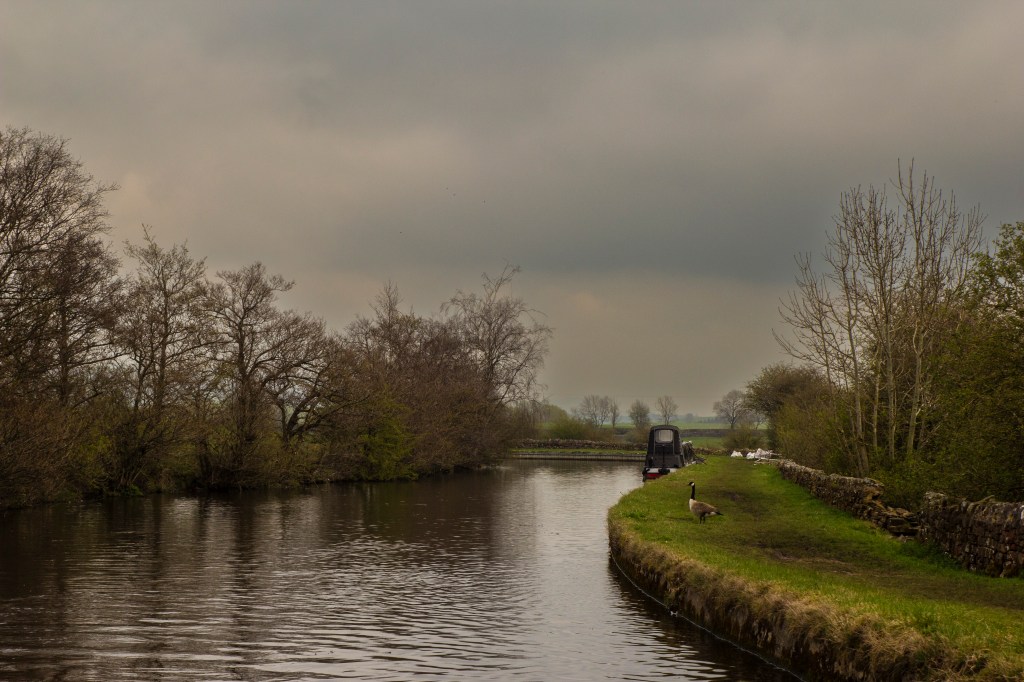

We were passing the marina at Barnoldswick when a wide-beam boat came round a corner, and cut right across Derwent Lass’ bow in order to get into its mooring space. This necessitated Ian stopping, going into reverse, then walking along the gunwale to fend off from another moored boat to turn our bow so that we could actually go forward.
The wide-beam boat was very shiny and new-looking. Ian was tempted to enquire whether it was the owners’ first boat. This veiled insult was one we heard a few years ago, when we were boating in Florida, but he refrained.
This was not the only contretemps of the day. Derwent Lass’ engine had been making suspicious noises, and about a mile from Foulridge Wharf, where we had planned to moor for the night, cut out altogether. Derwent Lass obligingly drifted to the towpath bank, where we were able to tie up and await help from the Canal Rescue Service. Advice about which wire to fiddle with was duly given over the phone, the engine burst into life, and we moored up just by the entrance to the Foulridge Tunnel.
Tuesday 18th April 2023
Foulridge to Greenberfield Bridge
The Rescue Service had said they would come the next day to check things over, but this proved unnecessary. The engineer rang up and talked Ian through what to do to avoid a repetition of the previous day’s unfortunate incident, and we were good to go.
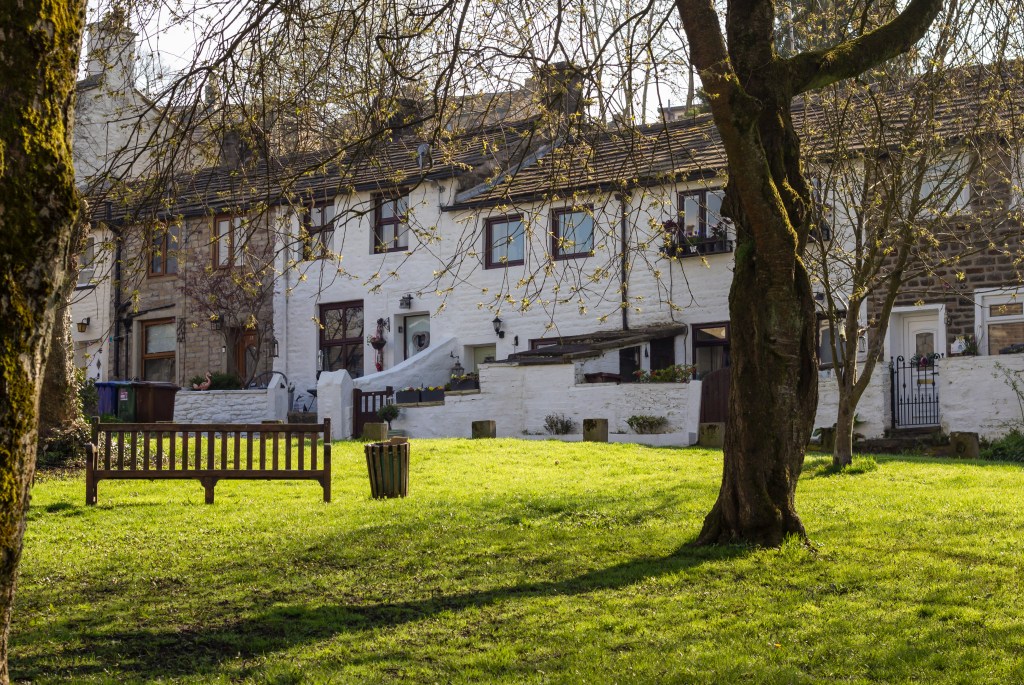
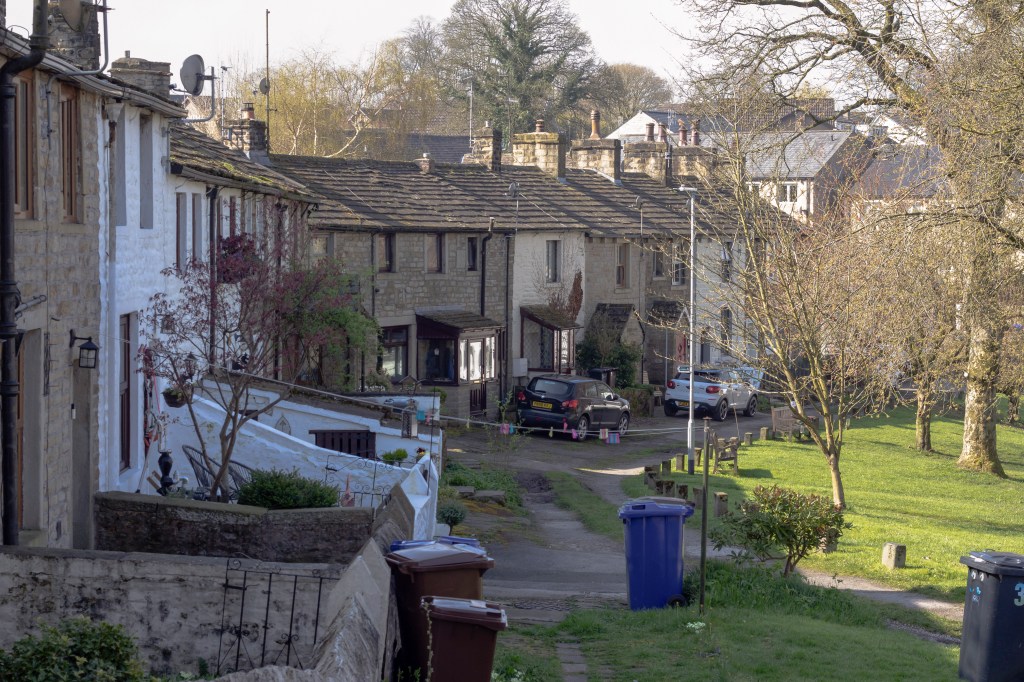
We had a walk round Foulridge before setting off. Although it’s bisected by the busy A56, the village green has a quiet charm. The village also has a good butcher and baker and I always like to buy from local shops if I can.
Misleadingly, the Nicholson’s Guide shows a winding hole (a widening of the canal where narrowboats can turn round) adjacent to the Foulridge Tunnel entrance, but this proved to be an inaccurate depiction. We had gone past the winding hole, and there was nowhere to turn the boat around. Ian had to reverse the boat about a quarter of a mile before we got back to the winding hole. Reversing a narrowboat isn’t easy because you can’t steer when they’re in reverse gear, but he managed it eventually.
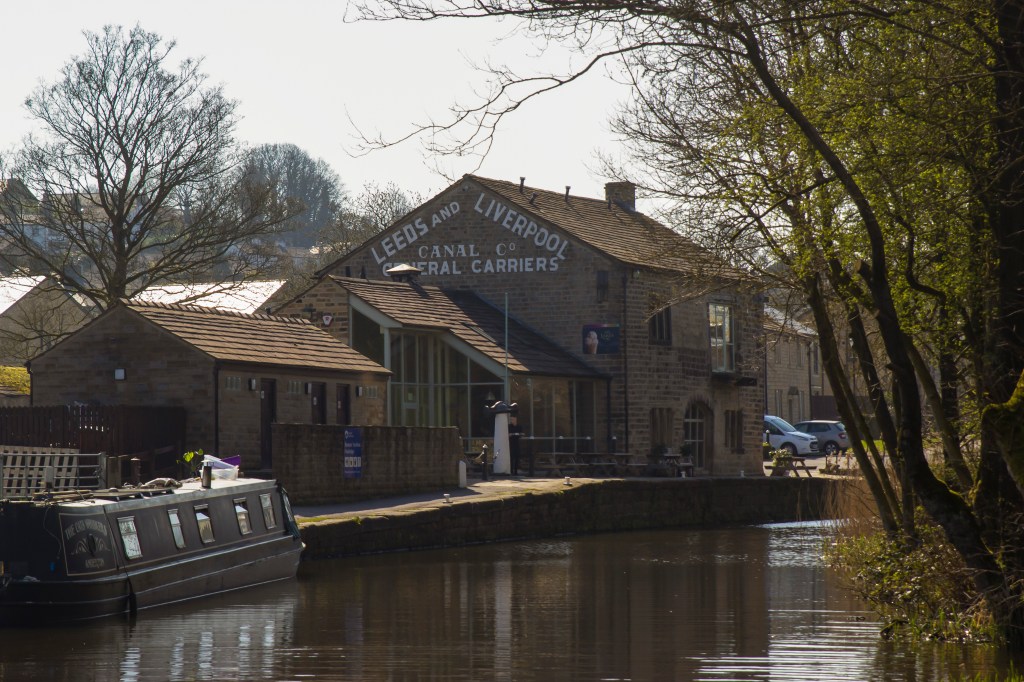
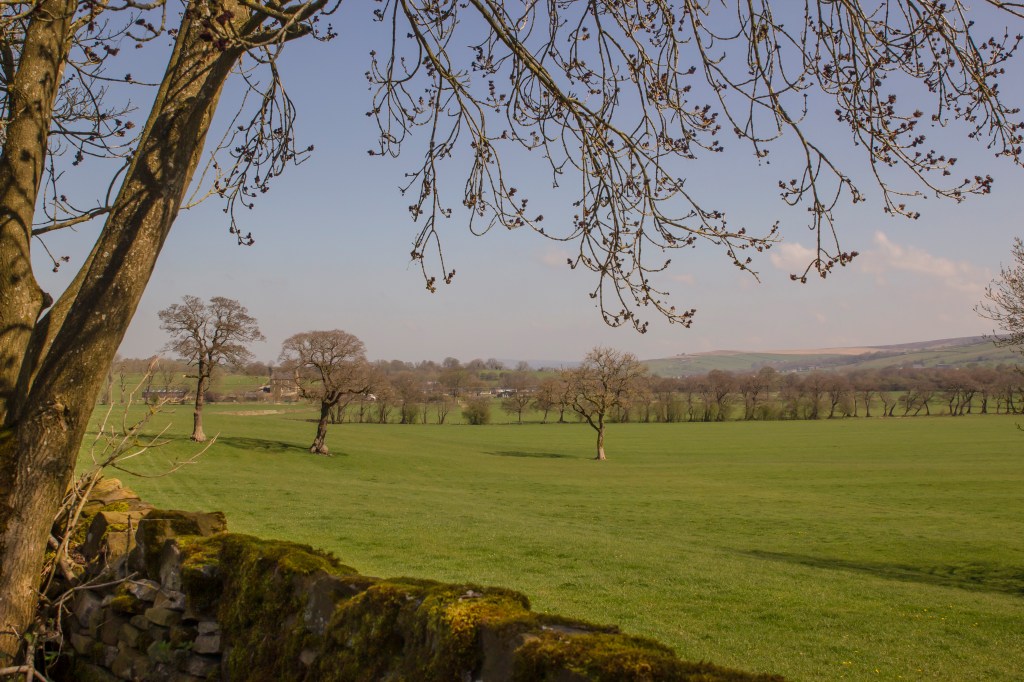
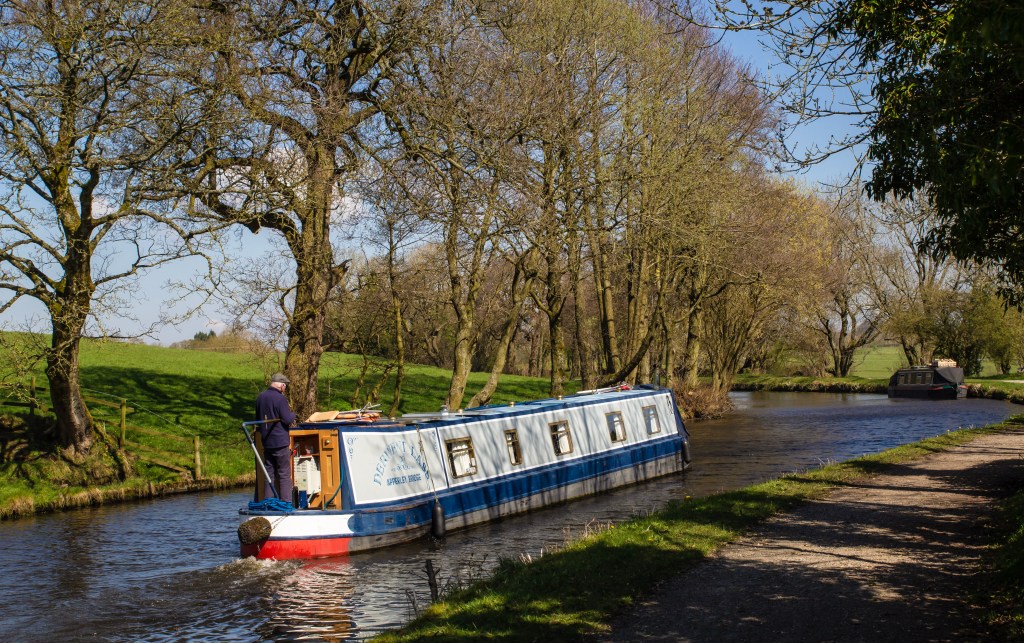
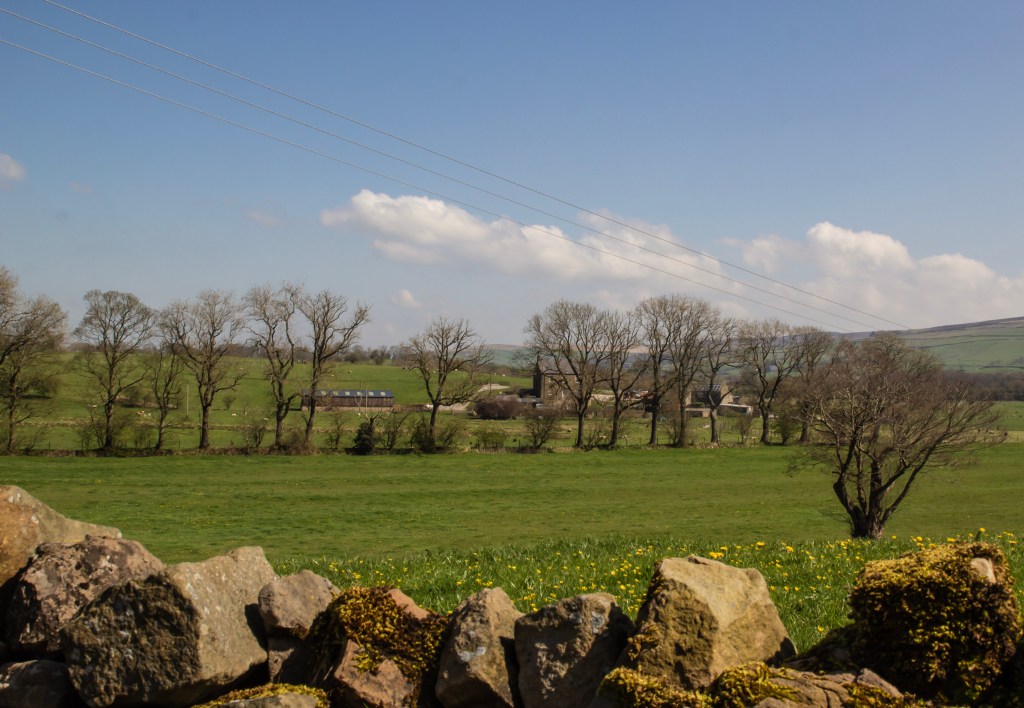
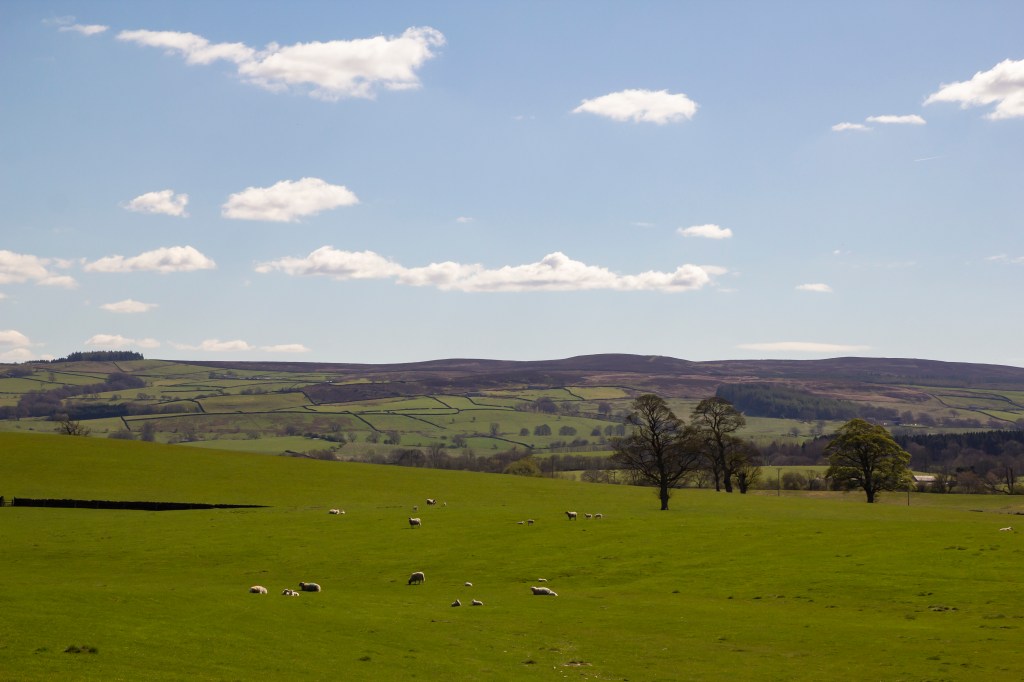
It was a glorious day with the late spring sunshine lighting up the fells around the waterway.
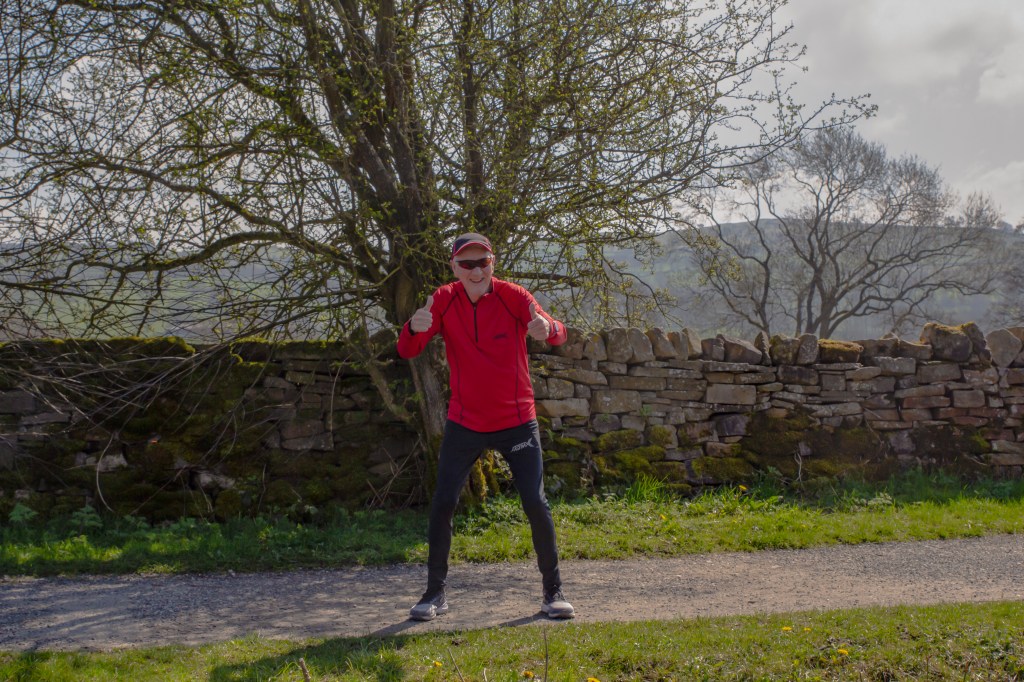
I’m always interested in the passersby but a bit reluctant to ask them if I can take their photograph. But this gentleman actually asked me to photograph him.

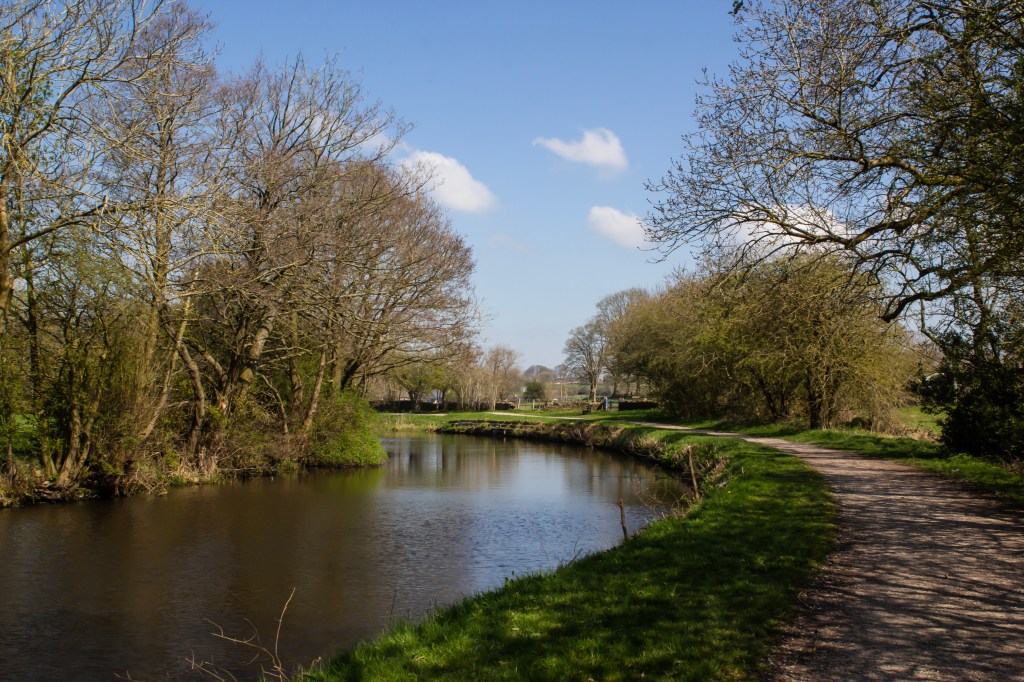
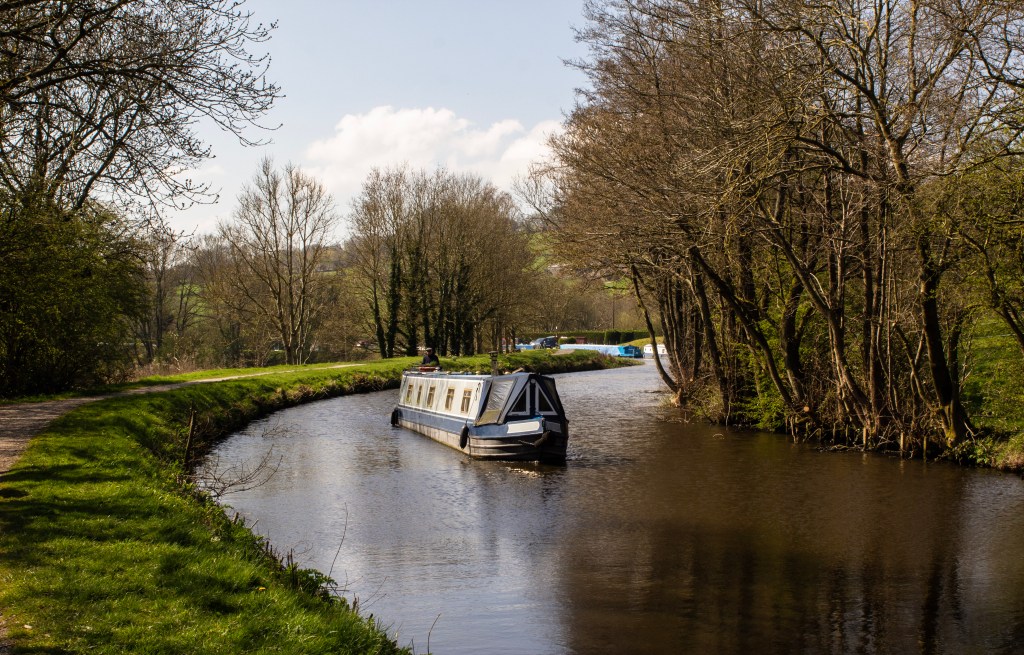
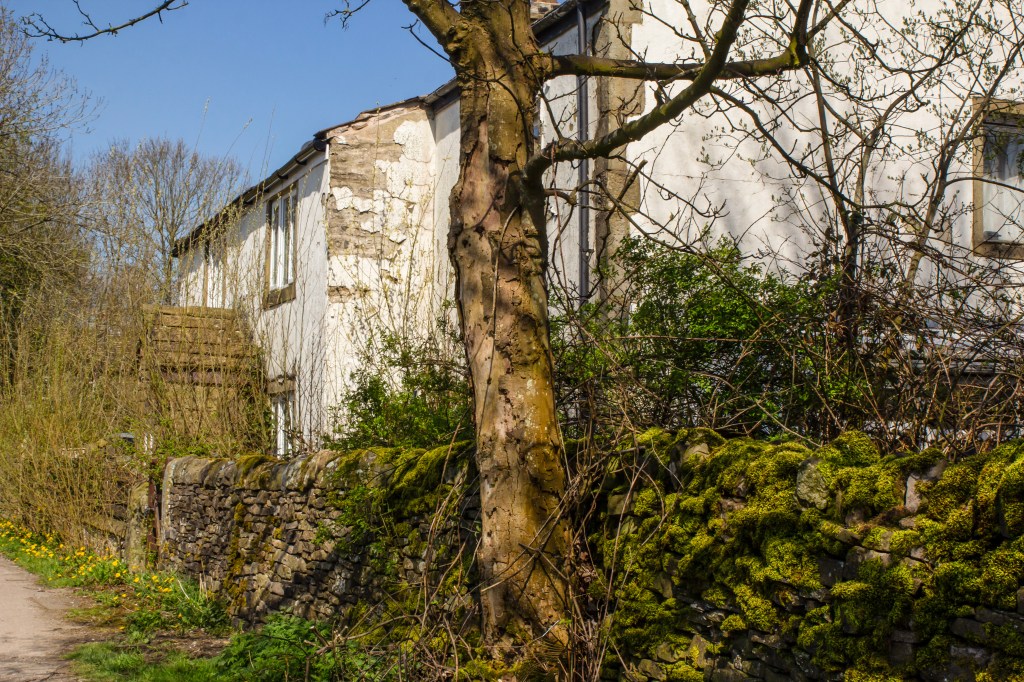
We’d been looking forward to a pub lunch at the historic Anchor Inn in Salterforth, only to find that it is now permanently closed.

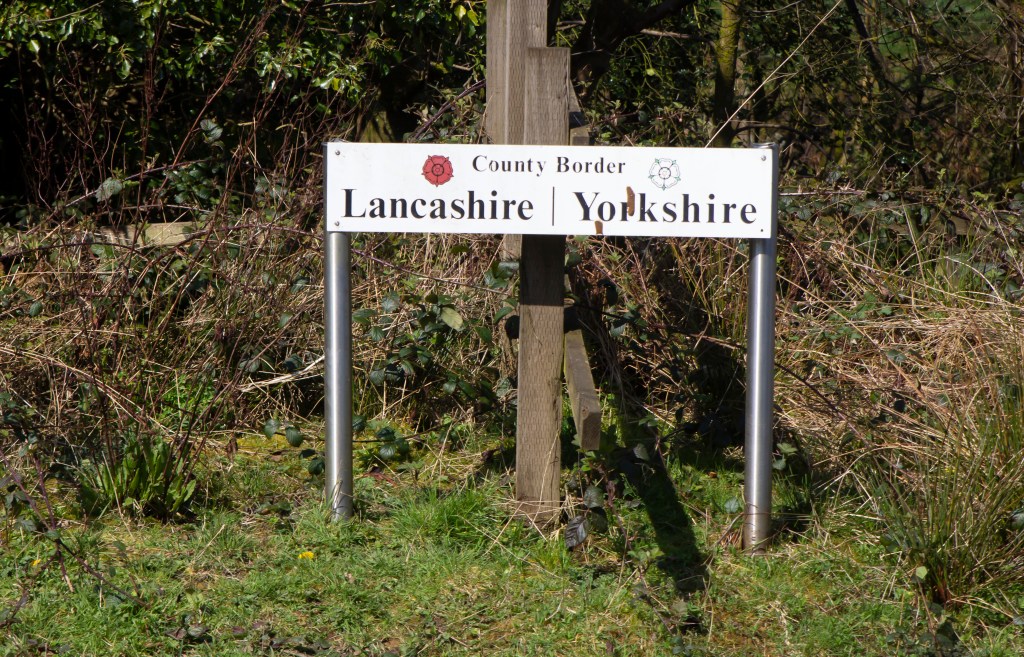
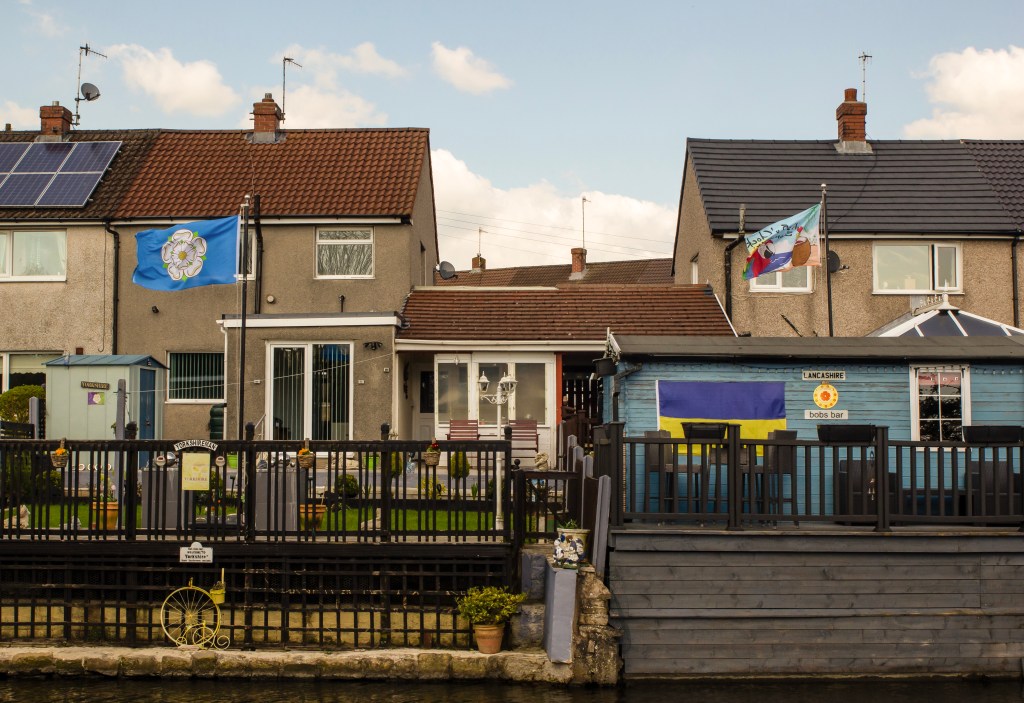
Although Barnoldswick is most definitely within the County of Lancashire, one resident was clearly asserting his Yorkshire allegiances, with his neighbour retaliating in kind.
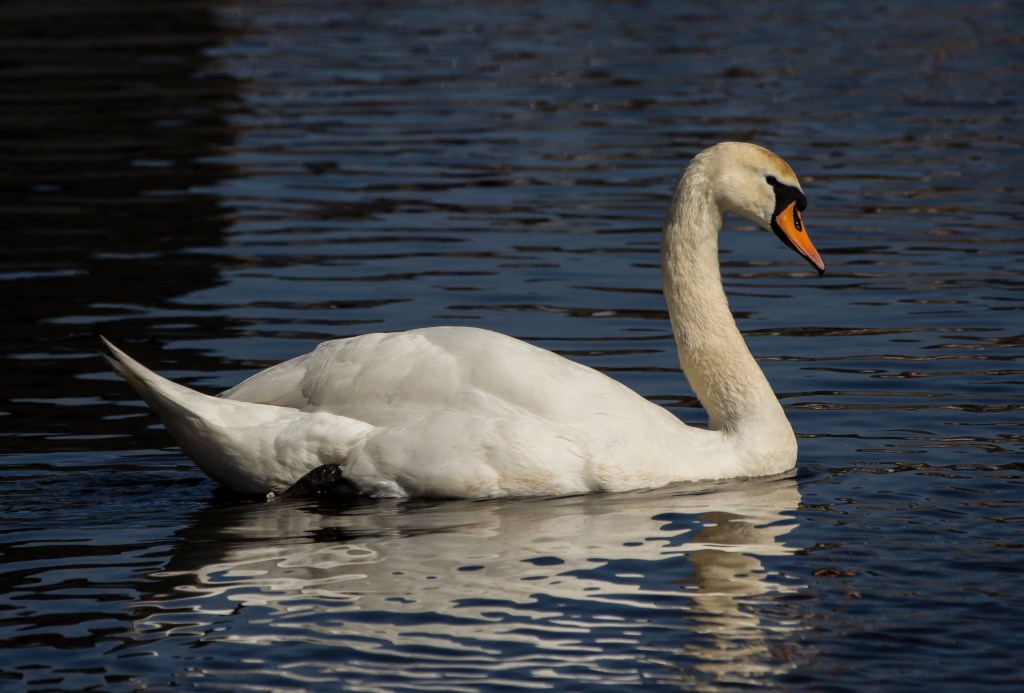
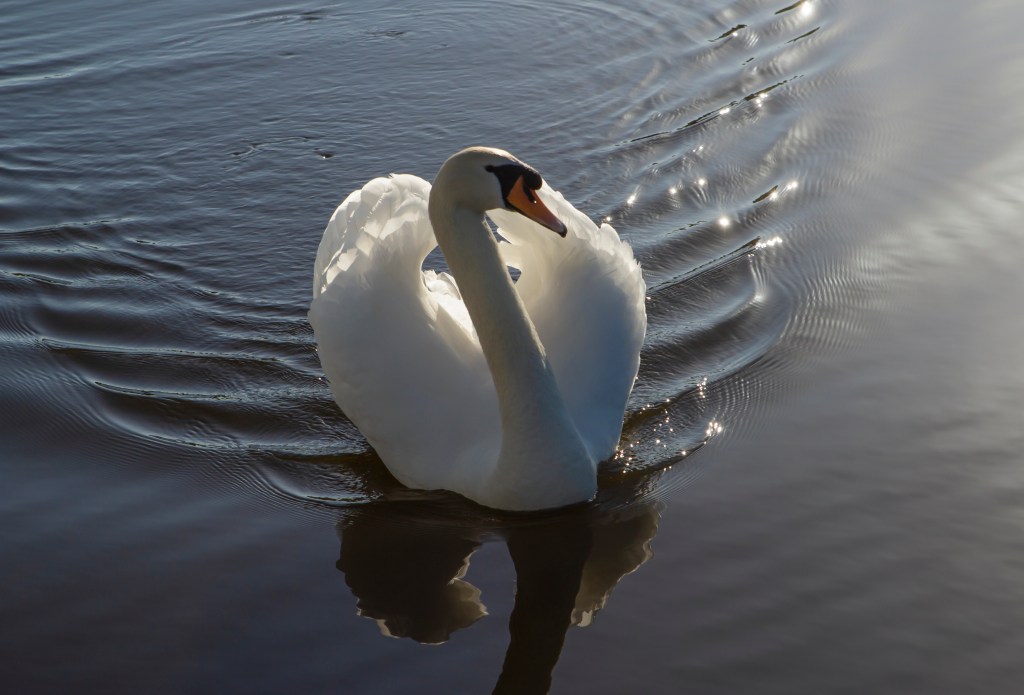
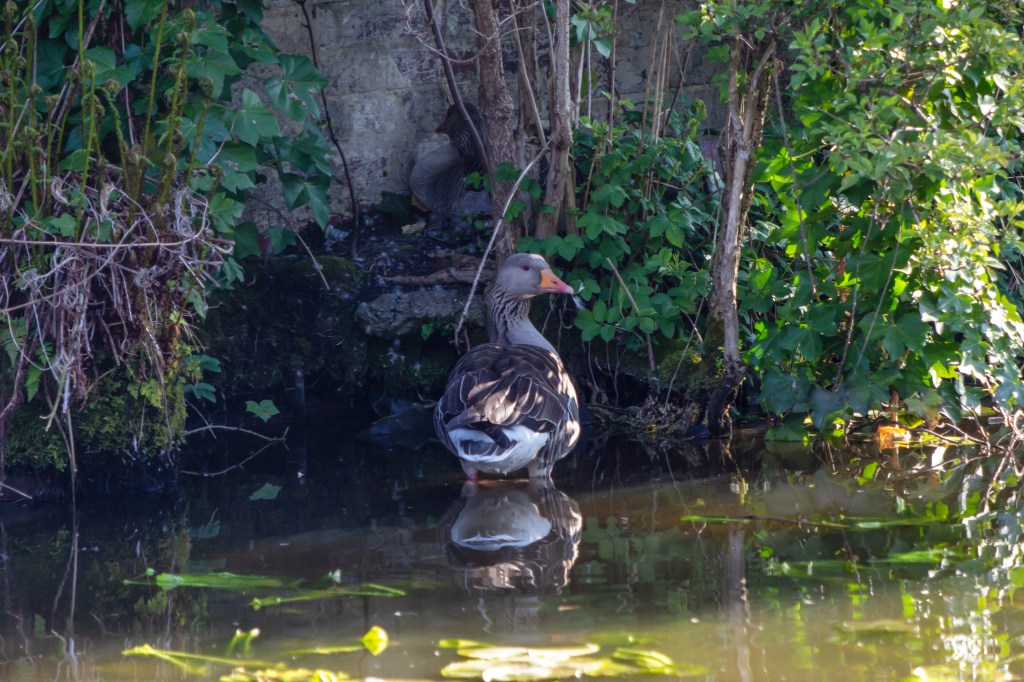
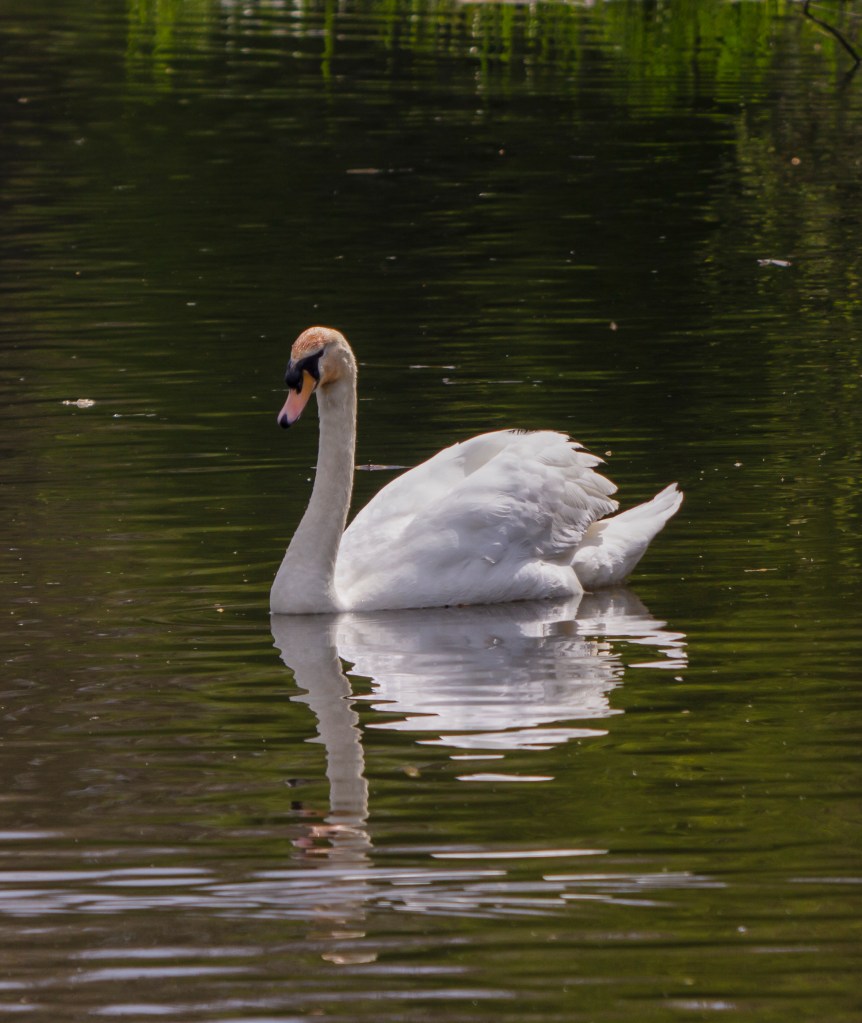
We moored up at the top of Greenber Locks, with a swan for company.
Wednesday April 19th
Greenberfield to Bank Newton
There was a slight delay to the proceedings. Firstly, we were told by a C&R Trust person that even though the locks weren’t actually padlocked and there was nothing to stop us going down, using them before the prescribed time of 10am is frowned upon. The C&R Trust people like to supervise boaters to make sure no-one does anything silly, like leaving a paddle open.
Another boat was waiting for the locks to open, and we agreed we’d go through together. This saves a lot of time and conserves water too.
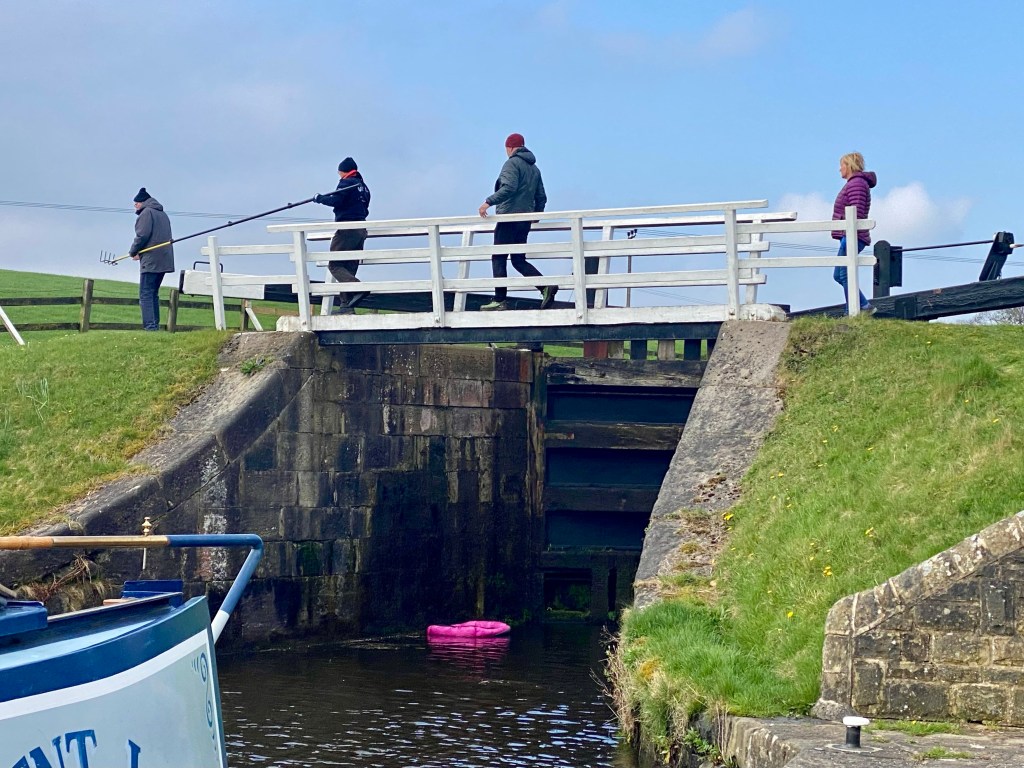
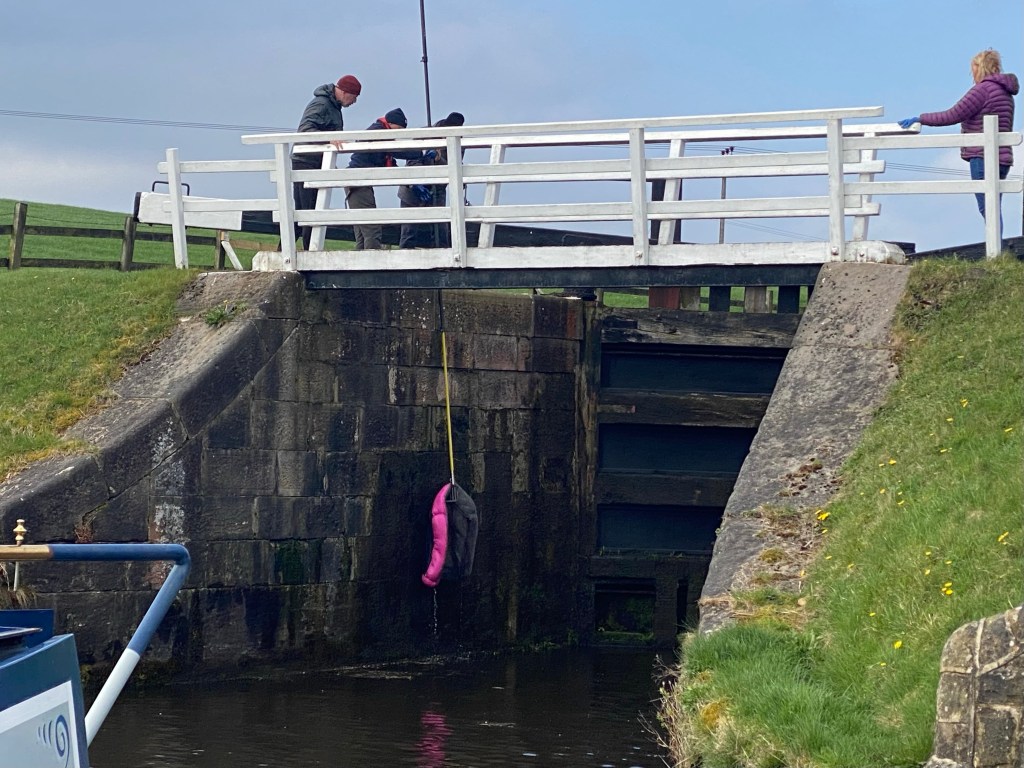
Then, we spotted something pink floating in the water near to the lock gate. The other boat had two dogs on it, and their bed had blown off the roof of the boat in the wind.
Ian offered to reverse Derwent Lass and fish it out. But C&R Trust man came to the rescue with a very long-handled fork, specially designed to retrieve objects which boaters had carelessly allowed to fall into the canal.
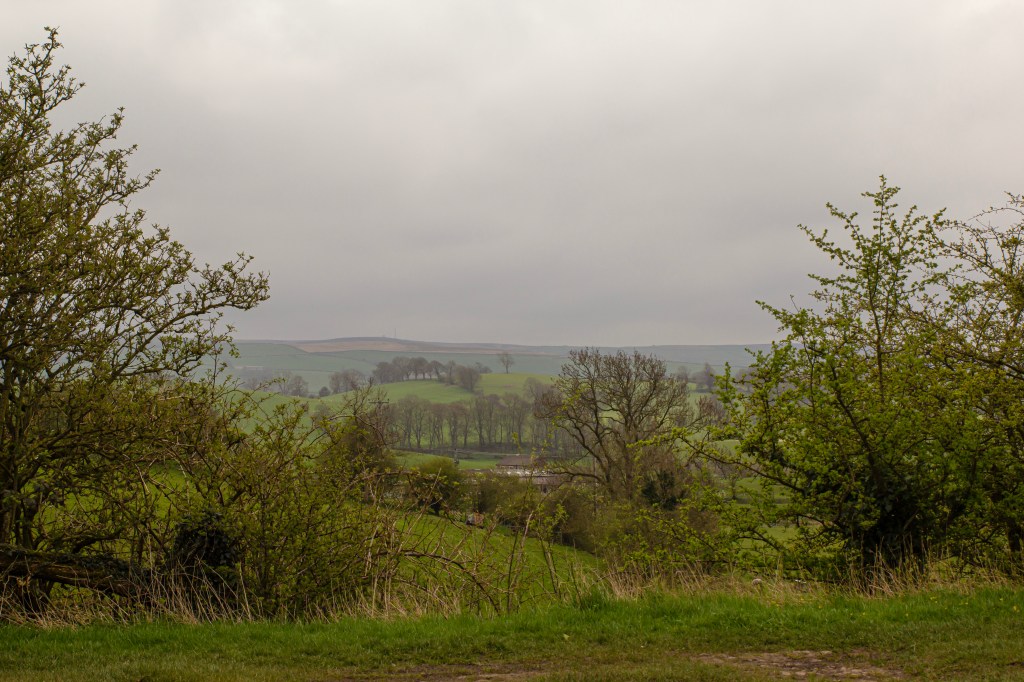
The canal then meandered through the lovely countryside to the flight of six locks at Bank Newton. This wasn’t so arduous as it might have been. Another boat shared the locks with us, and we again had help from the Trust volunteers.
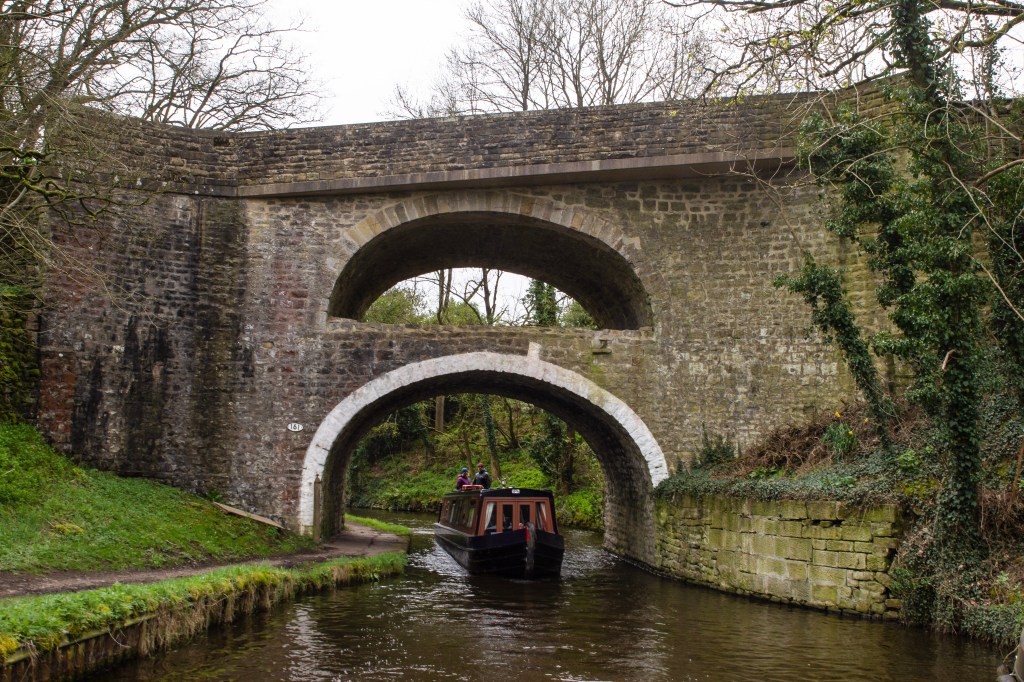
Unique on the waterways, the double-arched bridge at East Marton is listed by Historic England. The lower arch is the original packhorse bridge, thought to have been built around 1790. The upper arch was added to carry motorised traffic along the A59.

We stopped for a late lunch just after the bottom lock, where we’d taken over from Bob and Shirley. Then we were thwarted. The wind had become so strong that every time Ian tried to push the bow out, the boat was just blown back into the bank. We’d intended to get to Skipton to go out for a meal with friends, but the safe option was to stay put, rather than risk the possibility of getting into an even worse position.
Fortunately there was road access to the mooring and Andy and Lisa very kindly came to pick us up, and we had a very convivial evening in the Woolly Sheep pub in Skipton.
Thursday 20th April 2023
Bank Newton to Skipton
The wind had died down sufficiently to allow us to go on our way to Skipton and we had another day of glorious sunshine.
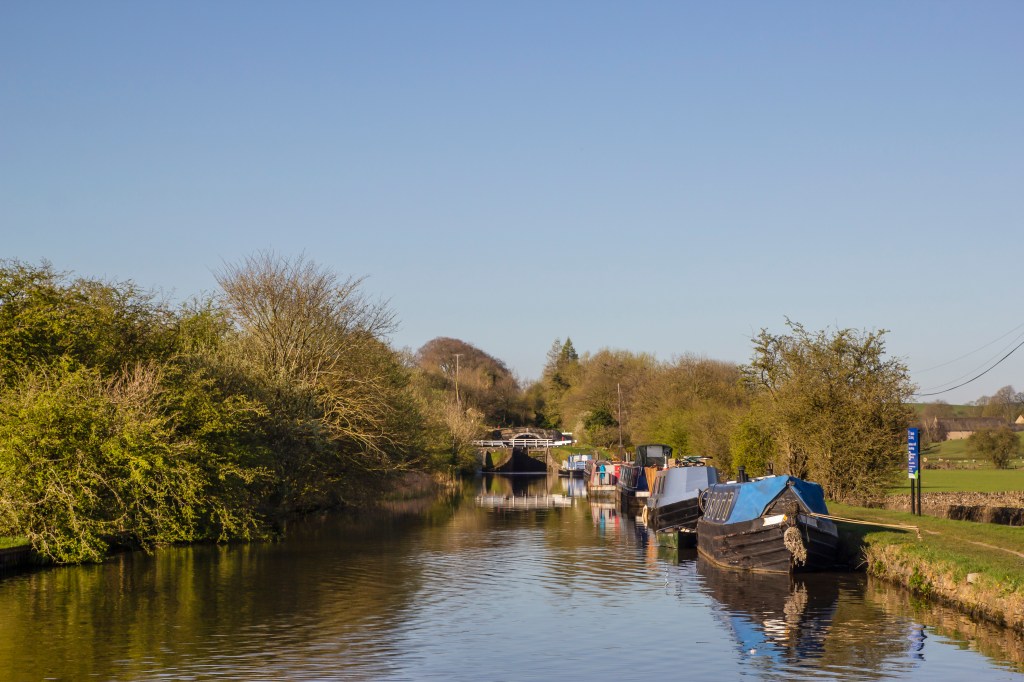
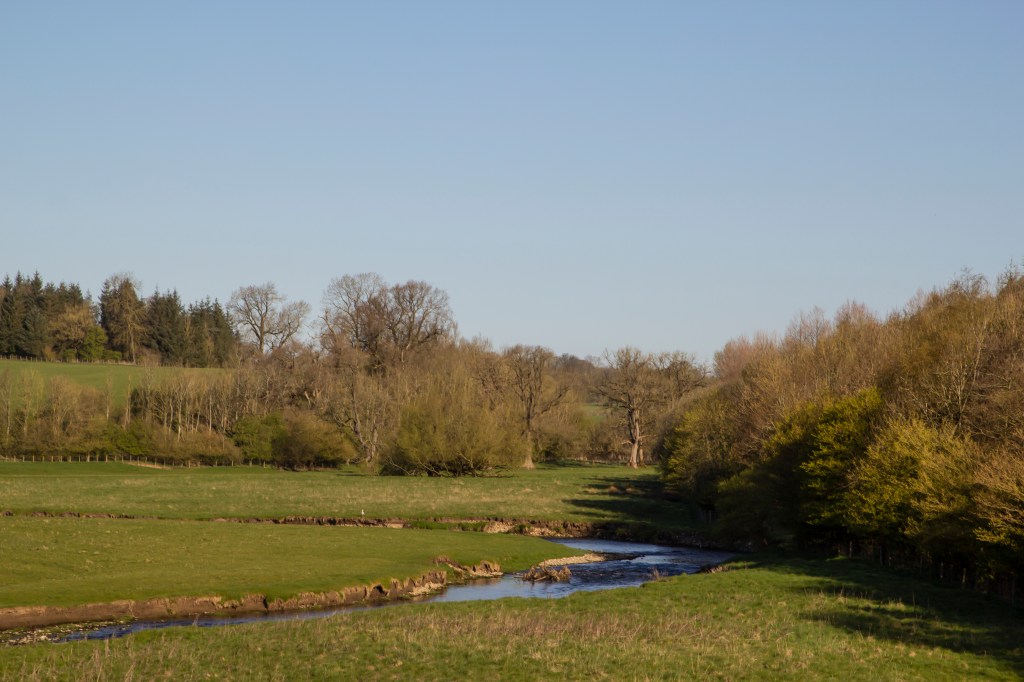
At Priestholme, the canal crosses the River Aire over a small aqueduct and then follows the river all the way to Leeds.
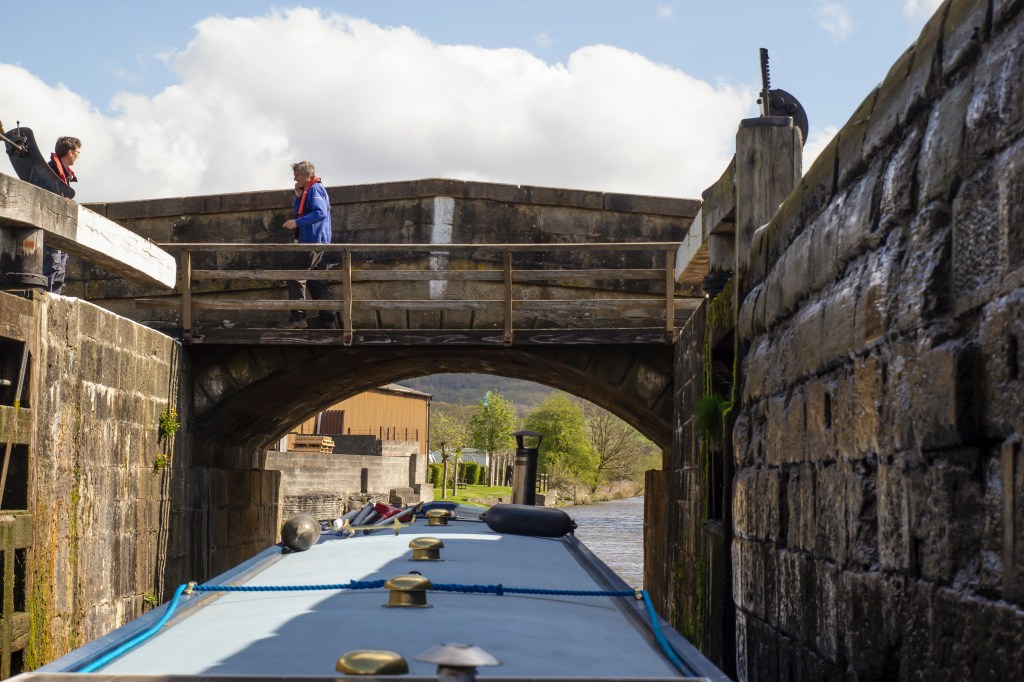
Beyond Holme Bridge Lock, two miles east of Gargrave, the canal follows the contour as far as Bingley Five Rise Locks, 11 miles away.


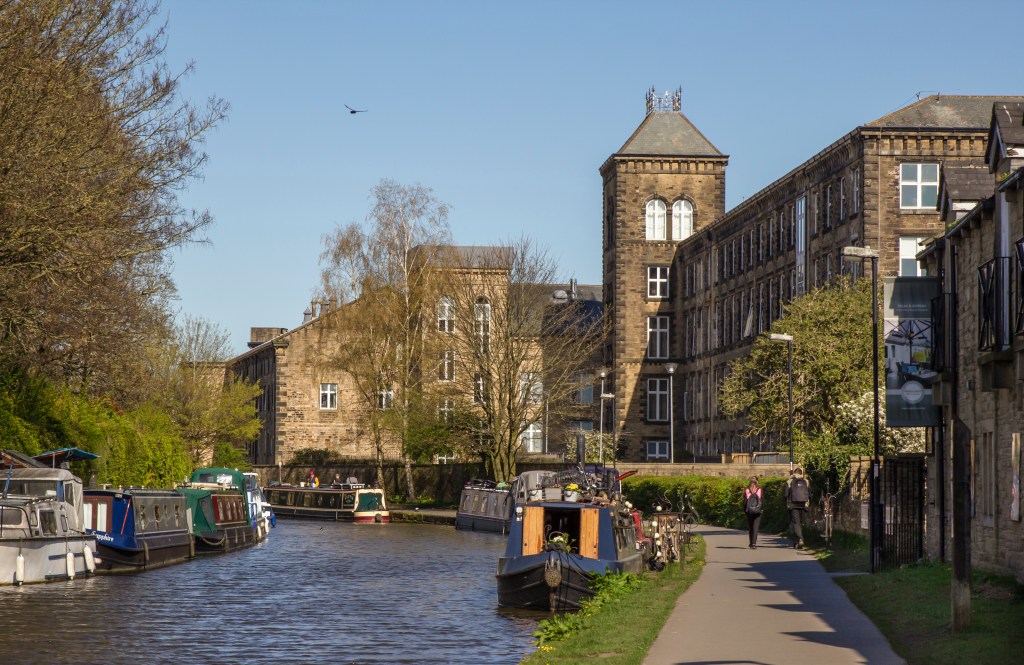
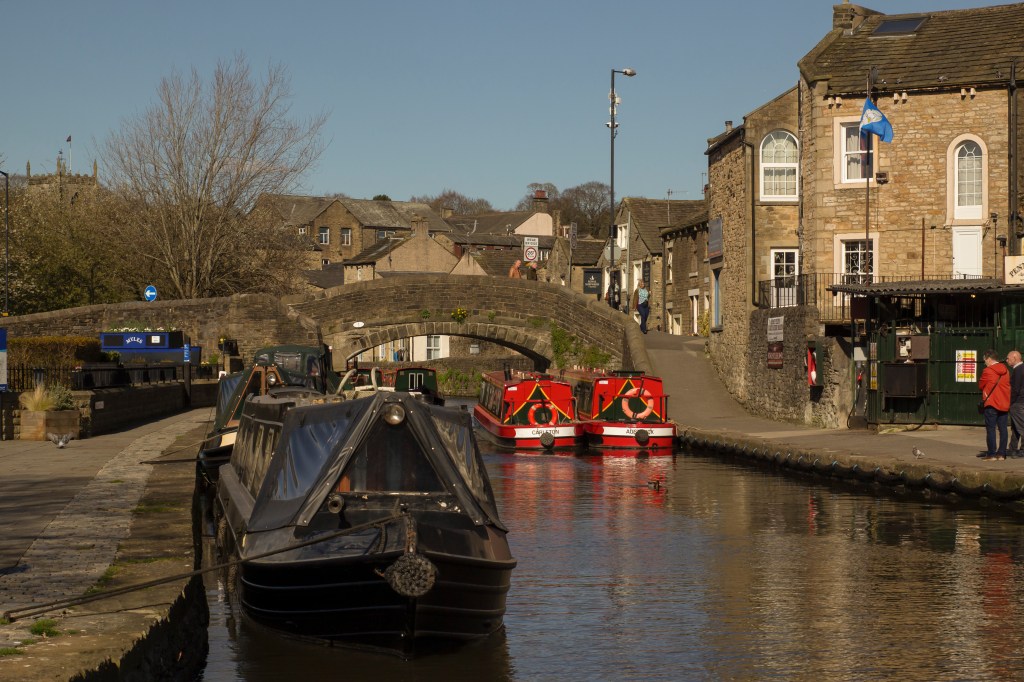
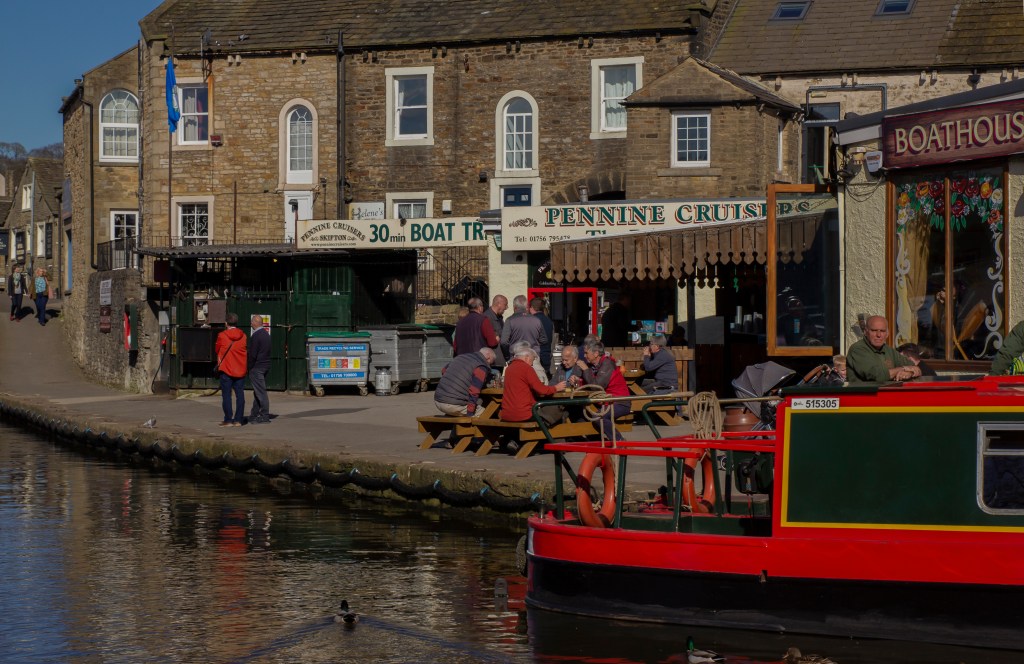
Although there was respite from working the locks, this did not mean an easy time for the crew. The new challenge was from the many heavy swing bridges, most of which had to be worked manually. But we got to Skipton just as the local school children were being let out, and I was surprised and pleased to receive offers of assistance from some friendly sixth-formers.

Friday April 21st
Skipton
It was still very windy and spending the day in Skipton seemed a better option than battling the elements trying to steer Derwent Lass anywhere. First stop, Caffe Capo on Swadford Street.


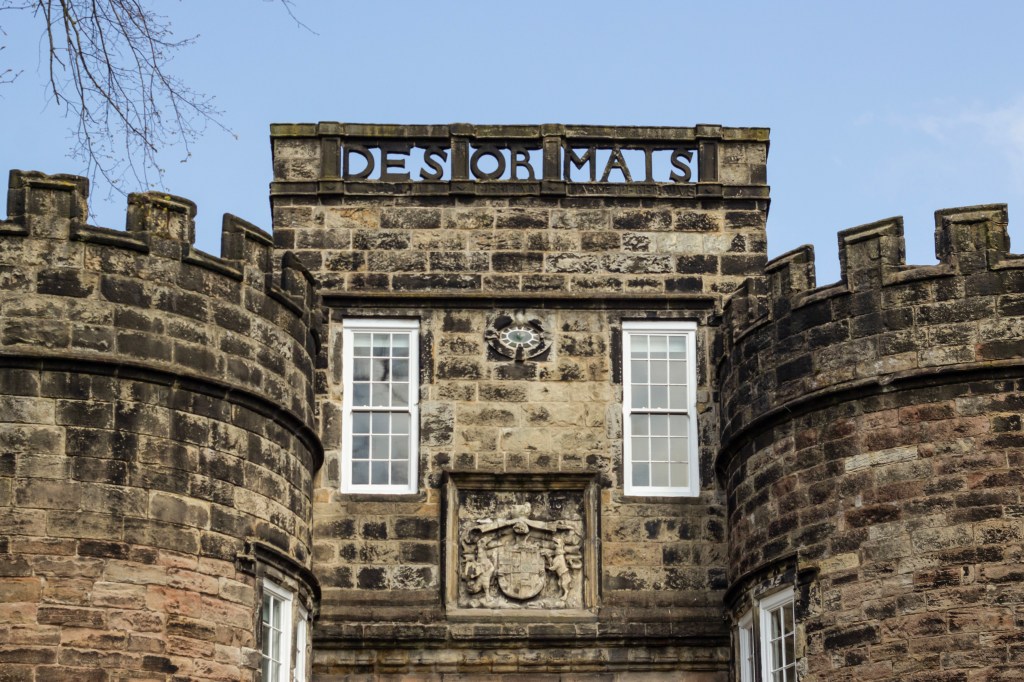
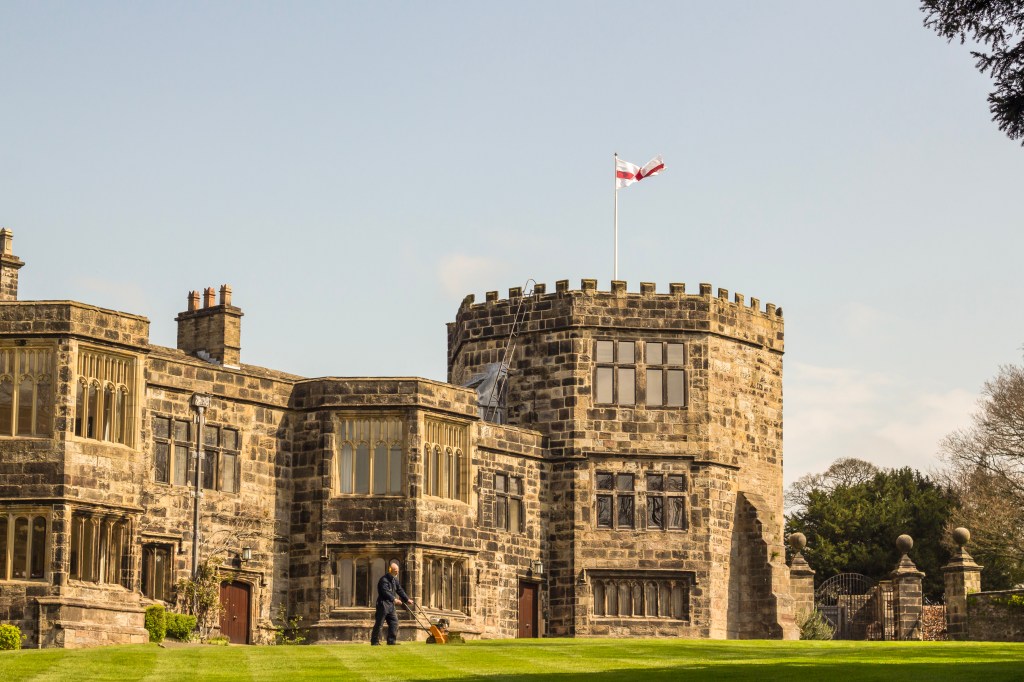
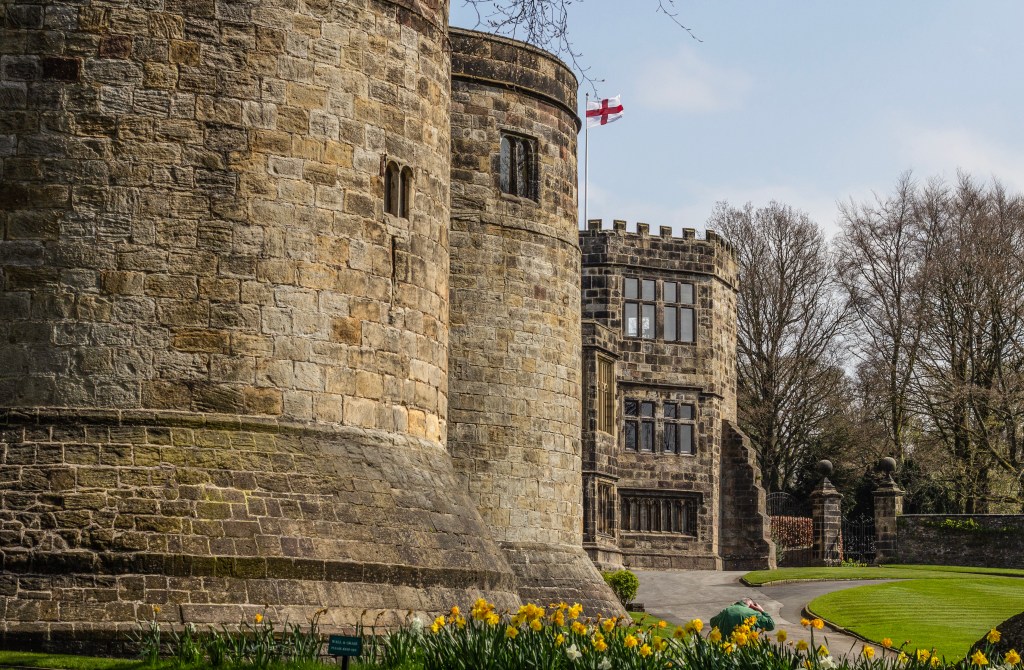
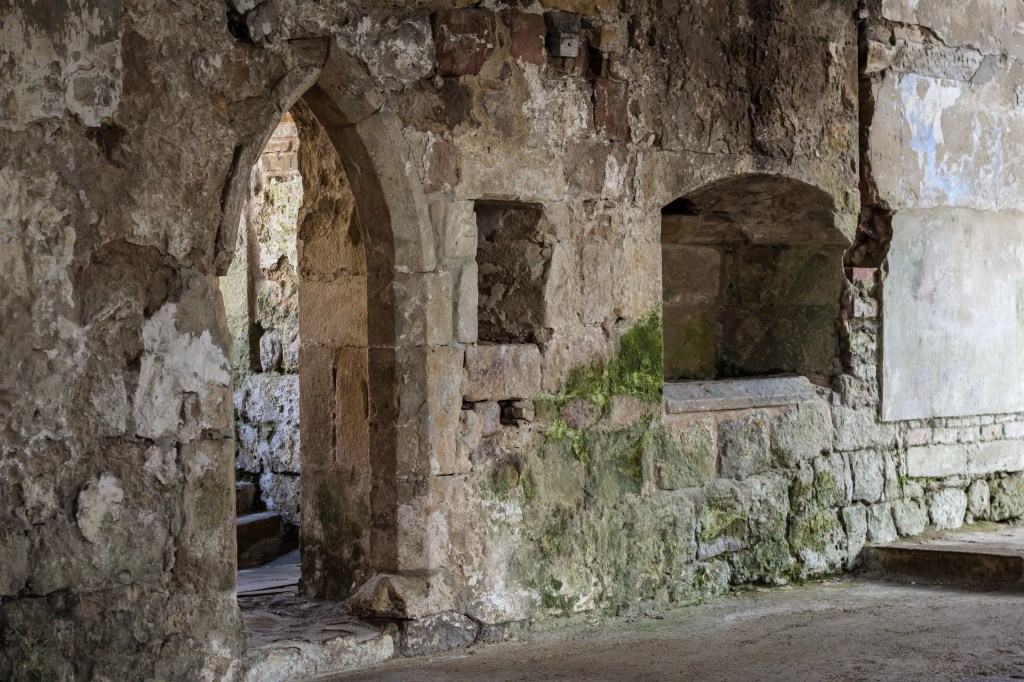
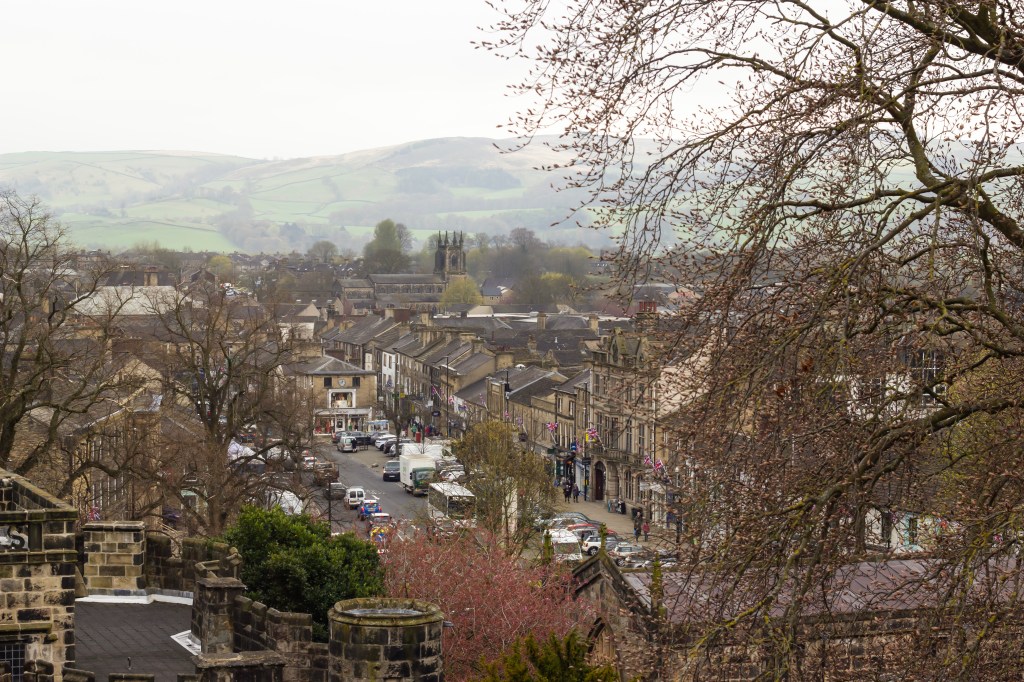
In a commanding position overlooking the market place and High Street sits Skipton Castle, built around 1090 by Robert de Romille, lord of the estates of Bolton Abbey.
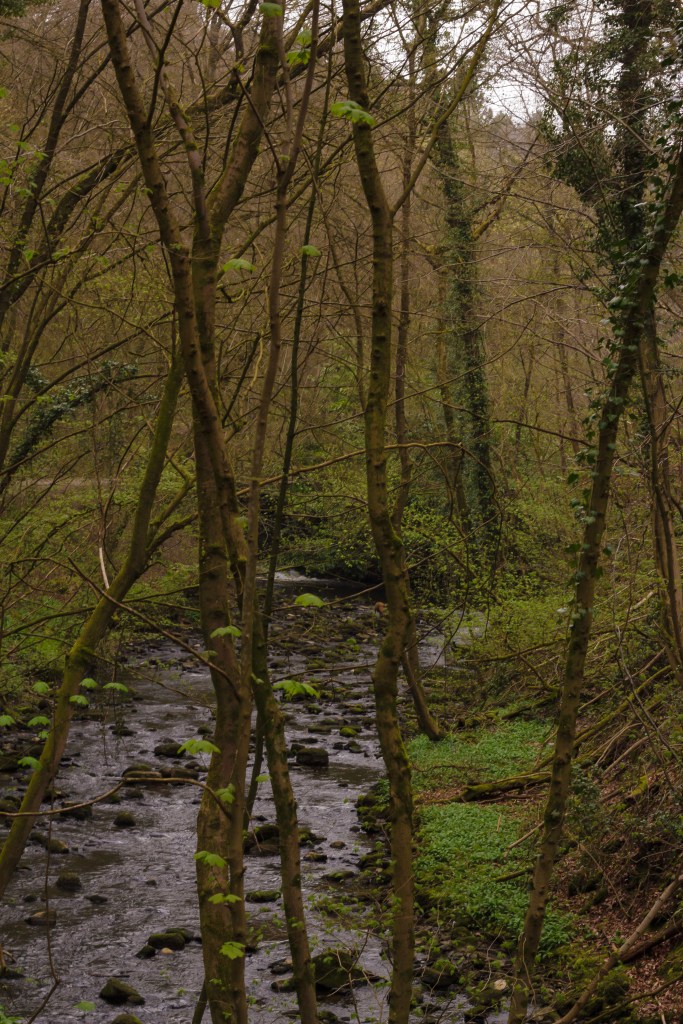
After the castle, we had a very good lunch at the ….pub and then a walk in the rain through Skipton Castle Woods which rise above the castle itself.

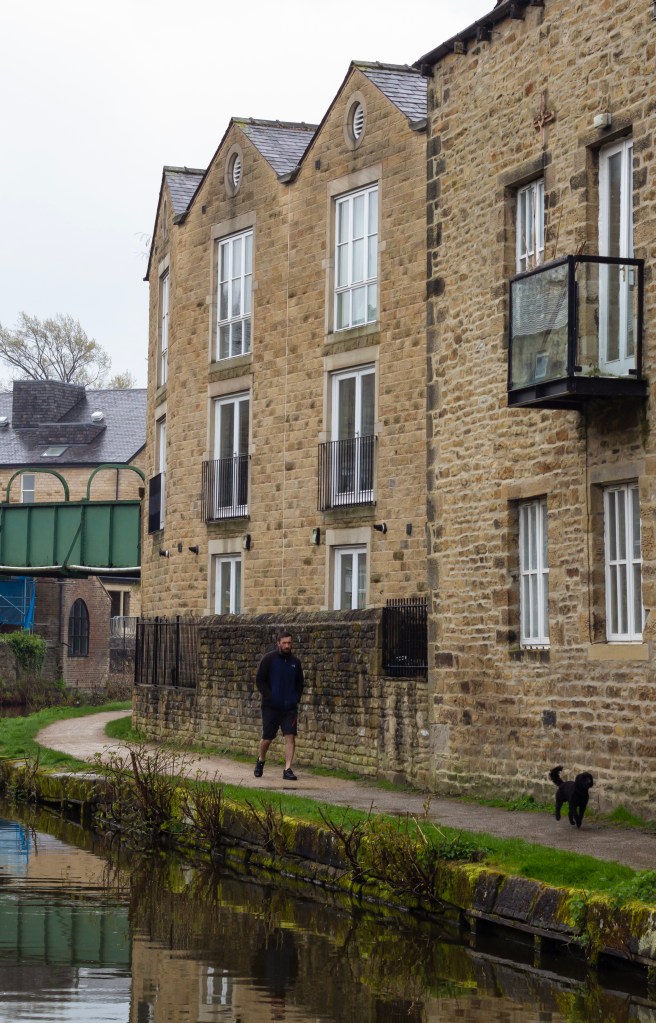
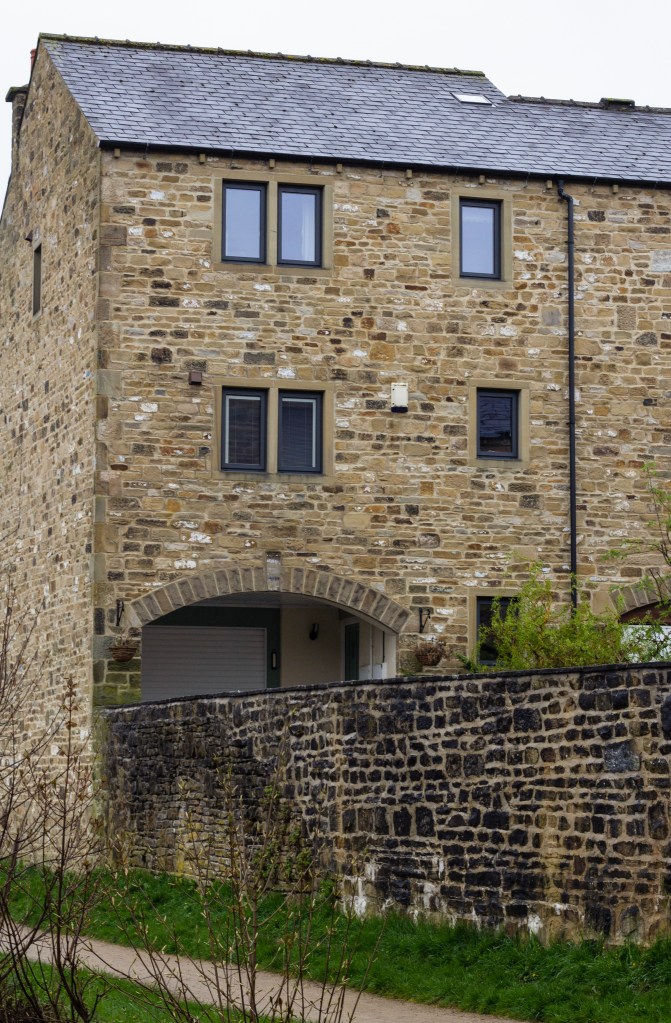
When we got back to Derwent Lass, we were met with a repeat of the toilet mishap we had first encountered at York. We had failed to notice that the water pump was running continuously, and this had been caused (again) by a non-return valve getting stuck and (clean) water flooding the loo. It had also emptied the water tank, so we had no water and no functioning loo.
Fortunately we weren’t far from a water point. Unfortunately, we were pointing in the wrong direction and Ian had to reverse the boat a quarter of a mile to fill up.
Saturday April 22
Skipton to Bridge 194 via Kildwick
We were quite near Snaygill Boats, where we could get a pump-out and toilet facilities were thus resumed. This more than compensated for the miserable, drizzly weather.
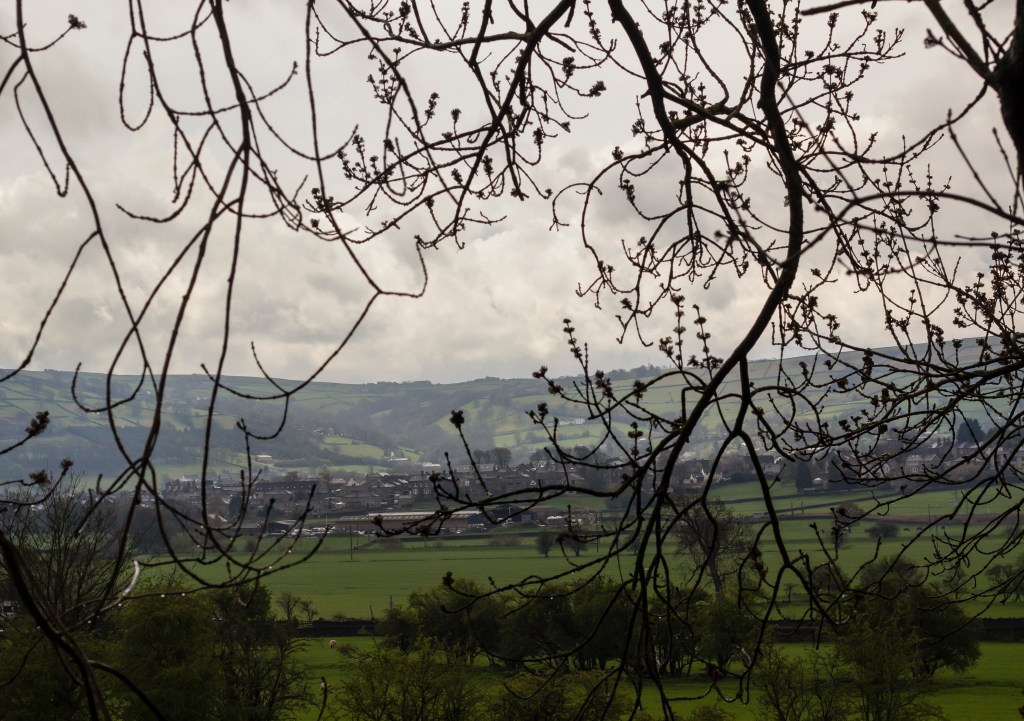
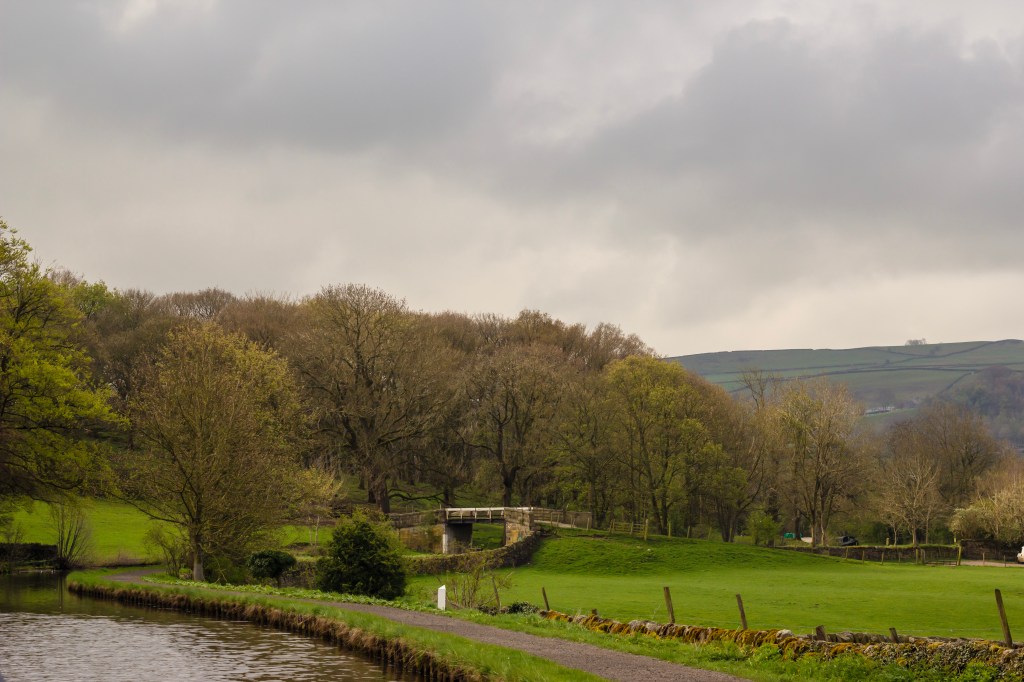
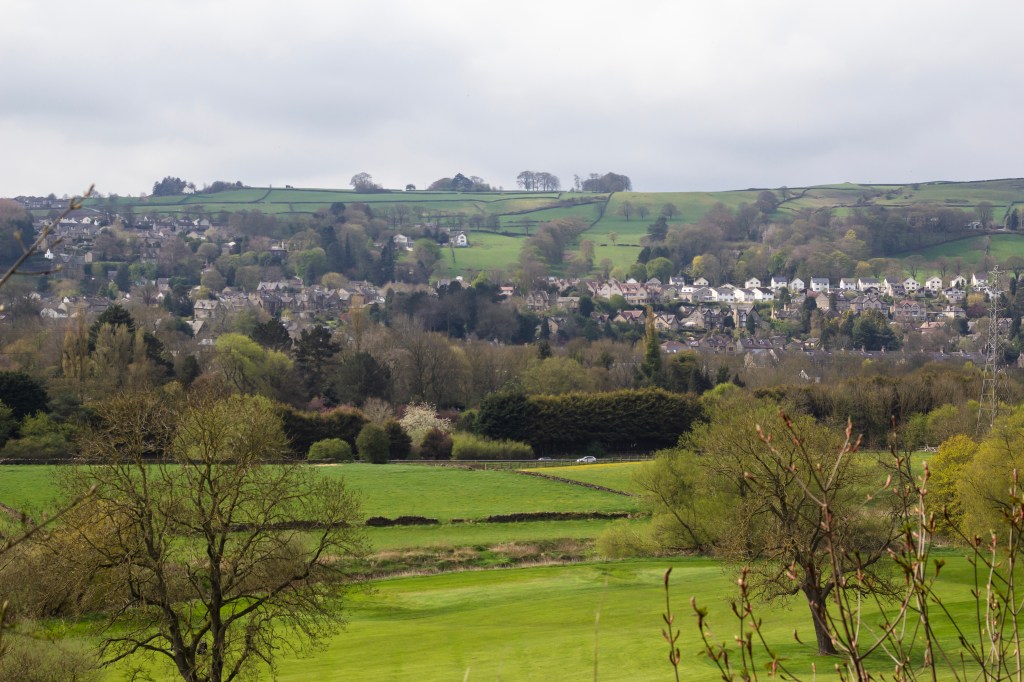
The canal continues to follow the River Aire, following the contour and affording views across the Aire valley.
It was Saturday. This meant that it was not only turnaround day at the hire boat operators at Skipton, with lots of novice helmsmen sometimes dangerously at large, but perhaps more entertainingly, there were boats on the water that had been hired for the day.
The rules concerning numbers of people on the day hire boats at any one time could be conveniently bent by extra passengers being picked up on the towpath just round the corner from the boat yard.
One such party boat overtook us near Kildwick, at about 11 in the morning. There were at least ten young women celebrating somebody’s forthcoming wedding and the alcohol was clearly already in full flow.


We tied up for the night near bridge 194, not far from Riddlesden.
Sunday April 23
Bridge 194 to Riddlesden
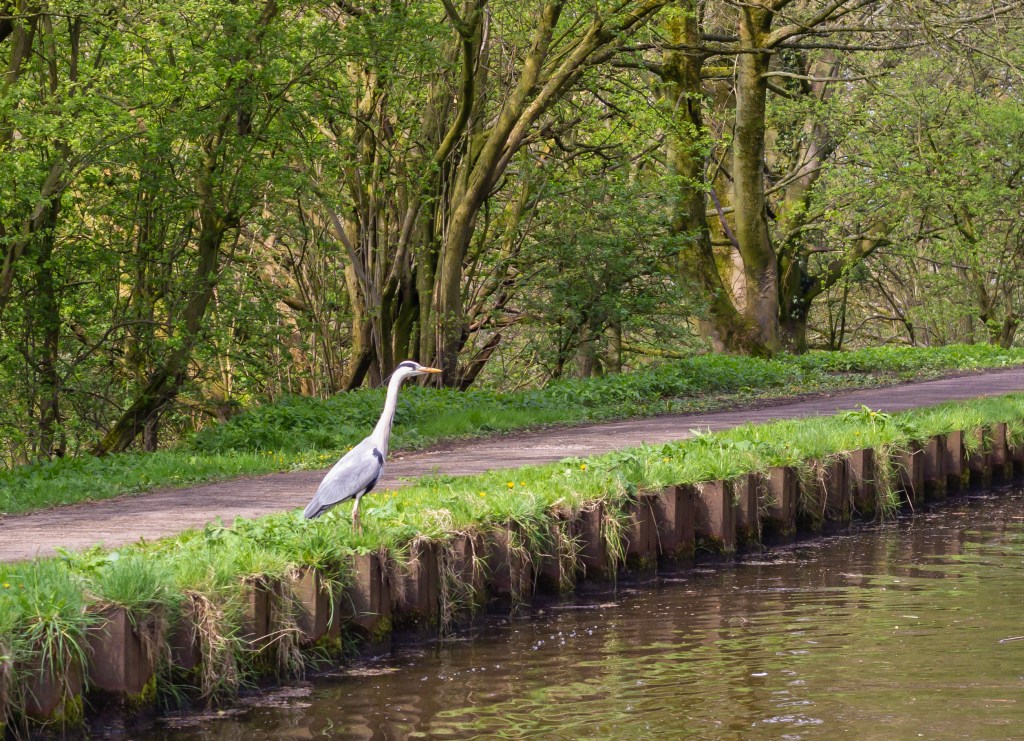
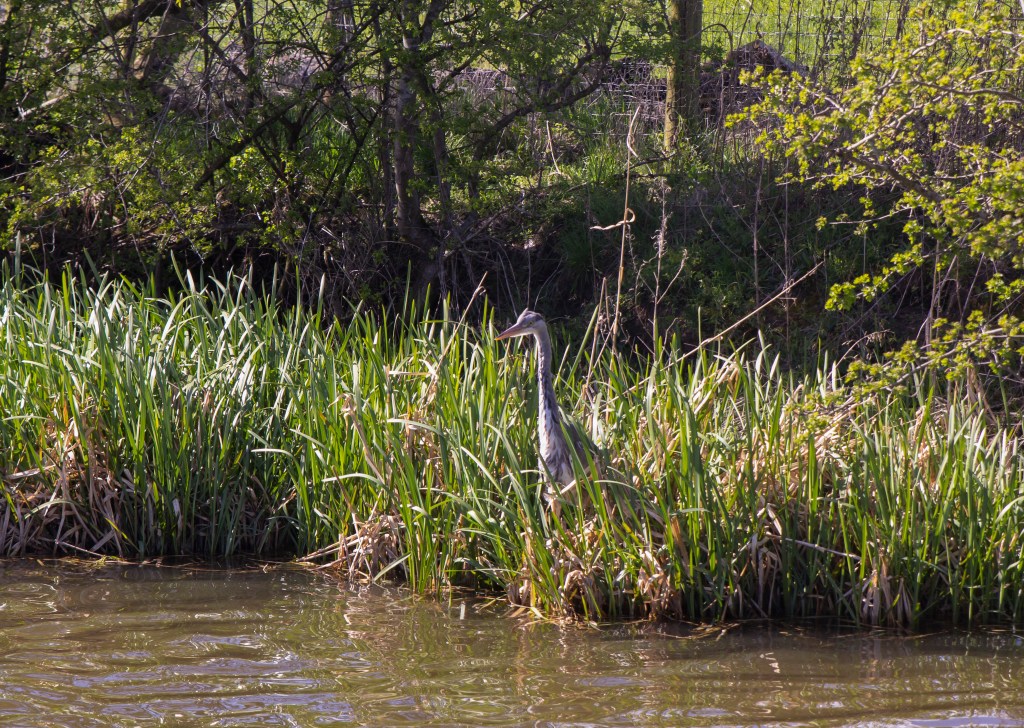
Heron on the bank

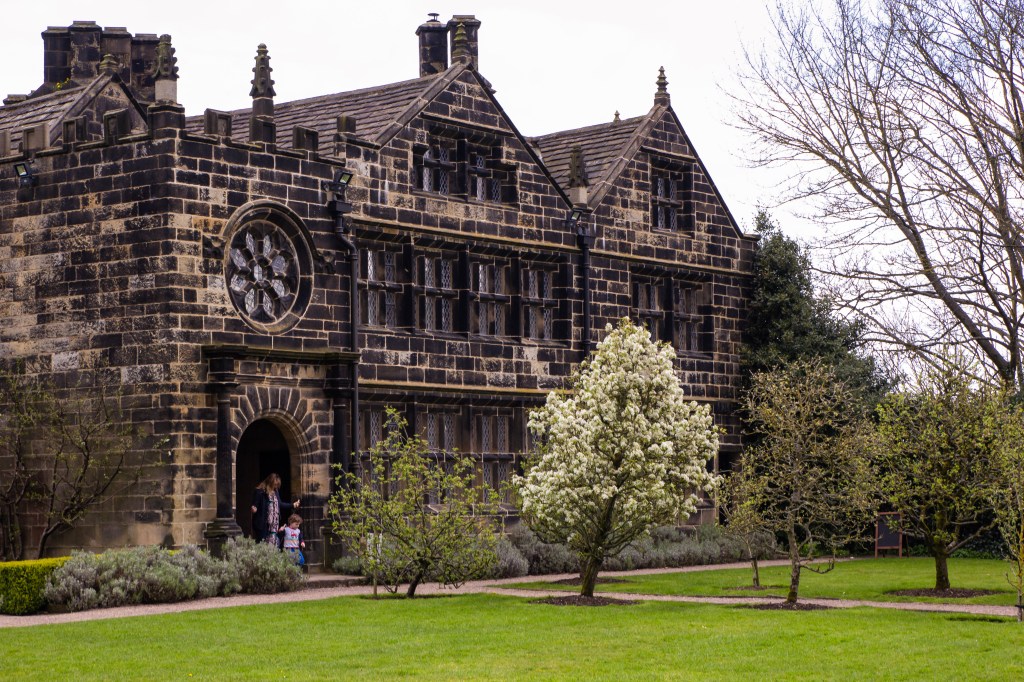
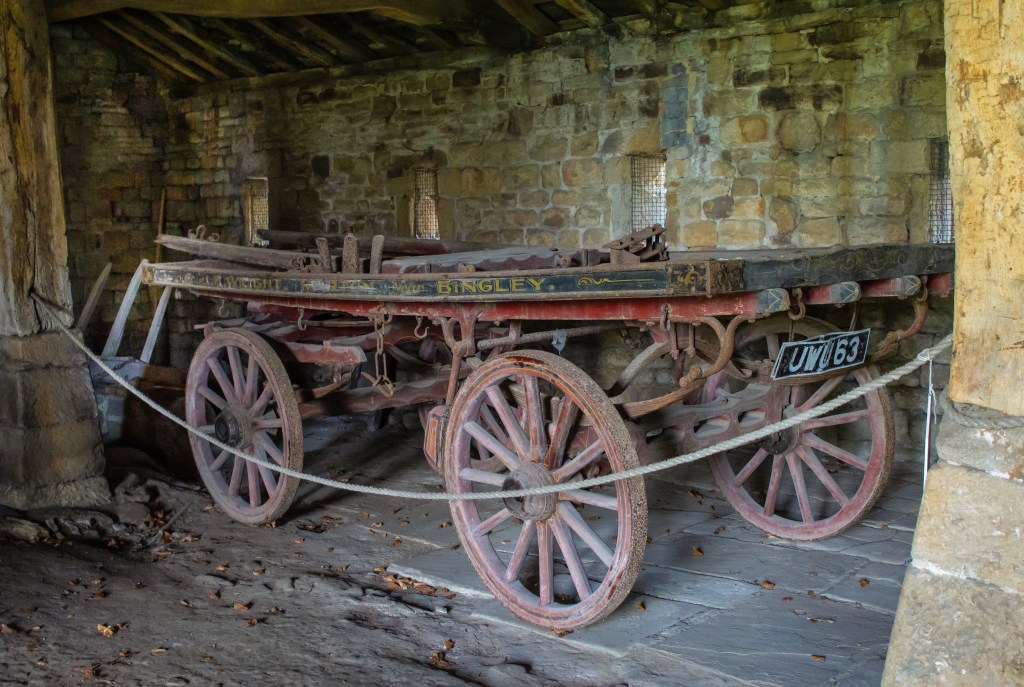
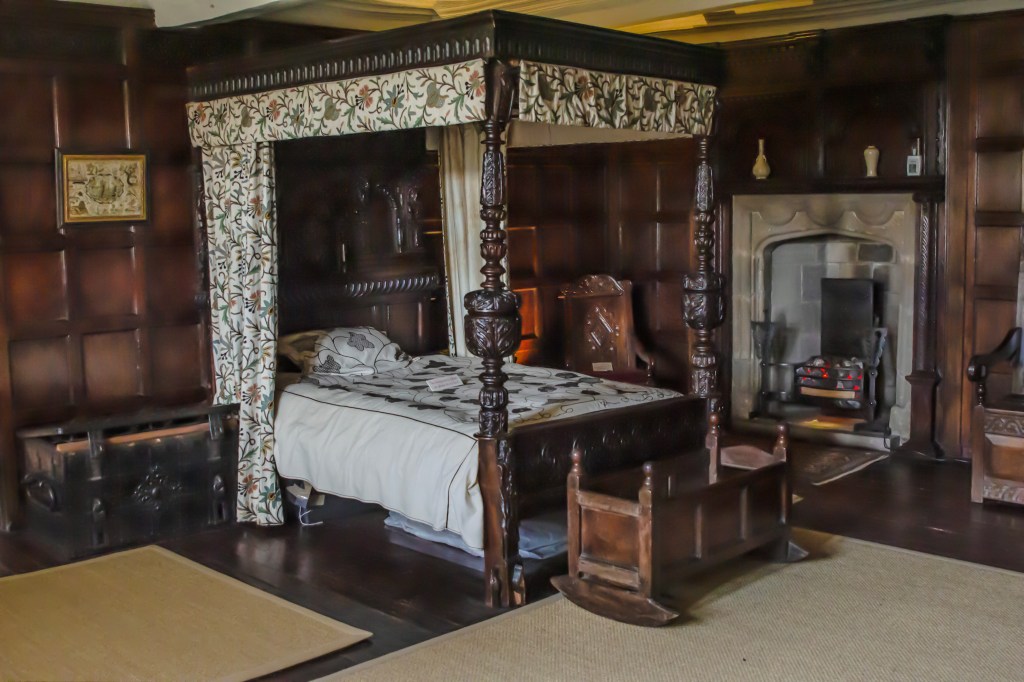
We stayed on the moorings in Riddlesden so we could visit East Riddlesden Hall, a 17thC manor house, the centre of an agricultural estate which dates back to the 7thC . Built by James Murgatroyd, the house fell into disrepair and was threatened with demolition in the 1930s. However, the mayor of Keighley, William Brigg and his twin brother John purchased the property and in 1934 bequeathed it to the National Trust.
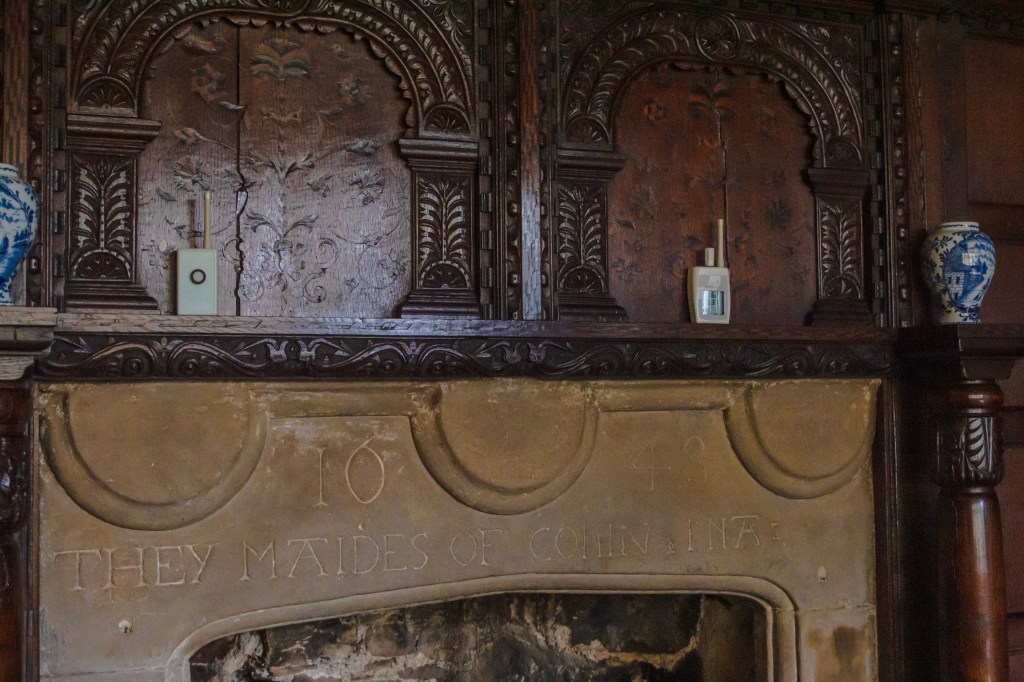
The inscription in the stone reads ‘They Maides of Coihn Ina’. This is believed to be a reference to a psalm in which daughters are described as the cornerstones of the family.
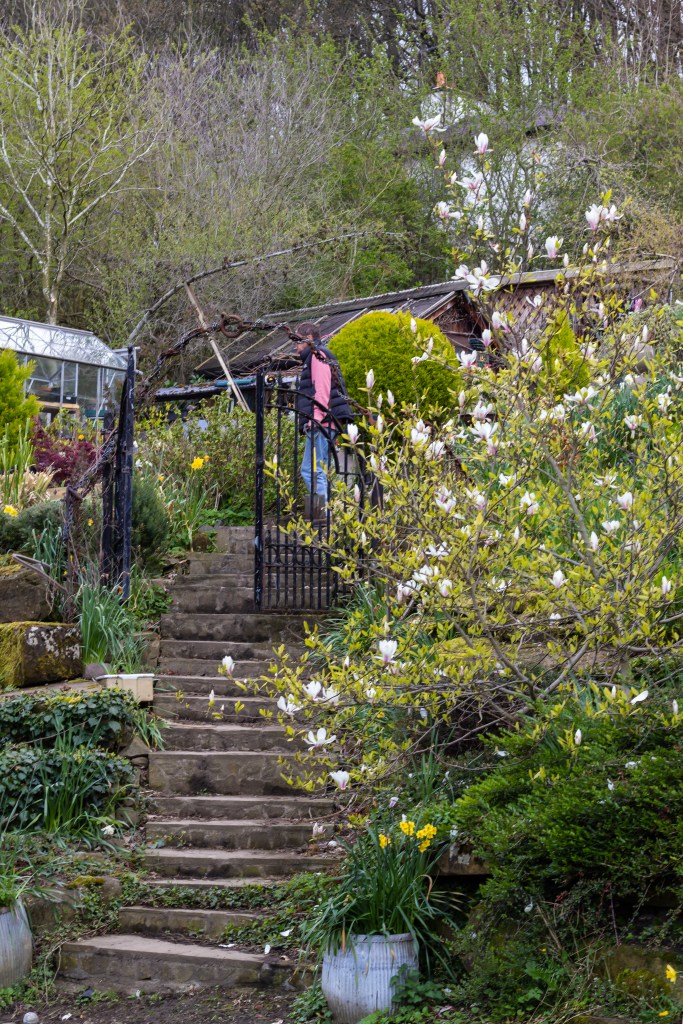
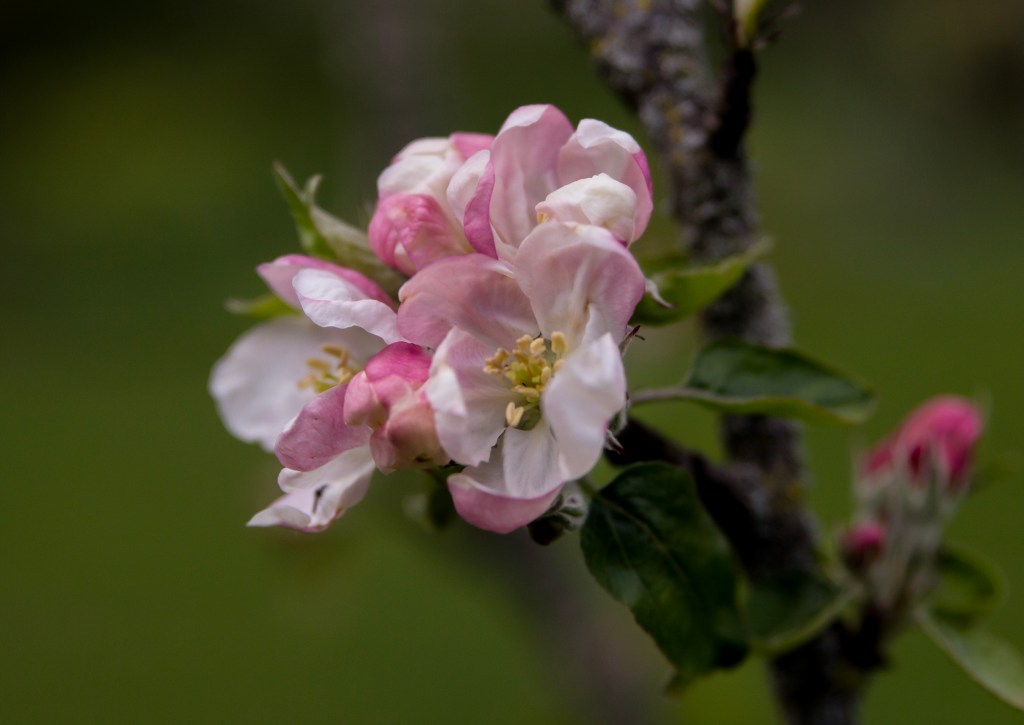
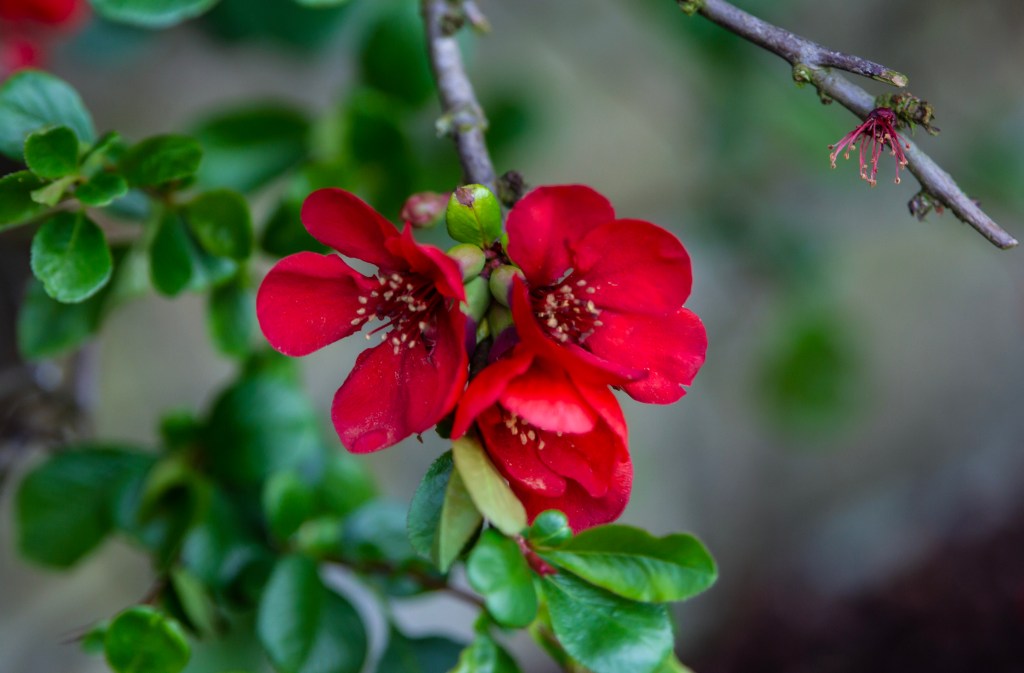
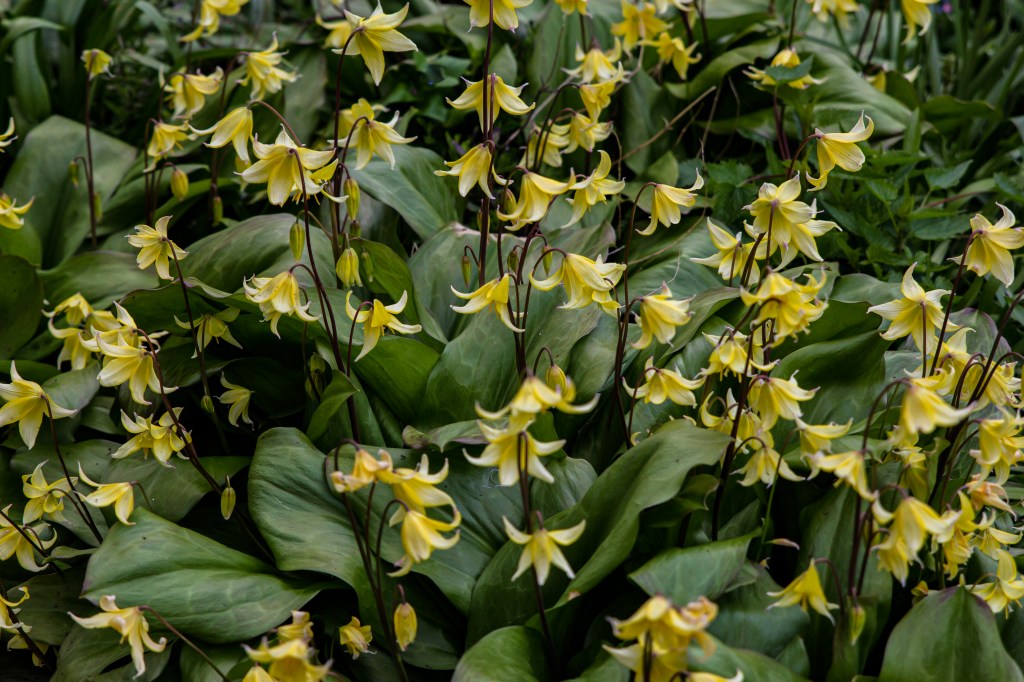
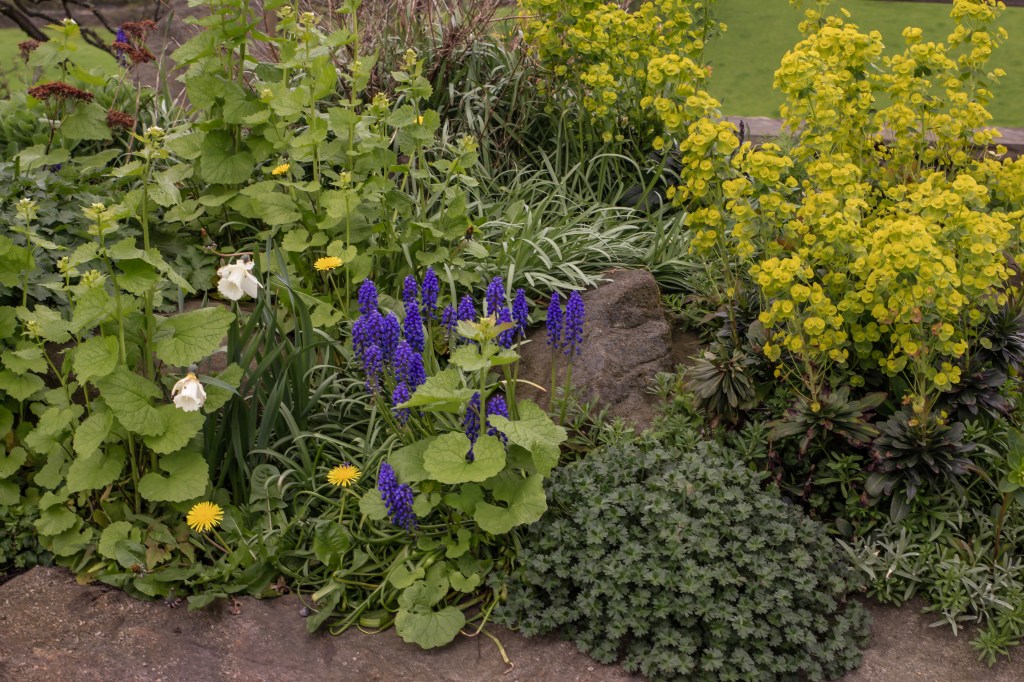
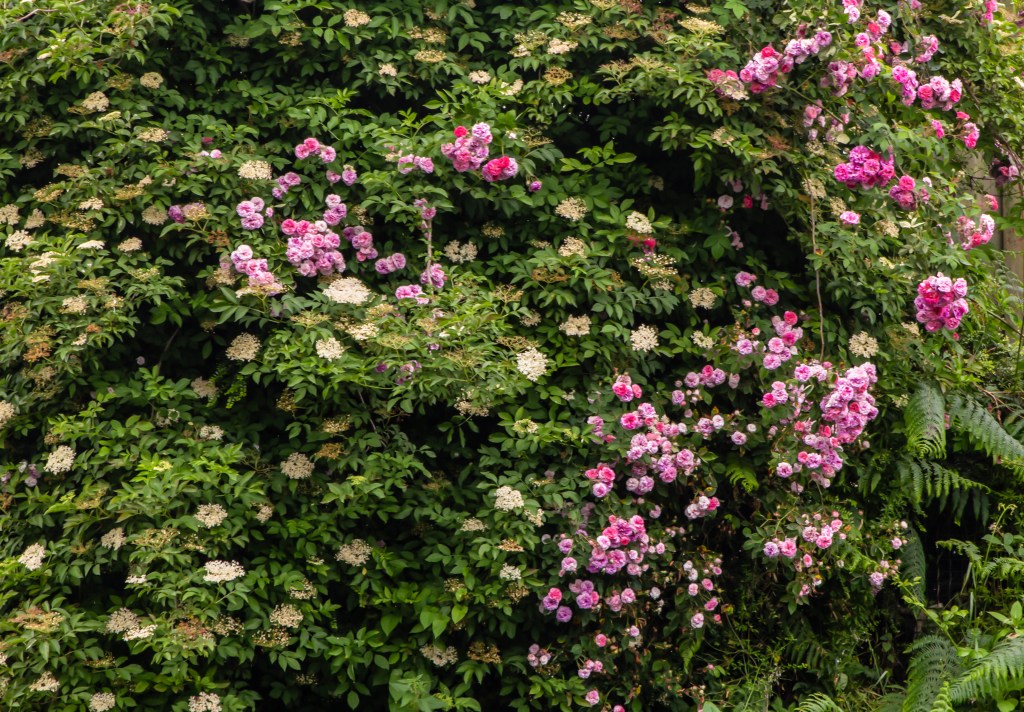
The garden was full of spring blossom and flowers.

Monday April 24
Riddlesden to Bingley
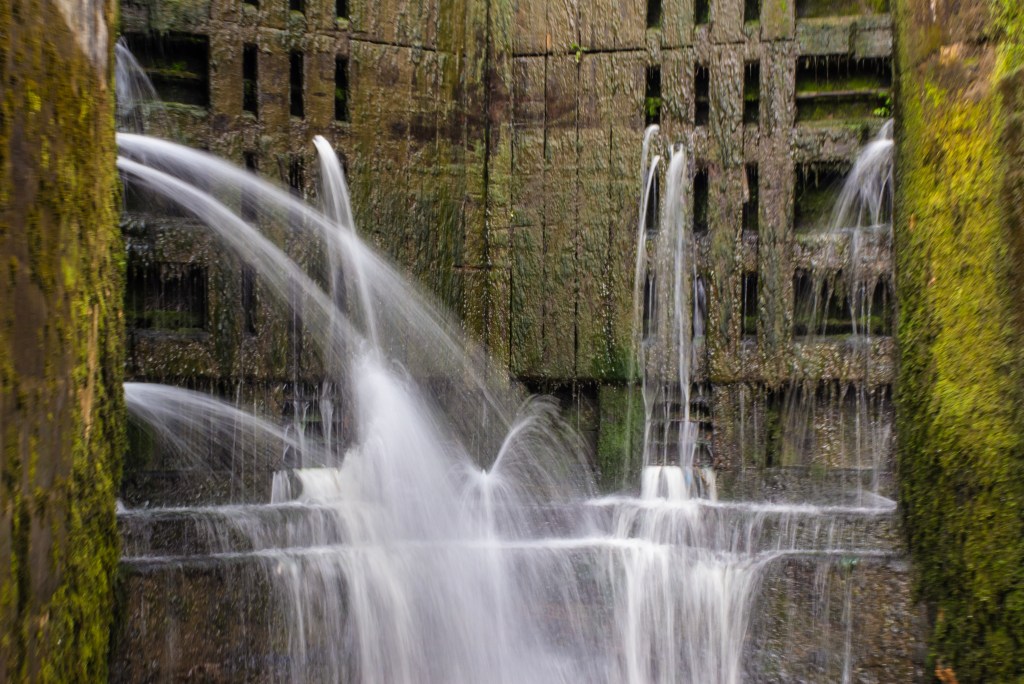
Today was a big day as far as boating went. We were going to descend that marvel of 18thC engineering, the Bingley Five Rise Staircase Locks. This means that you pass from one lock straight into the next one, without any intervening pound where you can take your breath and ensure that your crew is on the ball with regard to water levels in the lock. As the name suggests, at Bingley there are five locks, one following immediately after the other.
The Canal & River Trust doesn’t trust boaters to negotiate this complex system all by themselves, and so they are manned by staff, and you can only go up or down at the prescribed times. We had to wait till 1.30 before we could lock though.
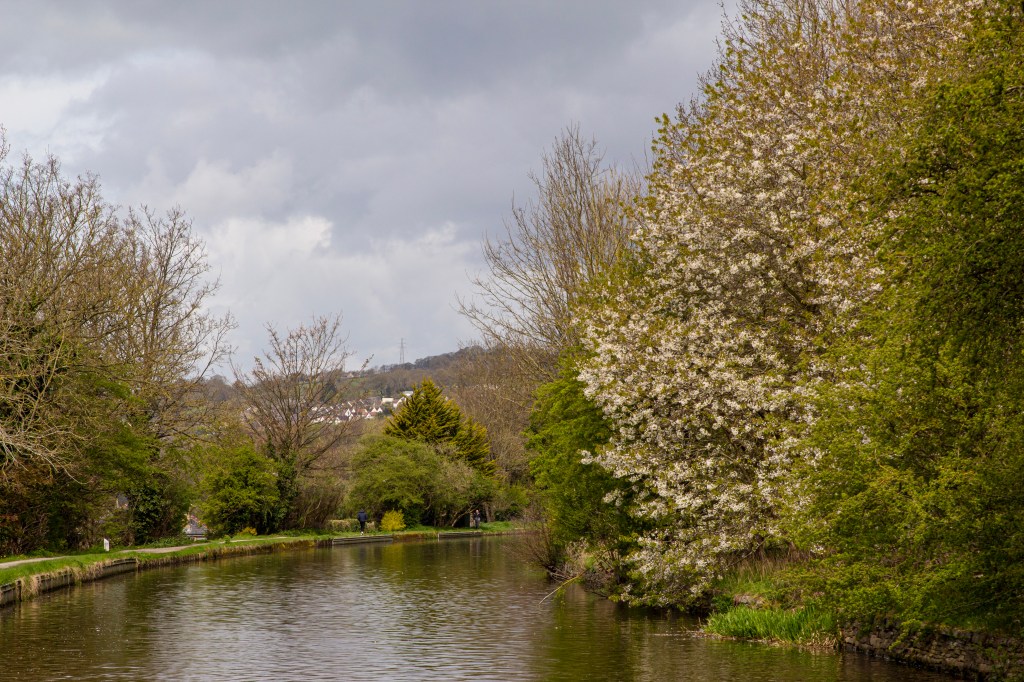

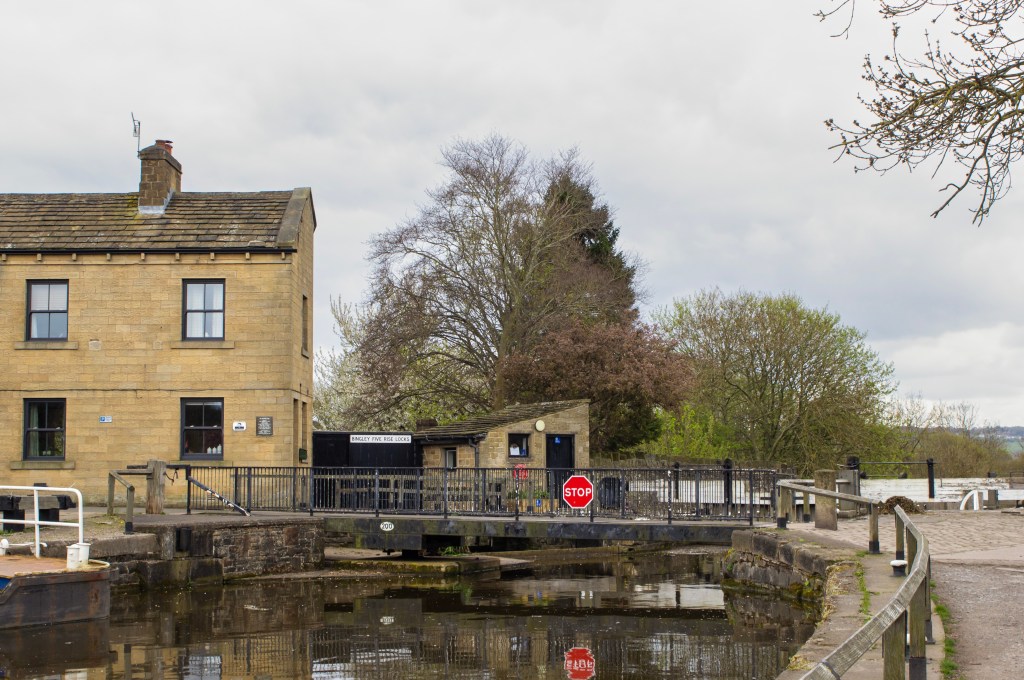
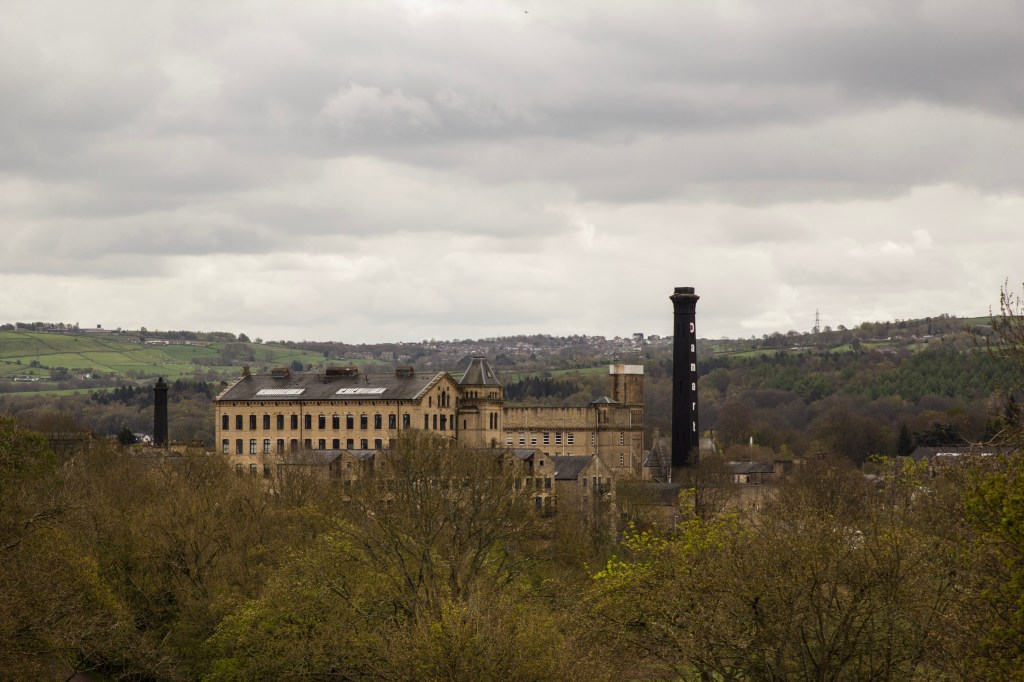
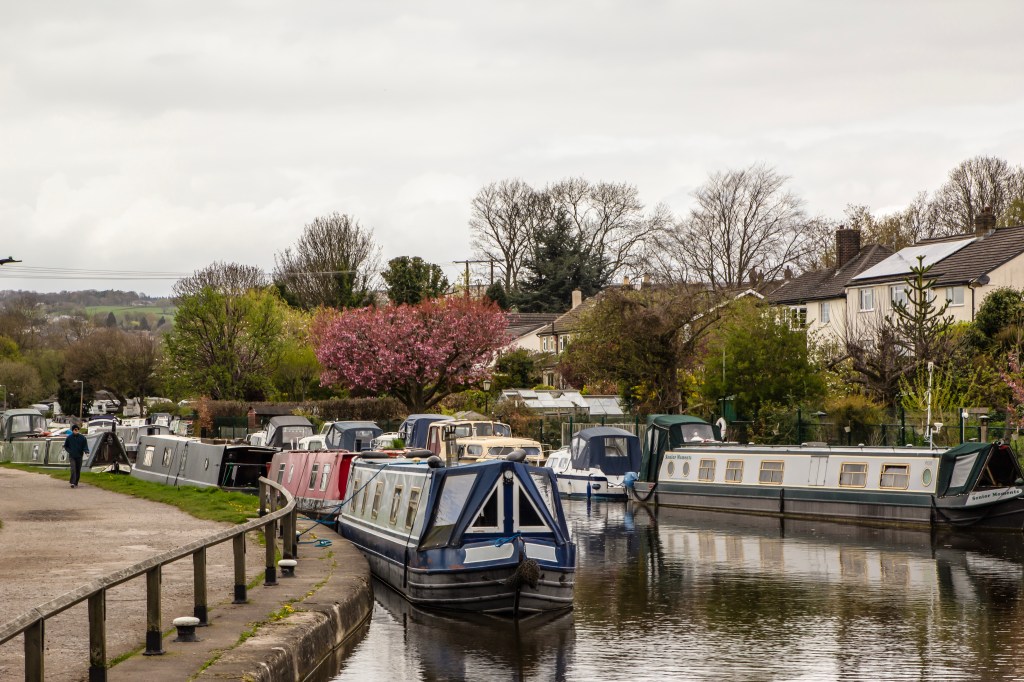
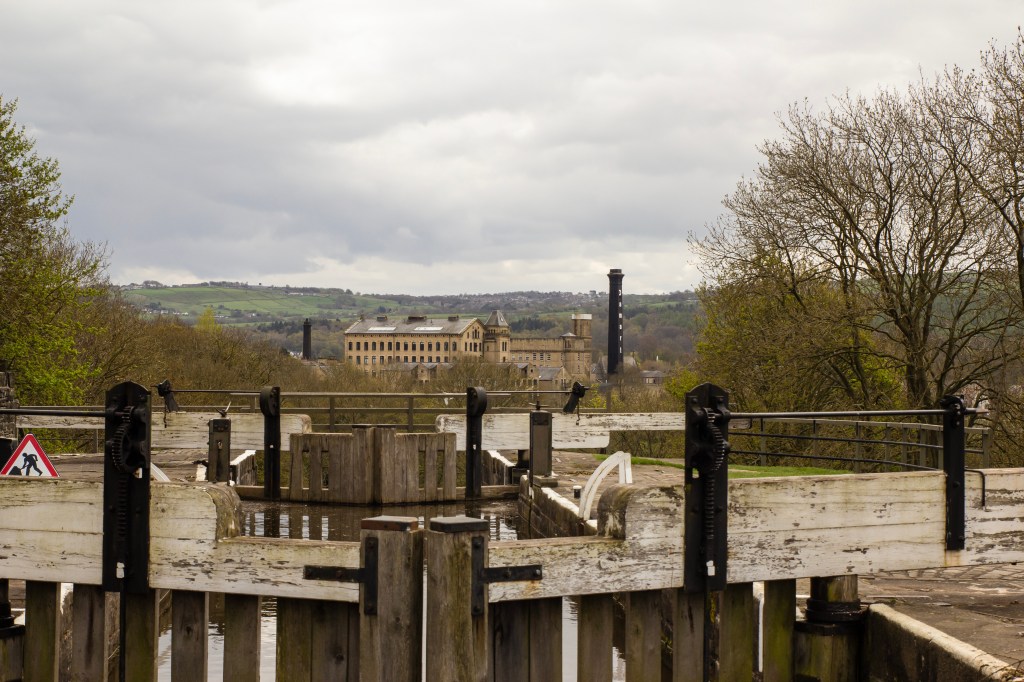

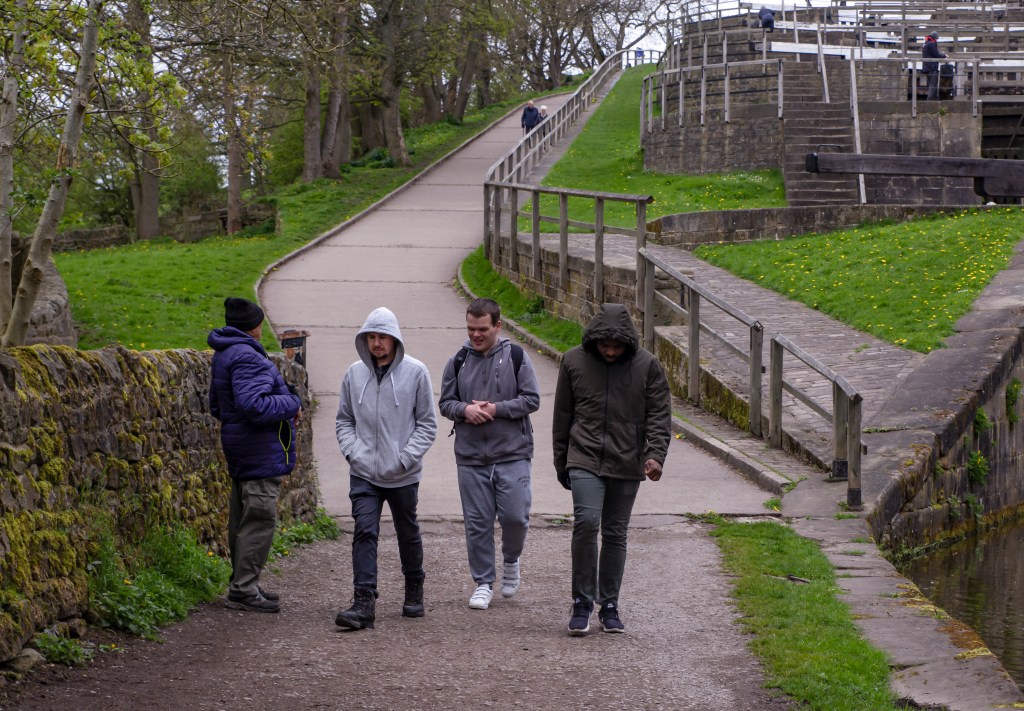
One advantage of the locks being operated by C&R Trust staff was that my presence on the boat wasn’t required, leaving me free to wander about taking photographs.
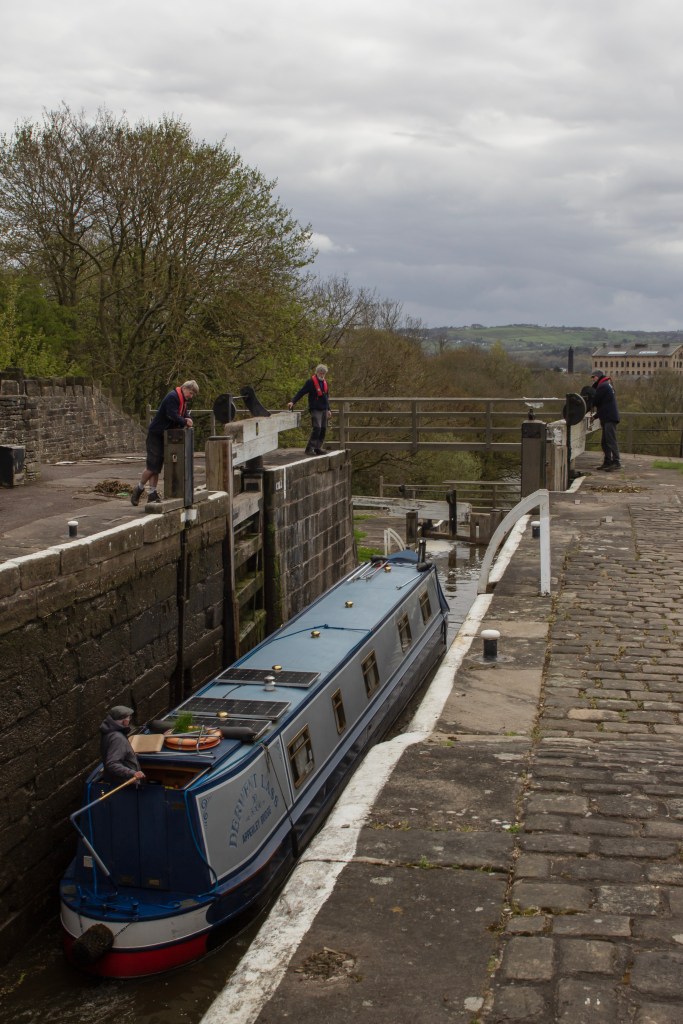
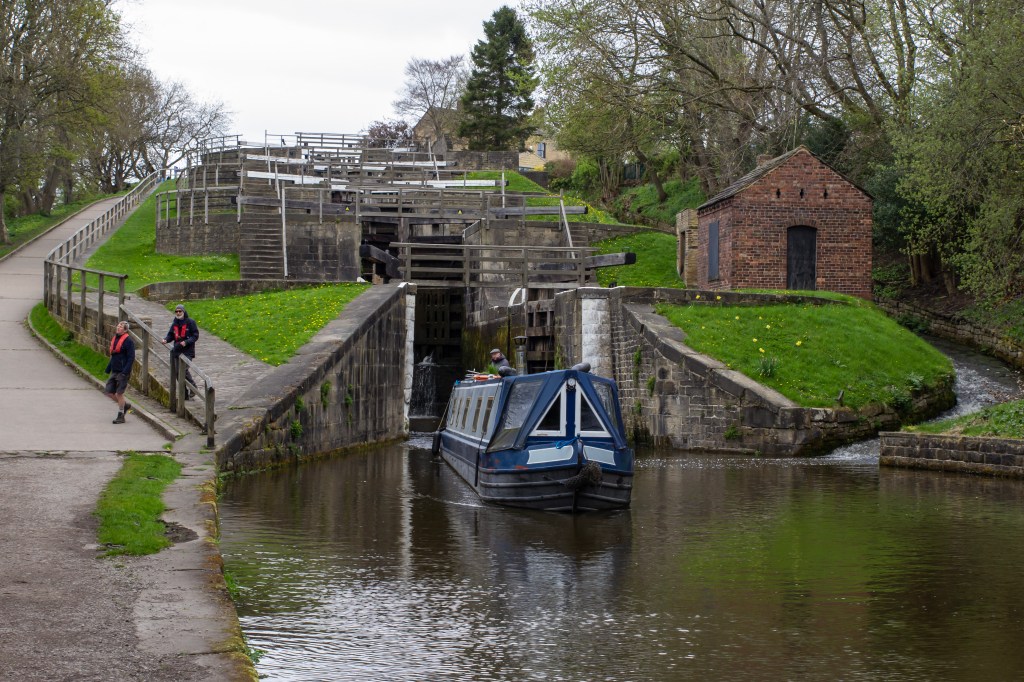
That wasn’t the end of the day’s challen still had Bingley Three Rise Locks and a swing bridge to negotiate before we got to the mooring but one of the C&R Trust staff had walked down and did the locks for us, so I was able to stay on boat.
<
‘
Tuesday April 25
Bingley to Apperley Bridge
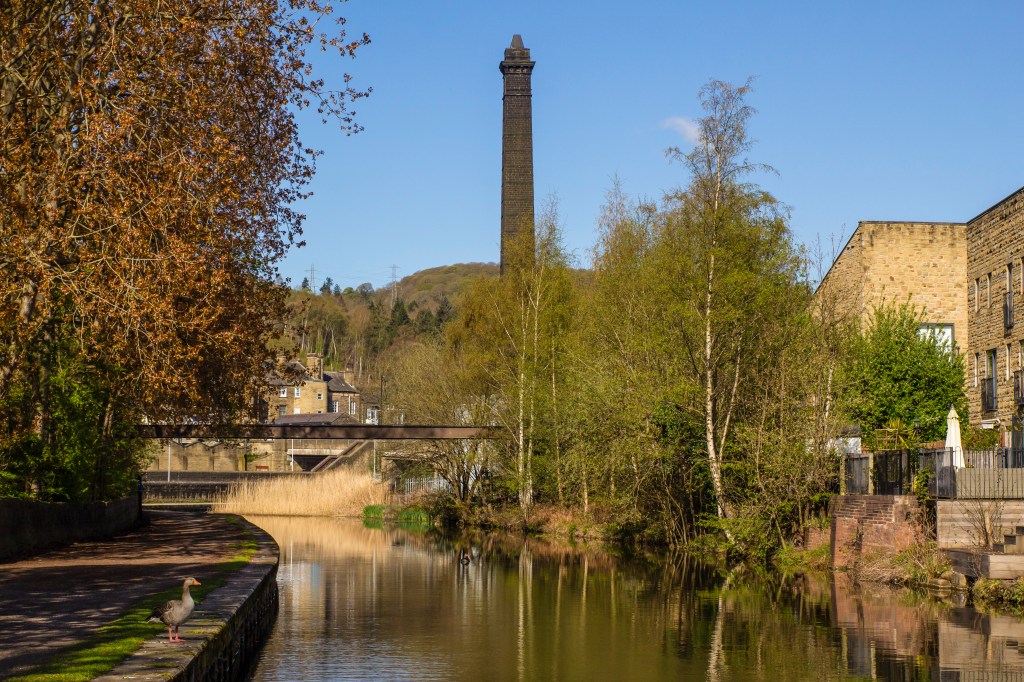
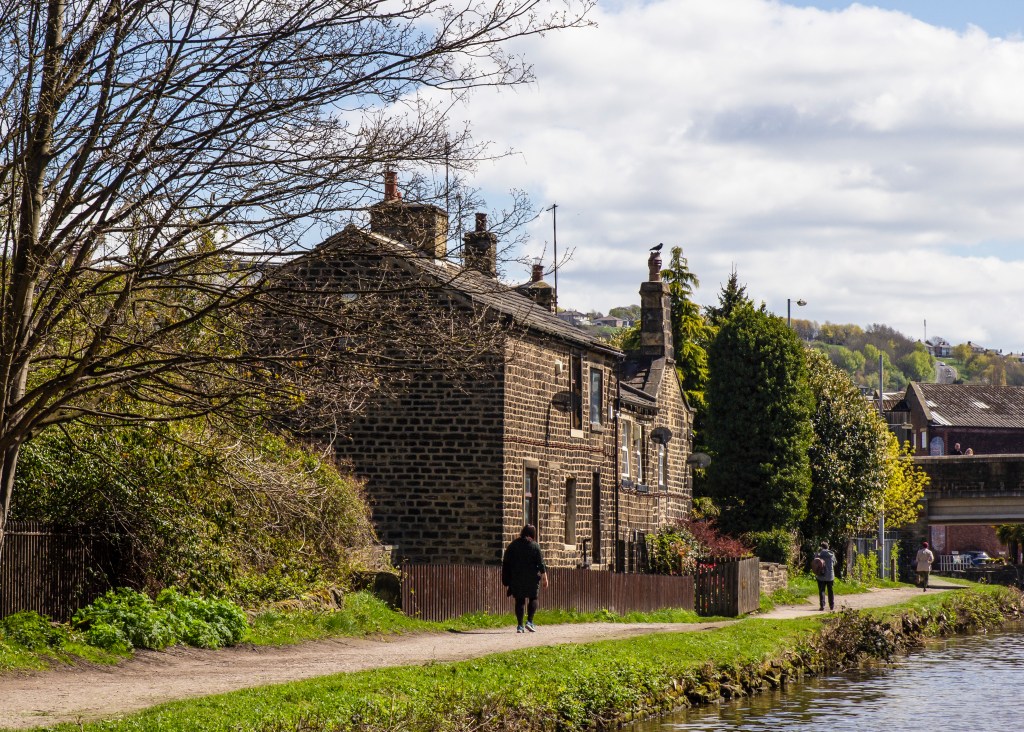
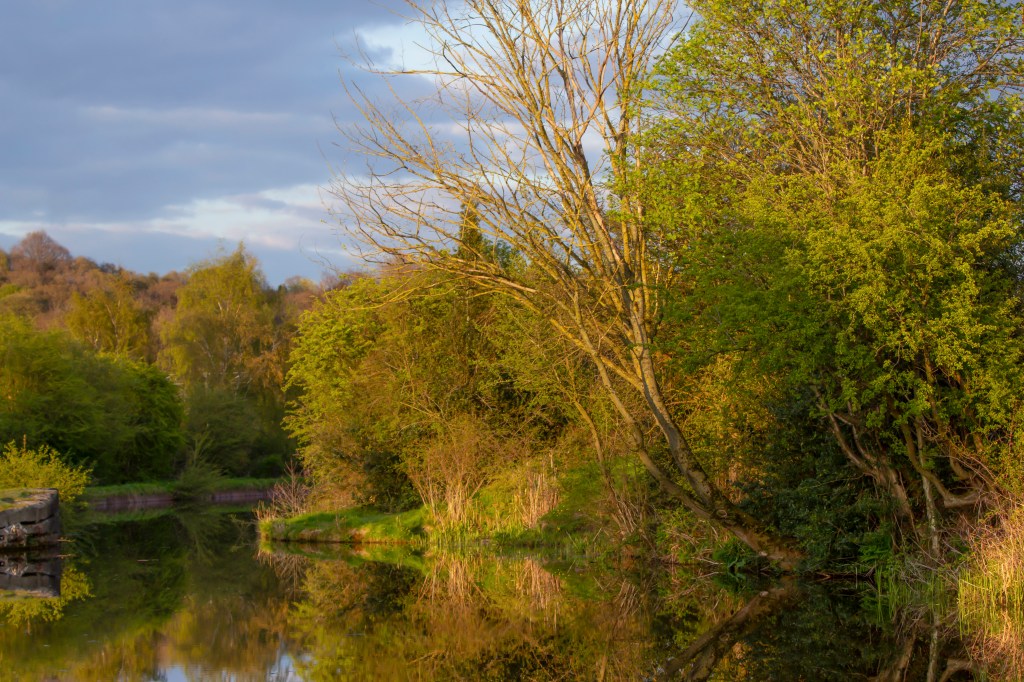
The weather improved and we had a good run through to Apperley Bridge, where Derwent Lass had been based for the first 18 years of her existence. Several people on the towpath recognised her and said it was nice to see her on the water.

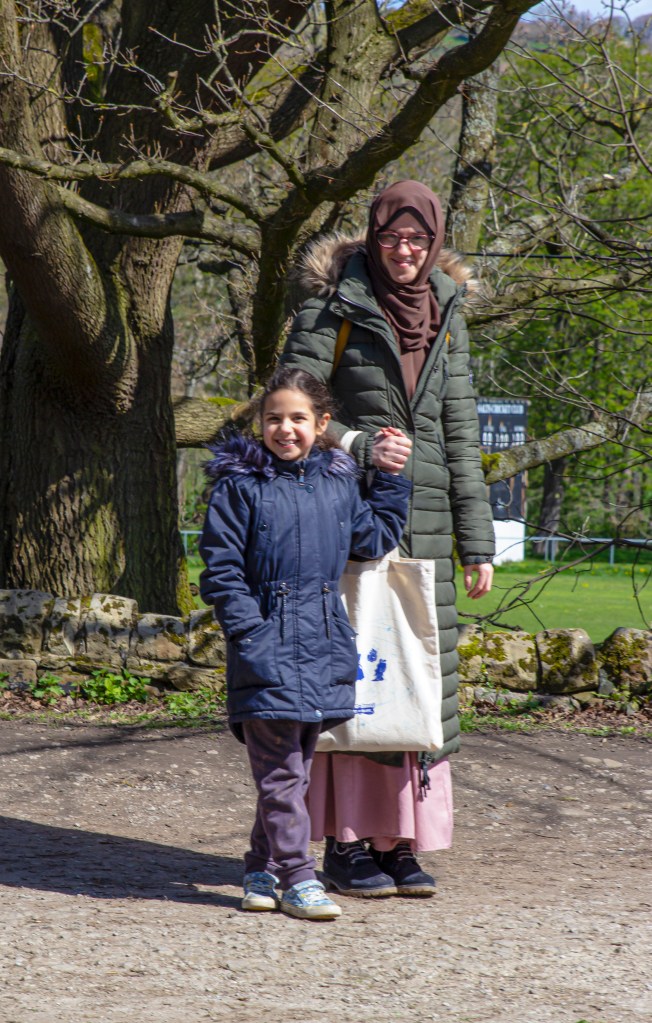
This little girl and her mother watched us go through the lock and the little girl wanted to know all about canals and how the locks worked. After I’d delivered a quite lengthy tutorial on the subject, I felt justified in asking if I could take their photograph.
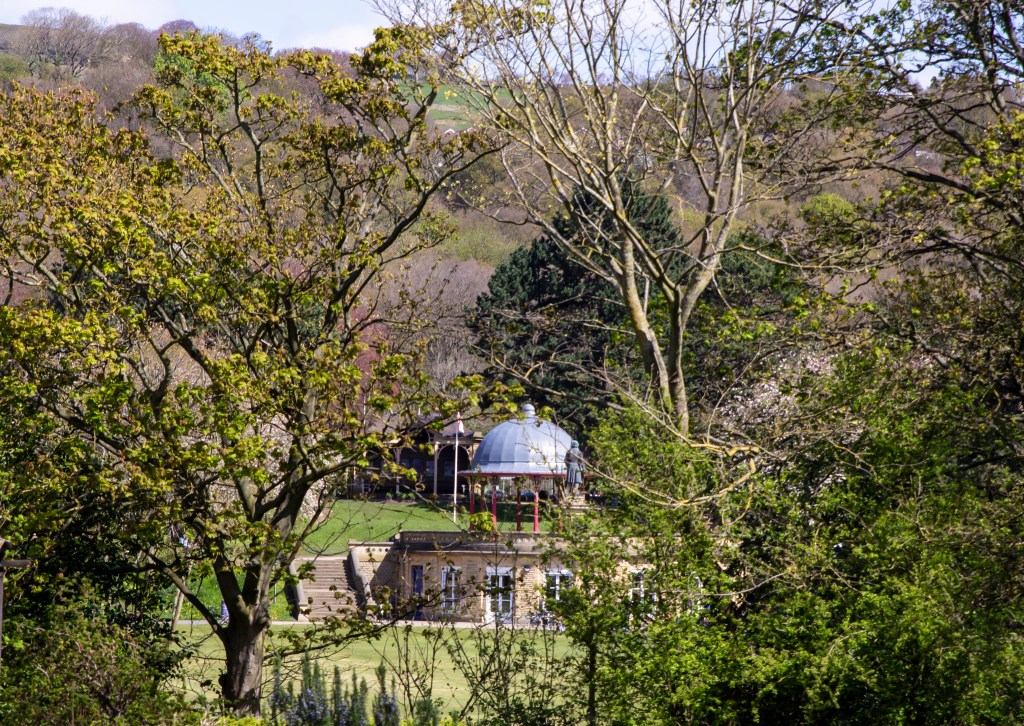
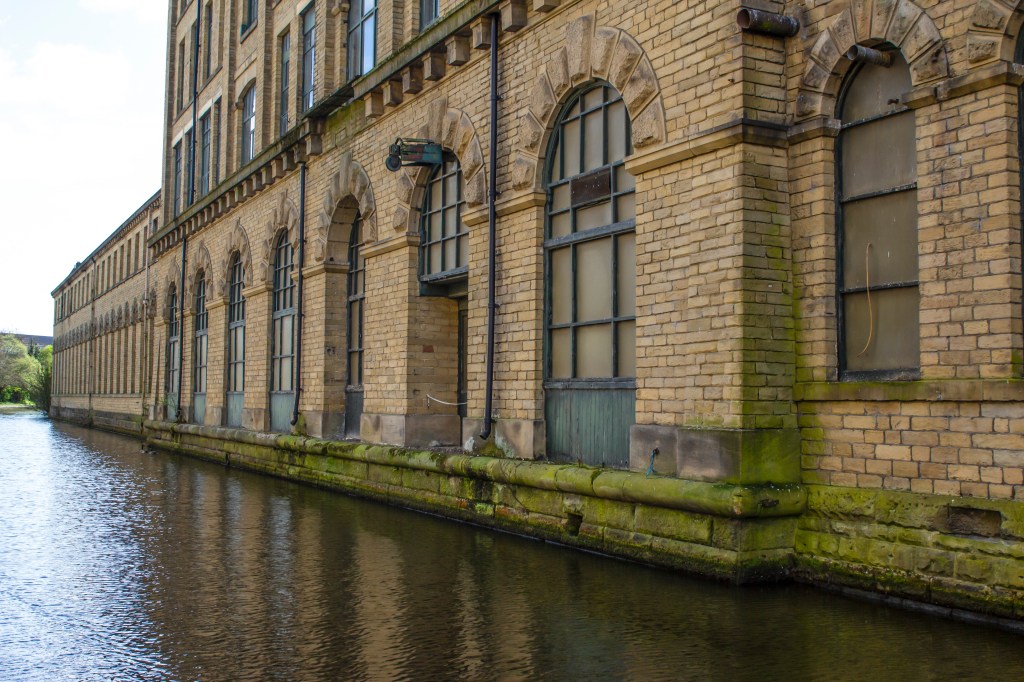
We wanted to visit Saltaire, but Salts Mill wasn’t open on Tuesdays. So we pressed on but decided to have a day trip from Leeds using the excellent local train service.

We moored up just past Apperley Bridge, close to where we’d spent our first night on Derwent Lass.
Wednesday April 26
Apperley to Leeds
We were now back on familiar territory, retracing our first journey on Derwent Lass, happily with fewer mishaps.
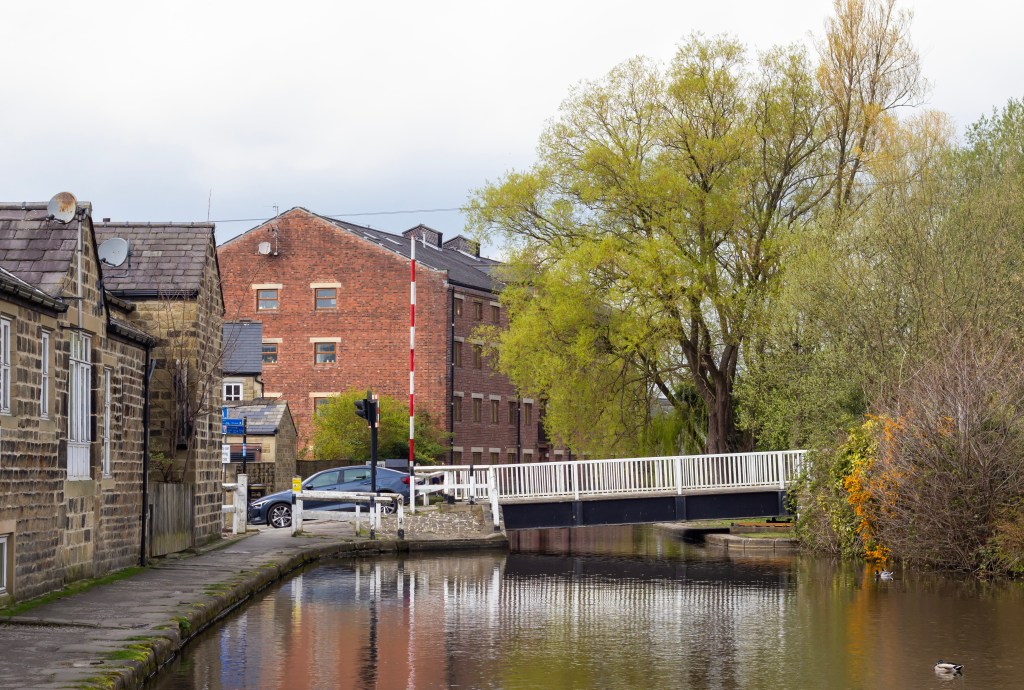
On the outskirts of Rodley, we came to a swing bridge which defied previous knowledge and commonsense.
It was relatively new, only opened within the last 18 months and is not owned by either the Canal & River Trust, or the local council, but a private company operating in the industrial buildings on the opposite side of the canal from the main part of the town.
It was a hybrid partly electrically controlled, partly manually. You had to start things off by. inserting your key, and then pressing diverse buttons, to unlock the bridge. This was so complex an operation that it had to be explained to me by a gentleman employed by the bridge owner, for this exact purpose. Then, instead of the bridge obligingly opening, like other electrically controlled bridges do, you had to push the very heavy bridge yourself. Fortunately, the gentleman’s job description included pushing the bridge, but even so, it required a massive effort on both his part and mine to move it. He solicitously enquired whether or nor I had high blood pressure (yes, but well controlled, thank you) because a boater the previous week had keeled over with the effort, and required medical attention. In fact I was more worried about him, as his florid complexion changed from red to purple as we moved the bridge, but his oxygen levels improved once we had the bridge back in place.
<
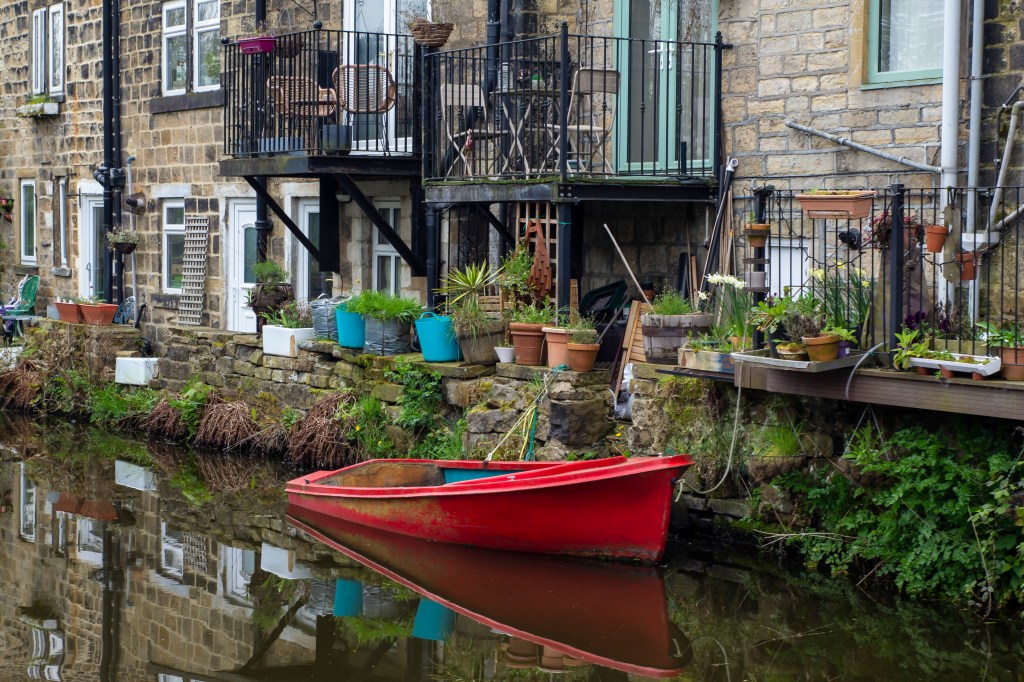

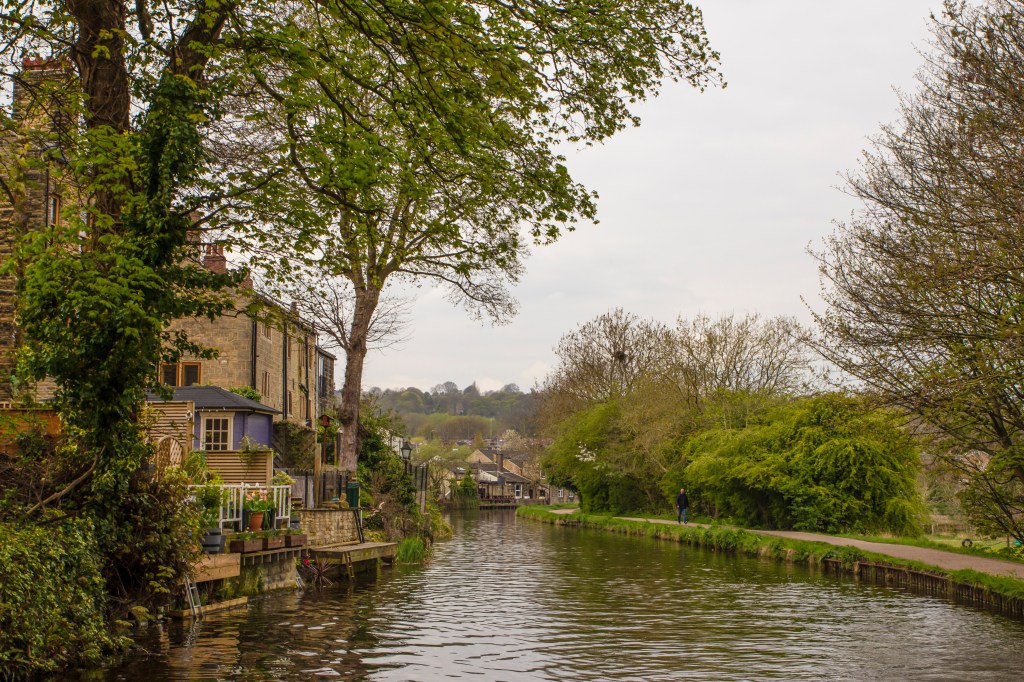


On the outskirts of Leeds, we had views across the valley of the ruins of the 12th C. Kirkstall Abbey.
Thursday April 27
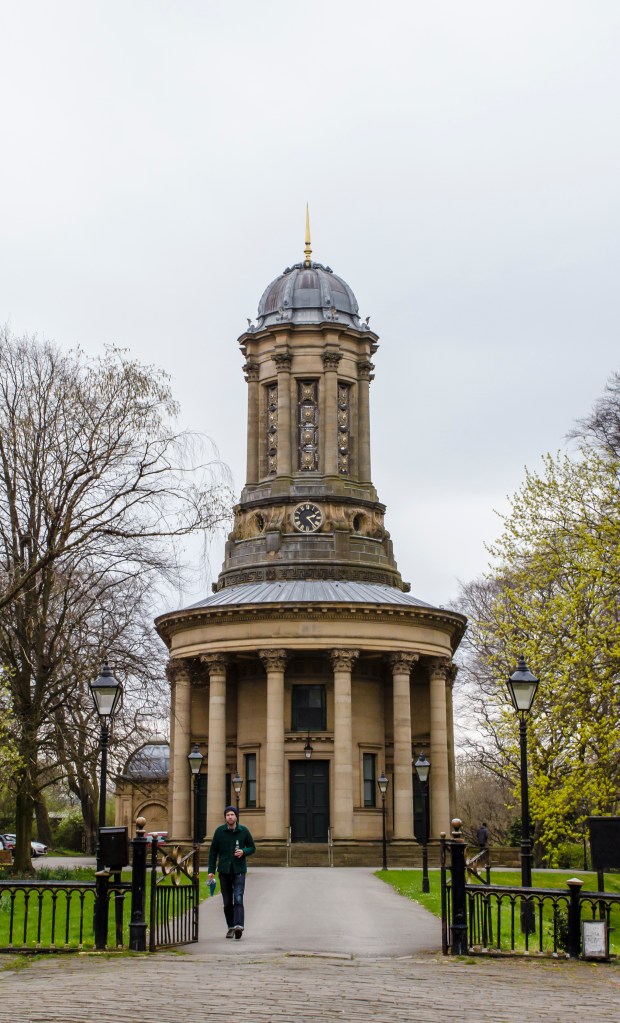
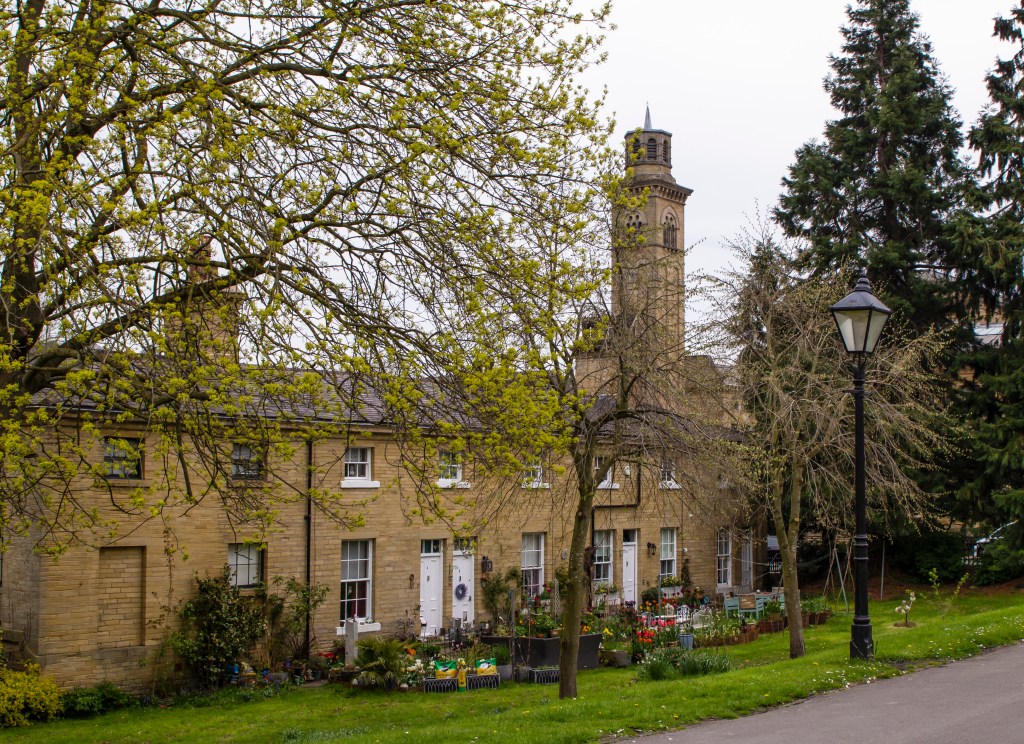
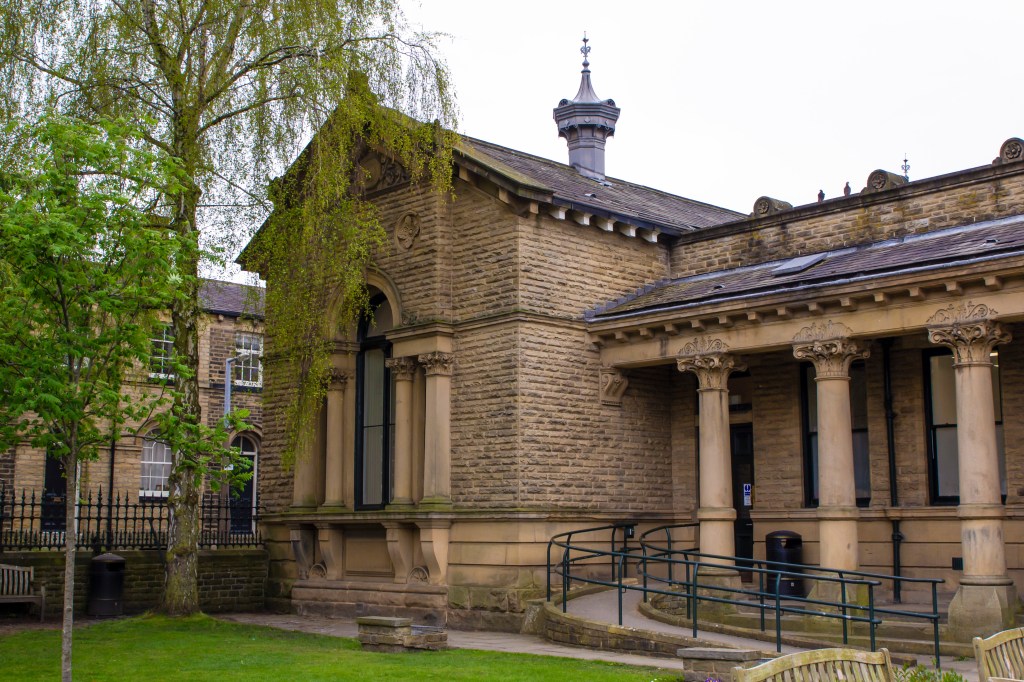
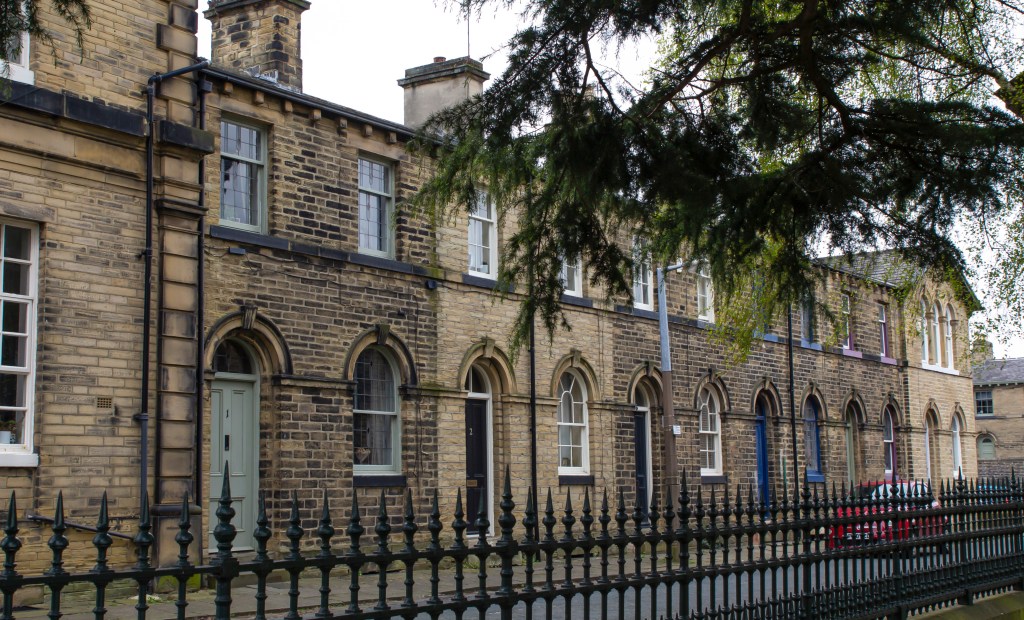
Trip to Saltaire
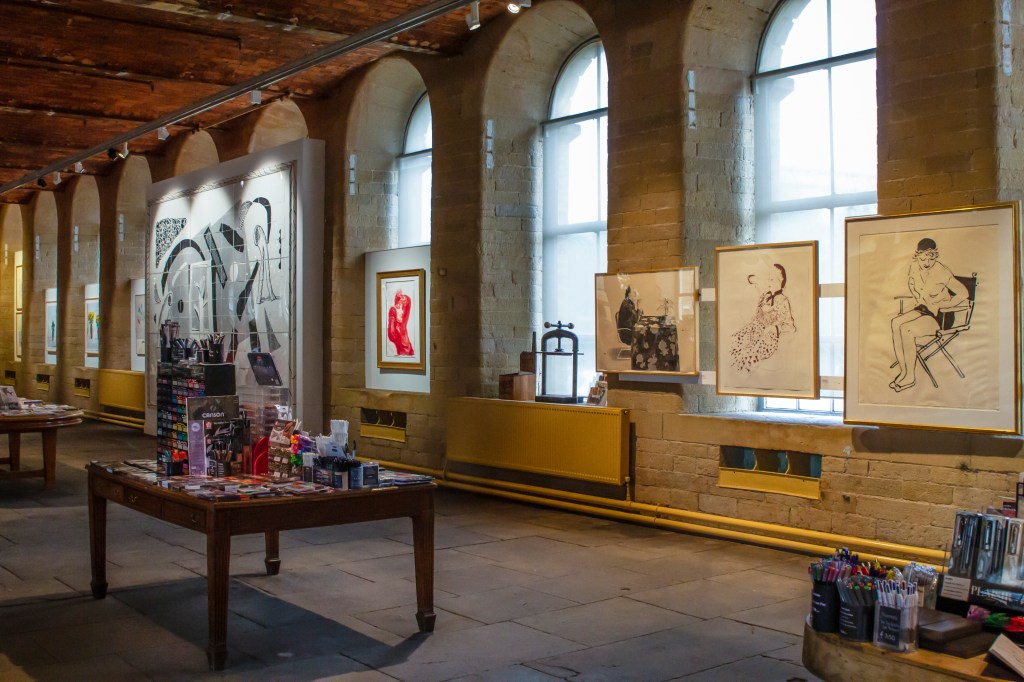
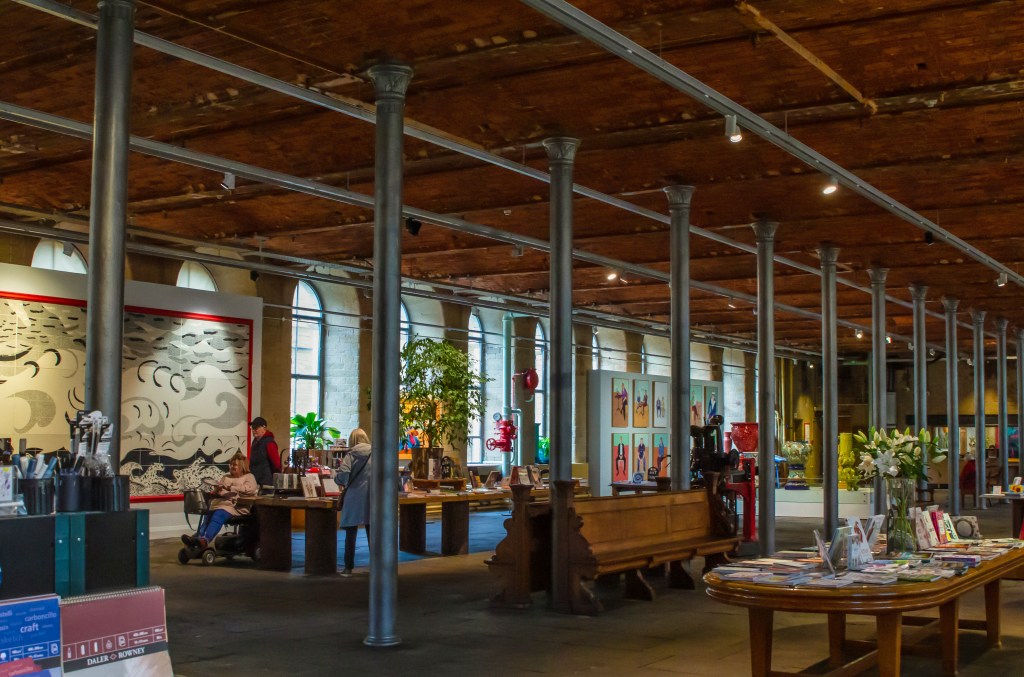
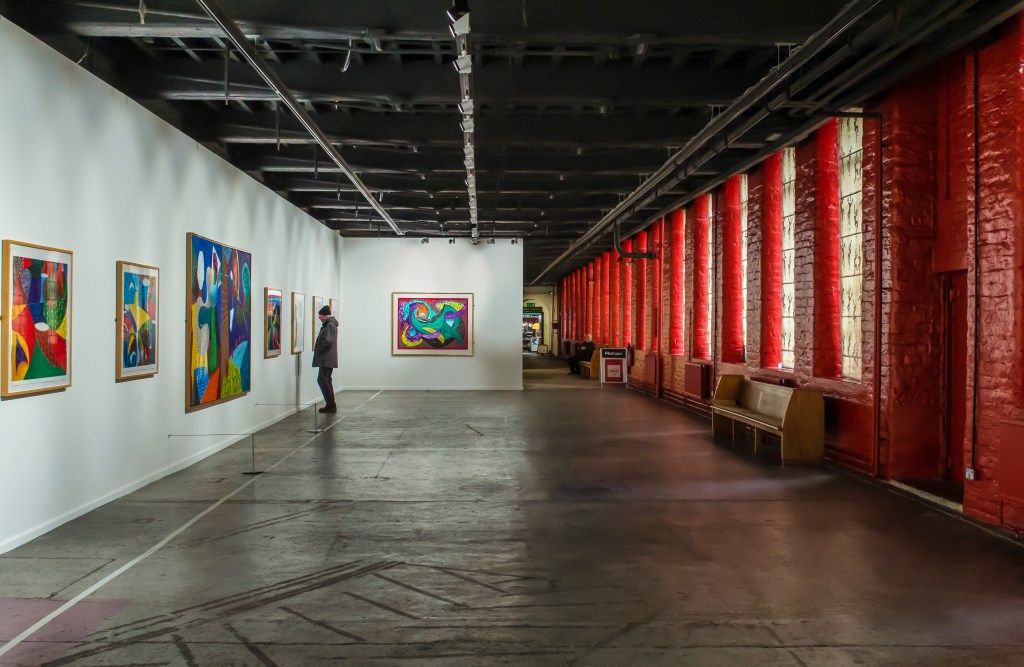
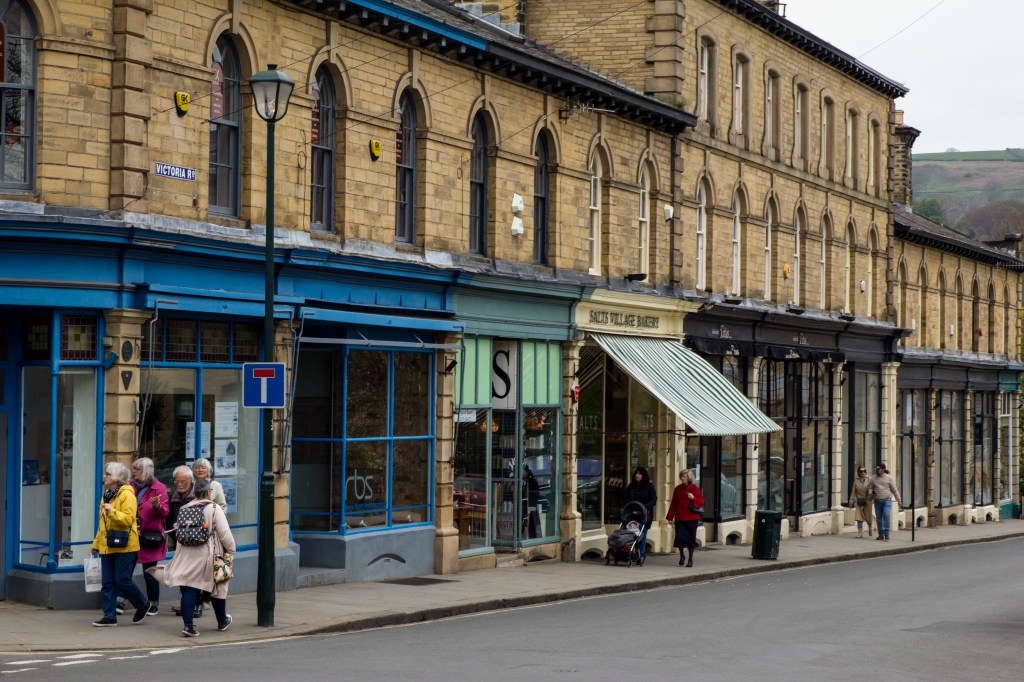
Salt’s Mill was built in 1853 by the industrialist and philanthropist Sir Titus Salt, and at the time, was the largest industrial building in the world.
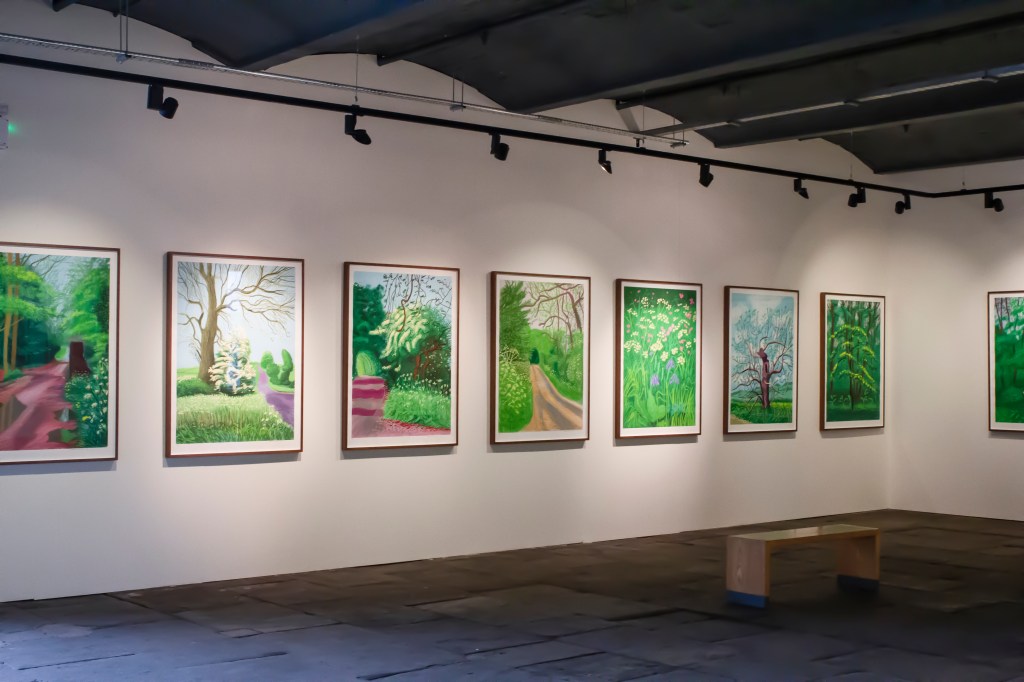
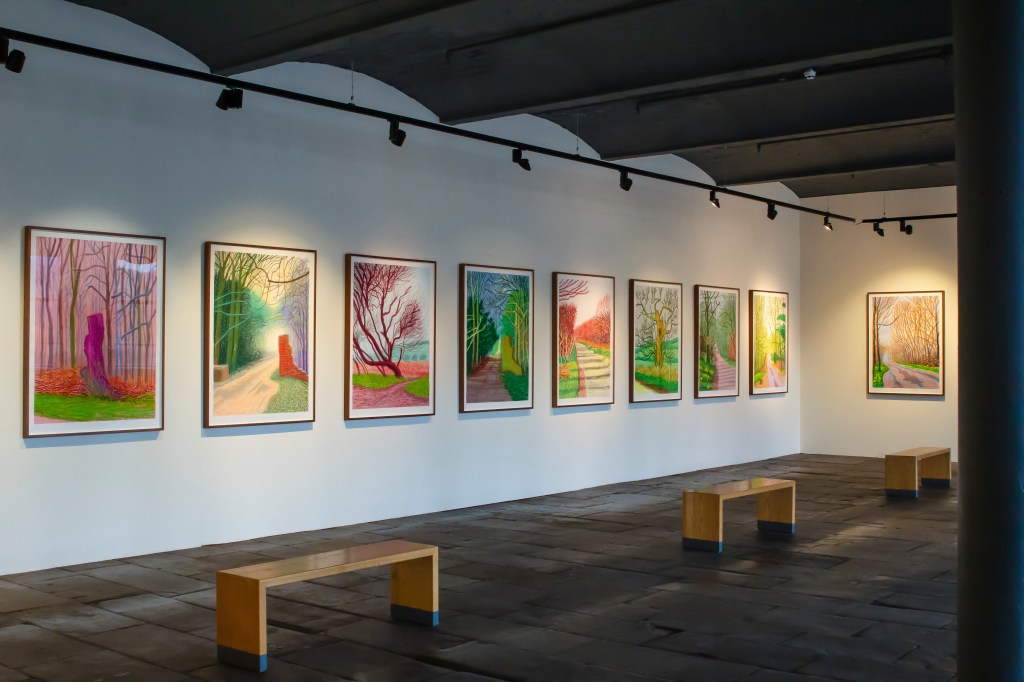
Textile production ended in 1986 and at this time, the mill was in a delapidated state. The following year, it was bought by Jonathan Silver, a local entrepreneur, who restored it and converted it inte retail units, a restaurant, and most importantly, a gallery devoted to David Hockney’s work. They were great friends and one of the exhibits is a card made by Hockney for Jonathan Silver when he was dying from cancer in 1997.

Friday April 28
Leeds to Mirfield
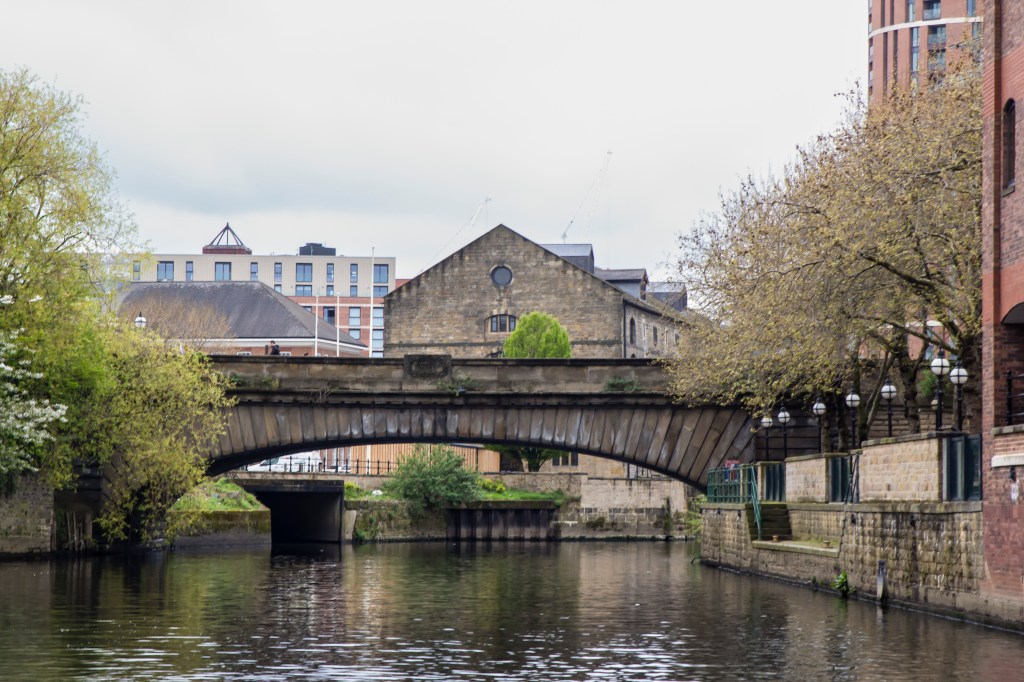
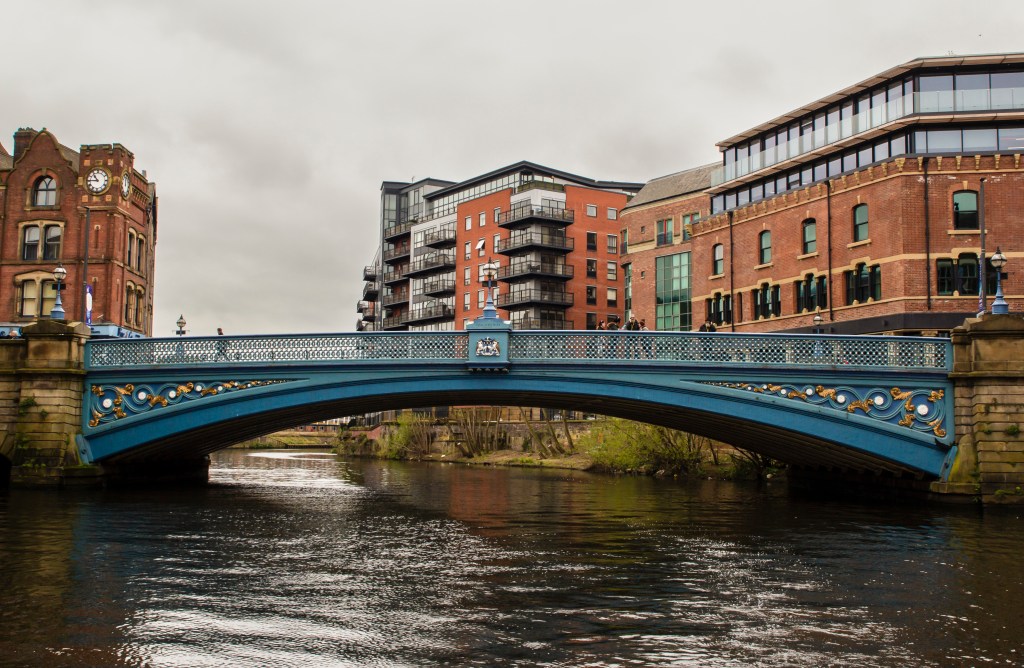
The last couple of days were marked with dismal weather and few opportunities for any photography!

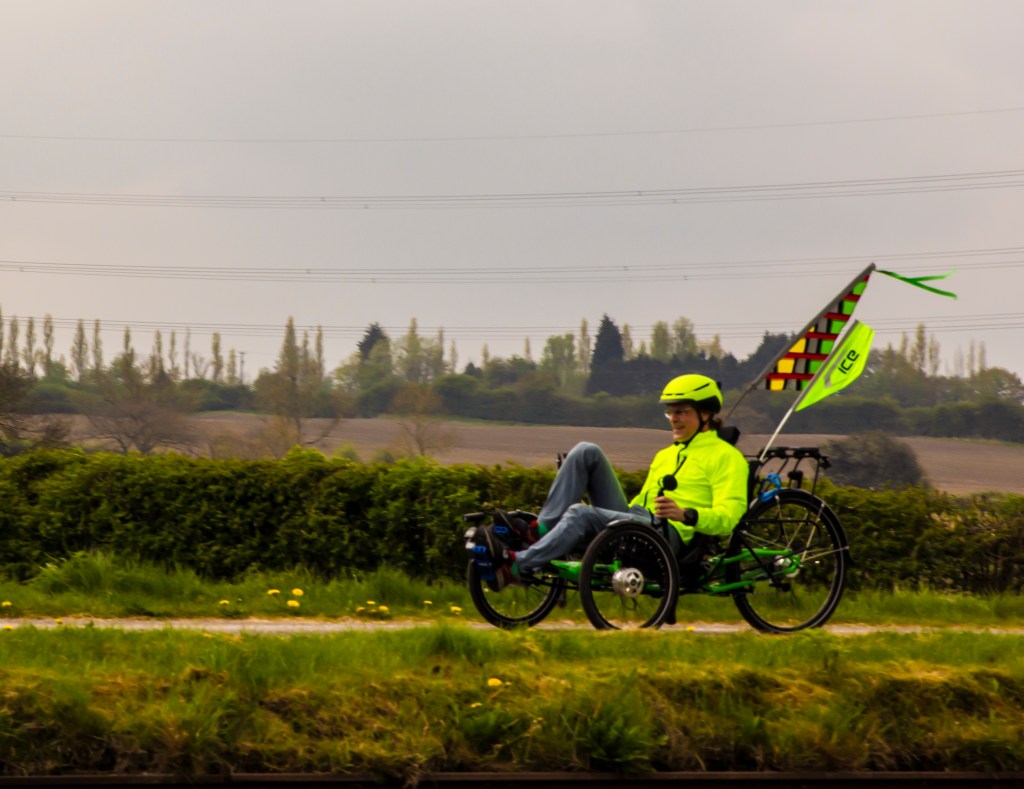
Interesting form of transport
Postscript
In the middle of May we had a babysitting assignment in Shropshire, and decided to take a few days on Derwent Lass to go up to Sowerby Bridge.
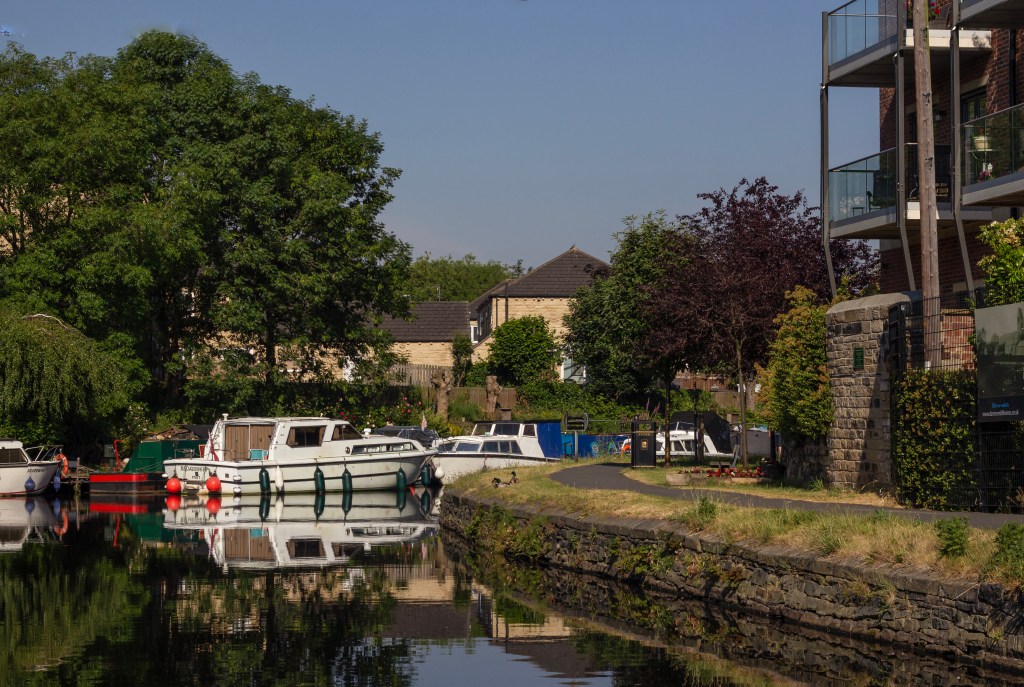
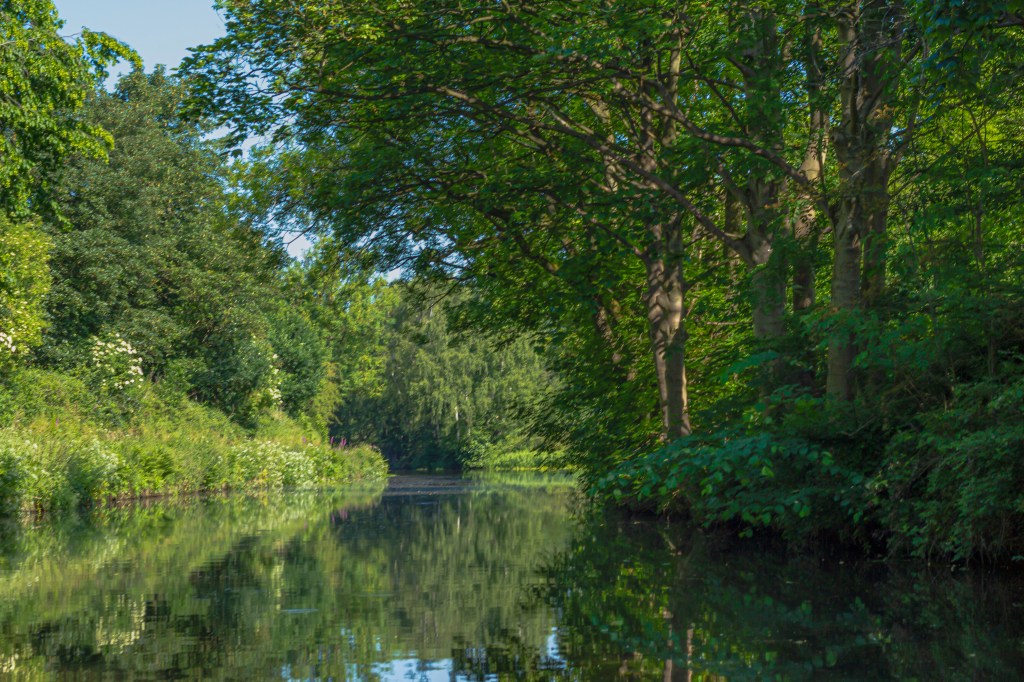
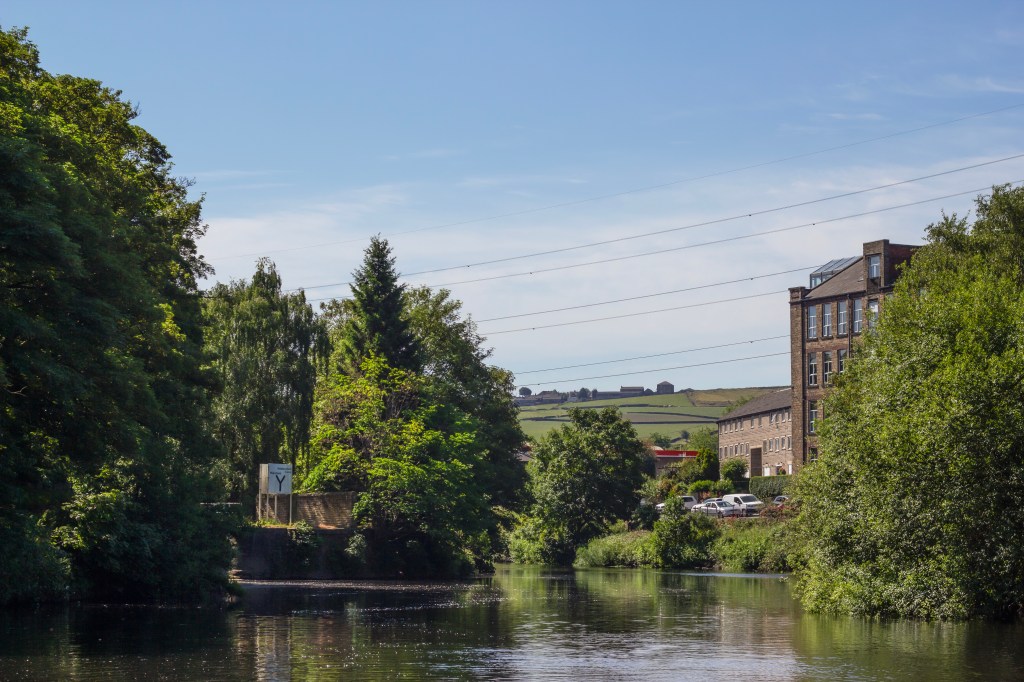


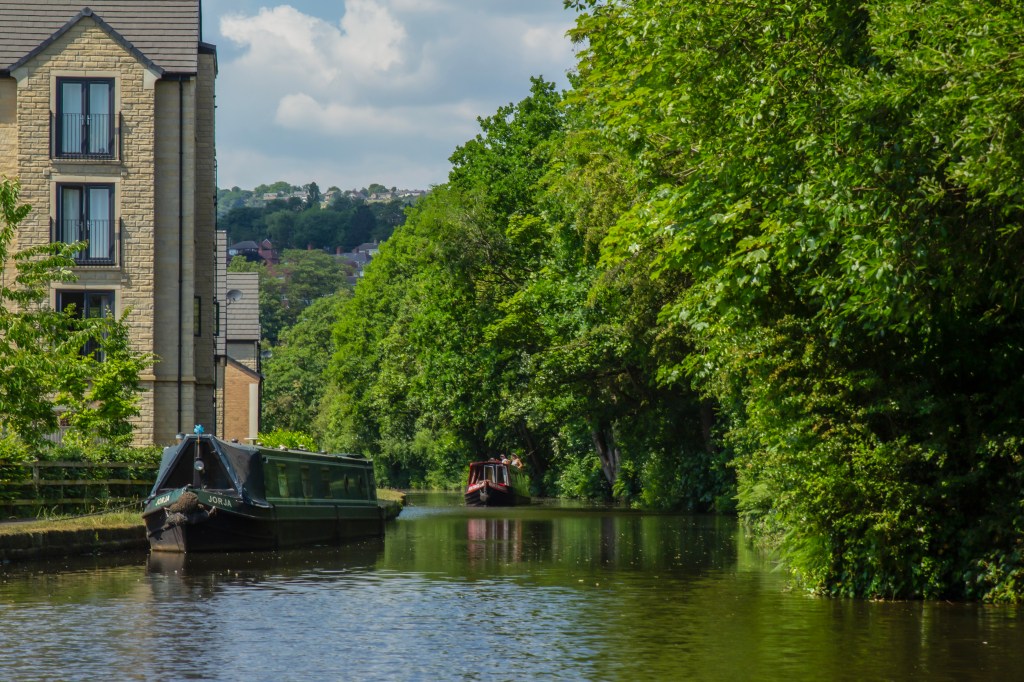
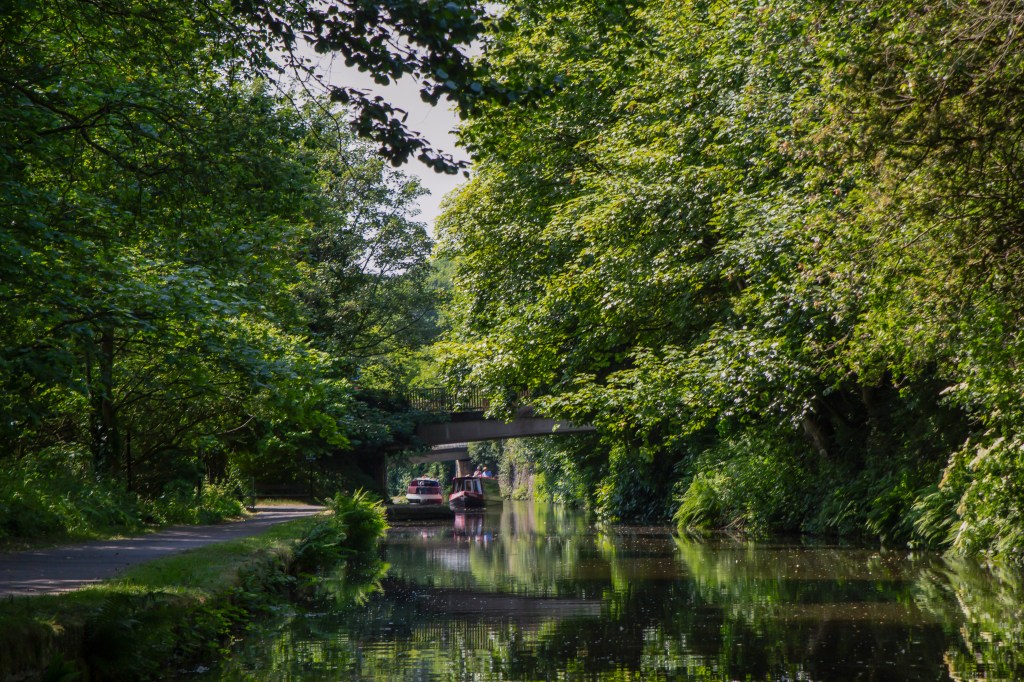
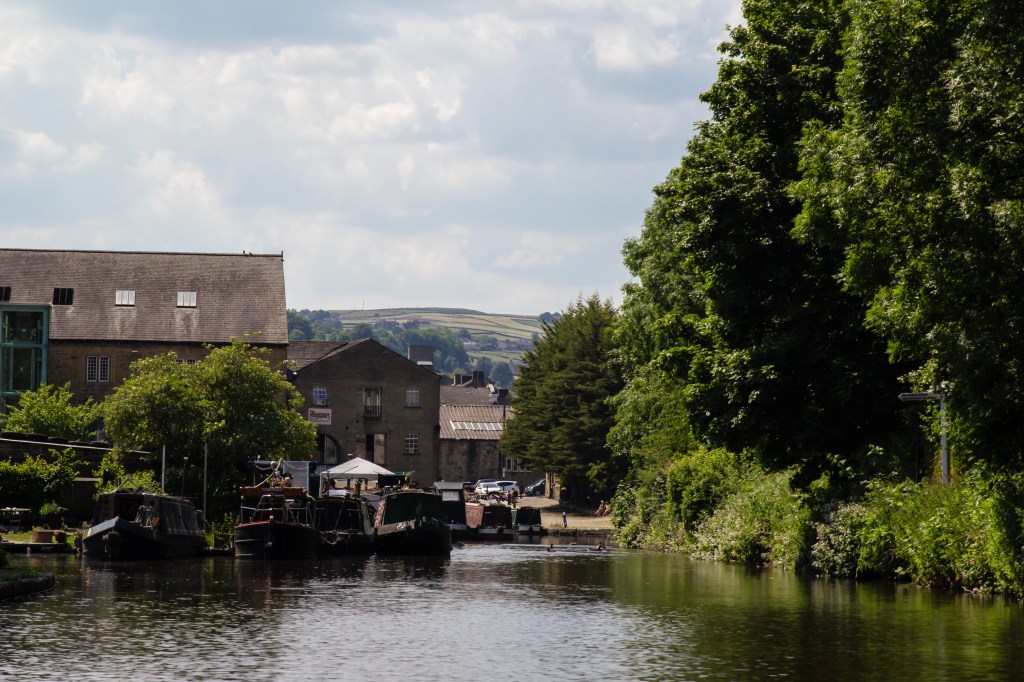

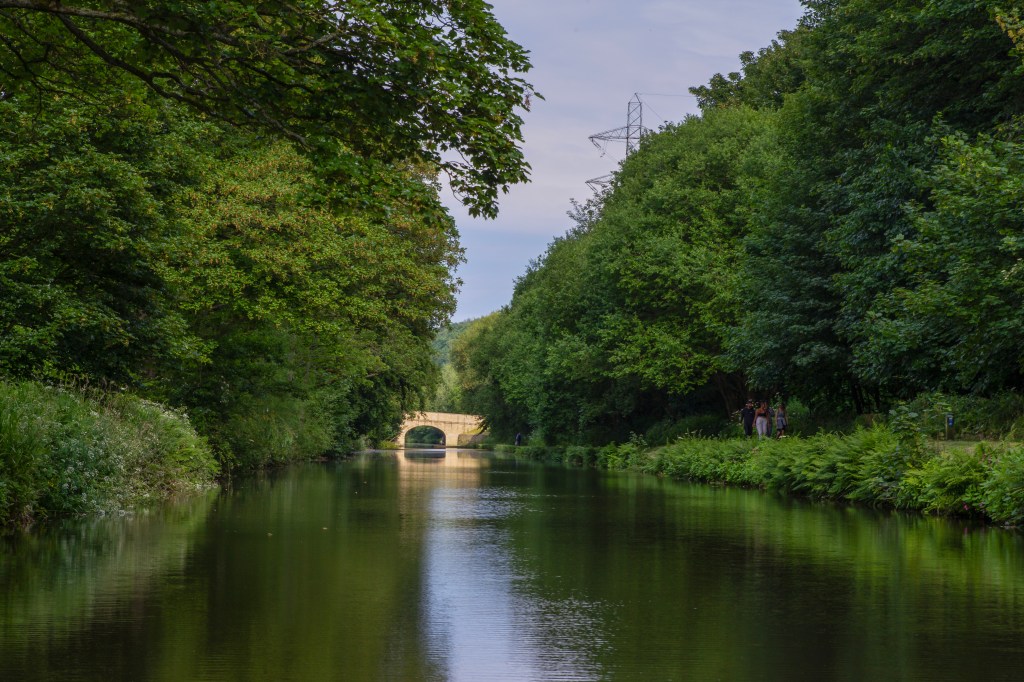
 Narrowboating in Yorkshire
9 replies on “Gargrave to Mirfield”
Brilliant and interesting, as always Jane.
LikeLike
Thanks so much Chris 🙂
LikeLike
A very interesting and informative read Jane thank you. I have had a lovely relaxing half hour and enjoyed your canal journey very much.
LikeLiked by 1 person
Thanks so much Sue 😊
LikeLike
Great blog Jane! As a regular walker on the Rodley canal I was very entertained by your account of the encounter with the new swing bridge. Hilarious! So many boaters have complained how terrible it is and it cost a fortune. Enjoy your boating!
LikeLike
Thanks so much John! We’re currently on the River Trent heading for West Stockwith and the Chesterfield Canal with a similar number of trials & tribulations to contend with 😆
LikeLike
Good luck Jane! Nice part of the world. Have you ever boated on the canals in South Staffordshire? We are hoping to buy a house somewhere near Brewood (if we can sell our house in Yorkshire!) and just wondered if you were familiar with the area?
LikeLike
Yes but more than 20 years ago – we had two holidays hiring boats from a place in Cheshire & one of the trips was down the Shropshire Union Canal & we got just about as far as Brewood. The Shroppie is lovely.
This current trip is actually part of moving the boat down to Cheshire – we’ve done most of the Yorkshire waterways now & they are pretty hard work a lot of the time. Our daughter & son-in-law & grandchildren live in Newport Shropshire & so they’ll be able to use the boat more when it’s based in Cheshire.
Good luck with your house selling/buying!
LikeLike
Thank you Jane! You do get around….fascinating!
LikeLiked by 1 person