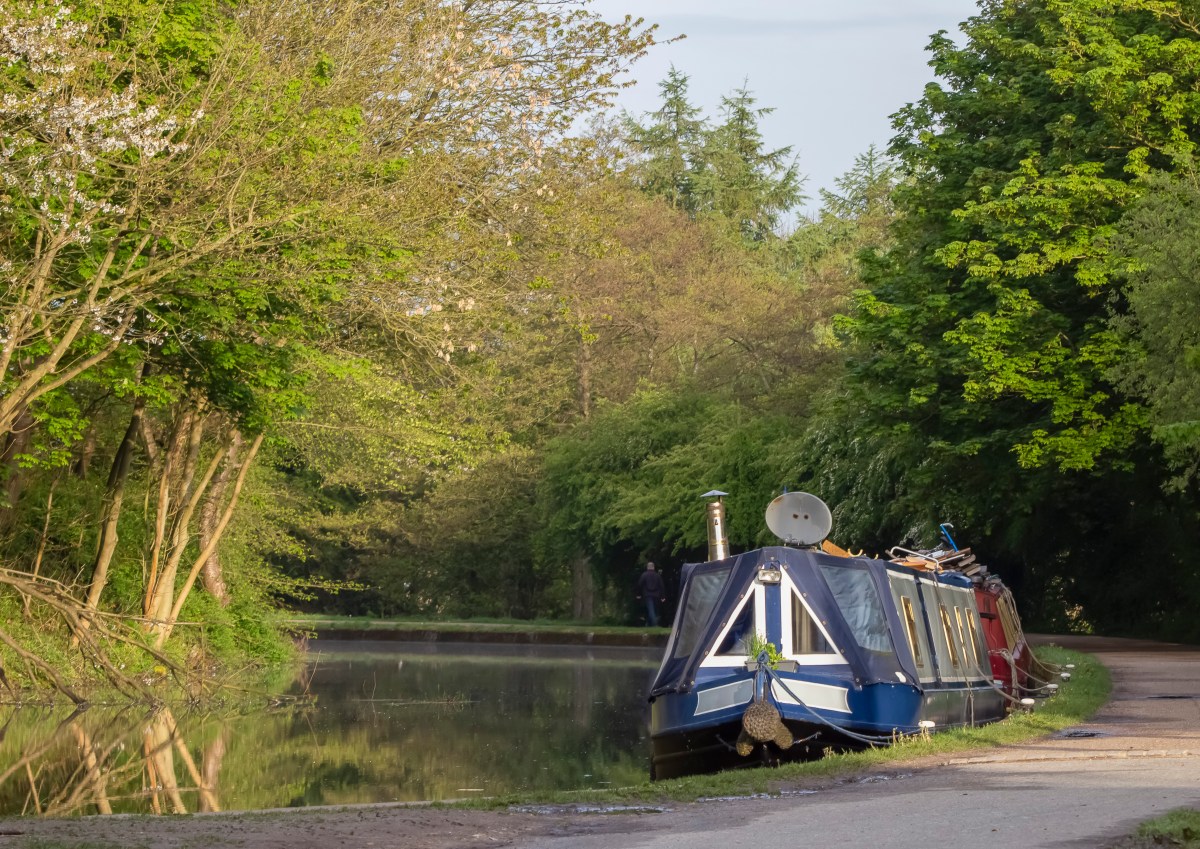
Oh the excitement when you have a home on the water again.
There was some urgency about finding a permanent mooring for Derwent Lass. She had been moored at a boatyard in Shipley while she was having her bottom blacked, and they needed the space and wanted us to leave as soon as possible. After a lot of searching, Ian found a boatyard at Mirfield on the Calder & Hebble Navigation which had a berth we could have. 16 miles by road, it would take us 5 days via the Leeds-Liverpool Canal, Leeds city centre, the River Aire, the Aire & Calder Navigation and the Calder & Hebble Navigation to do the journey. According to Canalplan, our journey would be 40.5 miles with 38 locks.
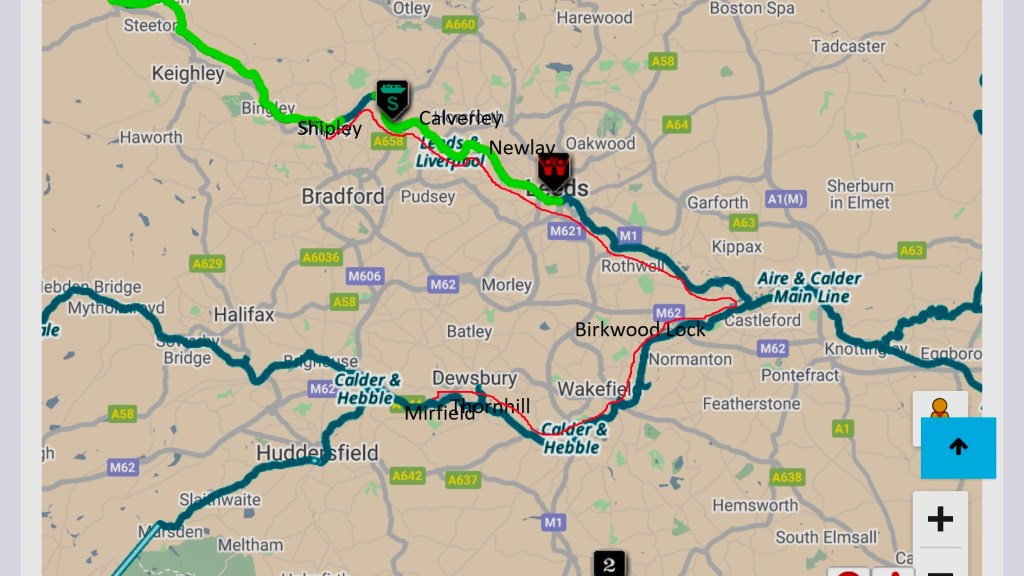
May 10th 2021 We drove down to Shipley with the car full of provisions and things we hadn’t taken down when we took over the boat. There was some urgency about this first trip too. May 17th marked a relaxing of some Covid restrictions, which meant we could visit and stay overnight with Susie and Jeremy in Shropshire. So I really wanted to be home on the Saturday, to get sorted out before leaving for Shropshire.
It took some time to transfer all our stuff from the car to the boat, through a padlocked gate, up a steep flight of stone steps, through another padlocked gate, and along the path past several other boats, to reach Derwent Lass, but eventually we’d finished and Ian drove the car to the Mirfield boatyard, returning to Shipley by train, while I spent a happy afternoon organising my new galley and deciding how to allocate the cupboard space. These tasks were made a great deal easier thanks to Carol, the previous owner, who had left the boat spotlessly clean. She’d also removed all her stuff, which gave me an opportunity both to put to good use things which I’d been hoarding for years, on the off-chance they’d come in handy one day, and buying some nice new kitchenware. One of the new items was a set of Kitchen Devil knives, and by the end of Day 1, they had lived up to their name. I had managed to neatly slice both my thumbs.
When we’d been on the Loop, we’d congratulated ourselves that after negotiating Tampa Bay, Lake Okeechobee, Pamlico Sound, New York Harbour during the morning rush hour, crossing Lake Ontario, and most notably the 12-hour crossing of the Gulf of Mexico, narrowboating in England would be a doddle. How wrong we were.
May 11th Obstacle #1. The boatyard had rafted up another boat alongside us, meaning we couldn’t get out of our mooring. But help was at hand. Two gentlemen from the neighbouring boats helped to untie the rafted boat, then walk it and re-tie it further along, so that we had an exit.
Obstacle #2. The engine wouldn’t start. But Joseph, one of our neighbours, had some jump leads and eventually we were on our way to Leeds and beyond.

Later on, we had a baptism of fire at the first locks we came to – Field 3 Locks was not one lock, but as the name implies, three locks arranged in a staircase, so that the boat passed straight into the middle lock from the top lock, and straight into the bottom lock from the middle lock, without any intervening ‘pond’. There was an illustrated information board with complicated instructions about ensuring that the middle lock was full, before you went into the top lock and so forth. Although we’d done staircase locks before when we were on Scallywag, it still seemed a rather nerve-wracking process, not to mention the effort rquired with the winch to open the paddles, and move the heavy lock gates.
After lunch it rained, but we pressed on. The Leeds-Liverpool seemed to have an inordinate number of swing bridges, which involved me getting off the boat, working out how to use the anti-vandal key to unlock the padlock, and then heaving with all my might on the bridge arm in an attempt to move it so the boat could pass through. At Idle Swing Bridge, I was defeated. I had to enlist the help of a passing cyclist to lend his weight to the effort, and even that wasn’t sufficient. Ian had to gently nudge it with the bow to get it to move. A mile further on, there was a Canals & Rivers Trust Maintenance Yard. The man there told us that someone had rammed Idle Bridge at speed last year, causing it to jam, and they hadn’t yet got round to repairing it.
There was another swing bridge at Apperley Bridge, but this one was not a farm track as all the others had been, but a proper road crossing, complete with flashing lights and barriers, and mechanically operated by inserting my Canals & Rivers Trust key into the lock, and pressing buttons in the appropriate order. I was conscious of a strange and unfamiliar sense of power as the cars drew up and halted at my bidding. Long lines had formed in both directions by the time Derwent Lass had passed through, and it was some minutes after closing the bridge that I was even able to cross the road and get back on the boat.
The rain had continued throughout the afternoon, so we were quite bedraggled by the time we finally moored up for the night at Calverley Wood, some two miles beyond the road swing bridge. It had been quite a hard day, with the physical difficulty of the locks and bridges, and we were looking forward to dinner and a drink. I went below and took off my dripping waterproof, at which point I realised that my keys (C&R Trust key, Derwent Lass’ front door key, house keys and tennis club fob) weren’t in my pocket and weren’t anywhere else on the boat either.
That left only the control box on the Apperley Bridge swing bridge. You had to leave the key in position in the box all the time that the mechanism was working, and I had forgotten to remove it at the end of the procedure.
Ian was not pleased by this lapse, but accompanied me back along the towpath to see if they were still there. To my huge relief, they were. But it was a long and unwelcome 4-mile walk at the end of a tiring day.
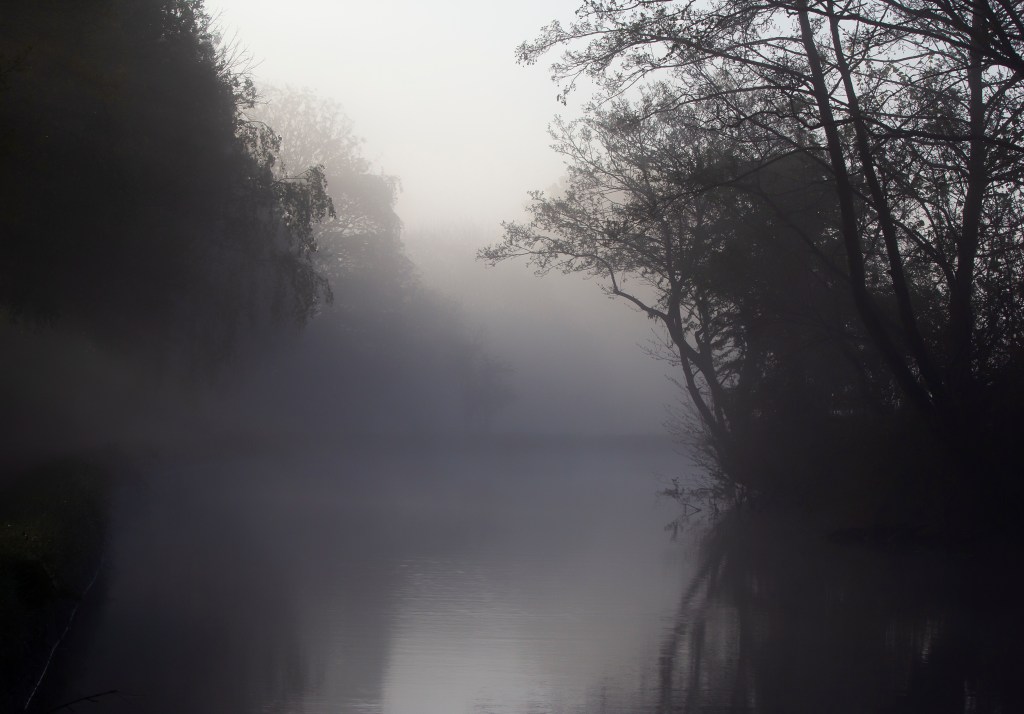
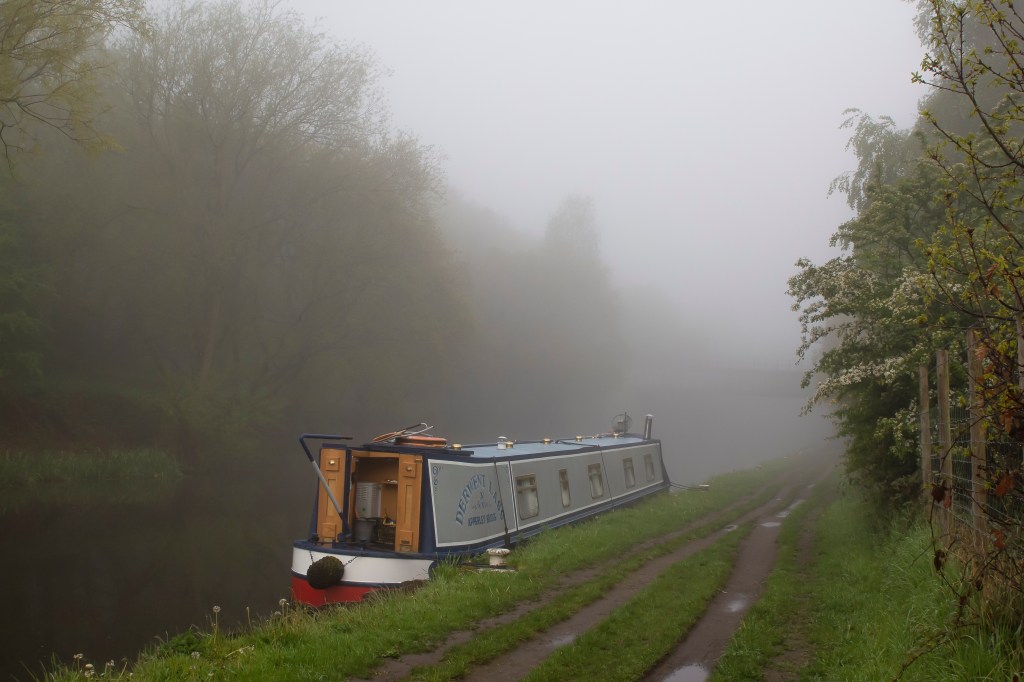
May 12 I woke early to find the canal shrouded in mist.
Rejuvenated by a good night’s sleep, we were keen to be on our way. But things got worse before they got better. Once again the engine wouldn’t start, and this time we had no helpful neighbours to call on for assistance.
With admirable foresight, Ian had subscribed to River Canal Rescue, a sort of AA for boats on the inland waterways. They said Dave would come later in the morning and sort us out.
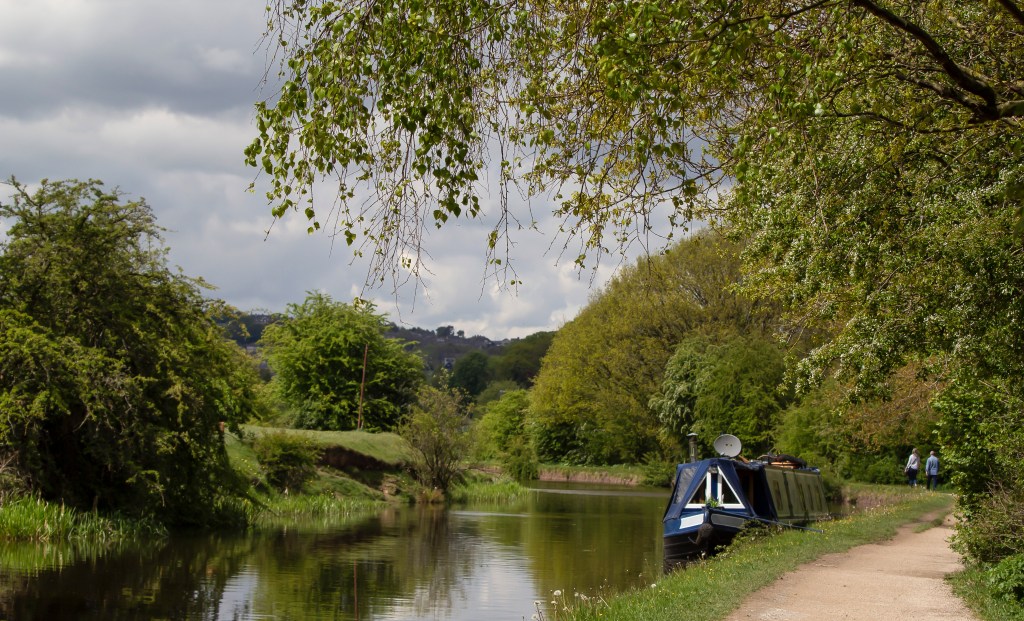
While we were waiting, I walked along the towpath. At this point the canal follows the hillside round the curve of the River Aire to the left.

Dave arrived at lunch time. He had made a telephone diagnosis of a faulty starter battery, and brought a replacement one for us. Because we were moored about a mile from the nearest road, this had involved transporting it in a wheel barrow. We were very grateful to be on our way and reached Newlay Locks for our next stop.
We were still unfamiliar with Derwent Lass’ little foibles and intricacies, and Ian realised with dismay that we had run out of water. C&R Trust water points seemed to be few and far between, and there were none marked on the Nicholson’s guide within reach. He managed to persuade the marina at Fallwood to let us fill up there. Another disaster averted.

May 13 Ian woke early at 6.30 and ‘advised’ me to get up, so we could have an early start and make up the time we’d lost the previous day. A few minutes later, I heard mild expletives from the galley. It wasn’t 6.30, it was 5.30. So I had time to go out with my camera and still have the prized early start.
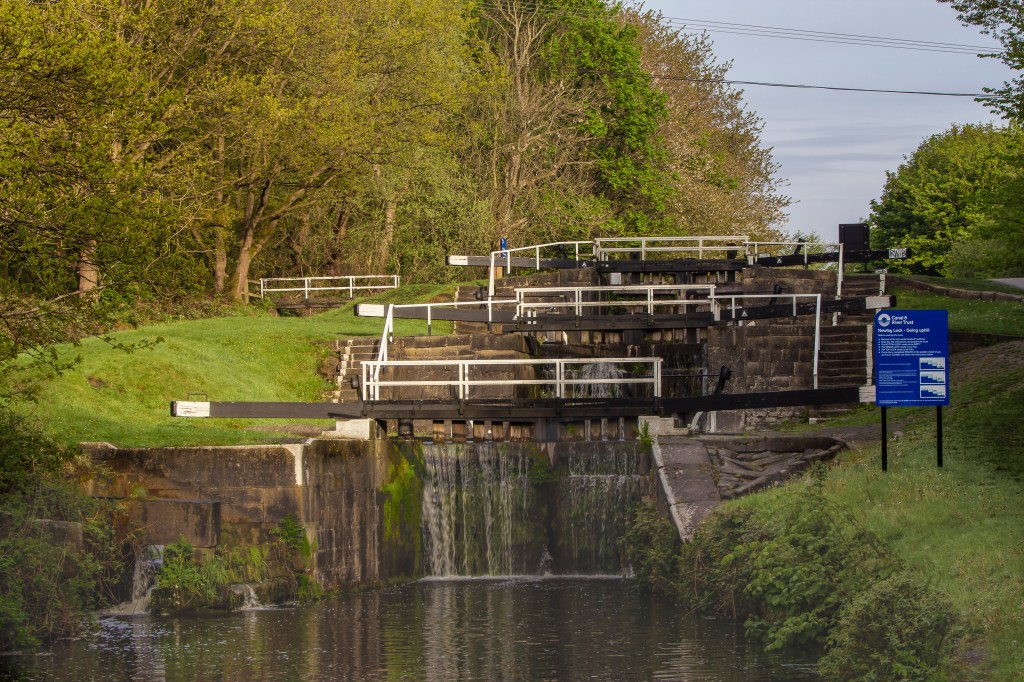

At Forge Locks, we really did have a near-disaster. It was another 3-staircase lock and while the top lock was filling, I wandered off to photograh something. When I came back, Ian was about to exit the top lock which had emptied. But there was no water in the middle lock – the paddles on the bottom lock were open and all the water had drained away. If Ian had come out of the top lock, Derwent Lass would have grounded on th cill and possibly even tipped over. I had no idea how this had happened, and it was clearly my fault. I ran up the path shouting to Ian who couldn’t hear me above the noise of the lock water. But Derwent Lass couldn’t have left the top lock, as she was gently balanced on the bottom of it. It took some time to re-fill the locks so we could proceed safely, and even longer for me to calm down.
We were due to meet my old school friend Jean in Leeds city centre. This was trickier than it sounds, because we couldn’t be sure exactly when we’d be there, and we didn’t know if there would be space on the public moorings at Granary Wharf, near the station. But apart from getting caught in a downpour at Office Locks, just before Granary Wharf, all went smoothly, helped by location sharing on WhatsApp.
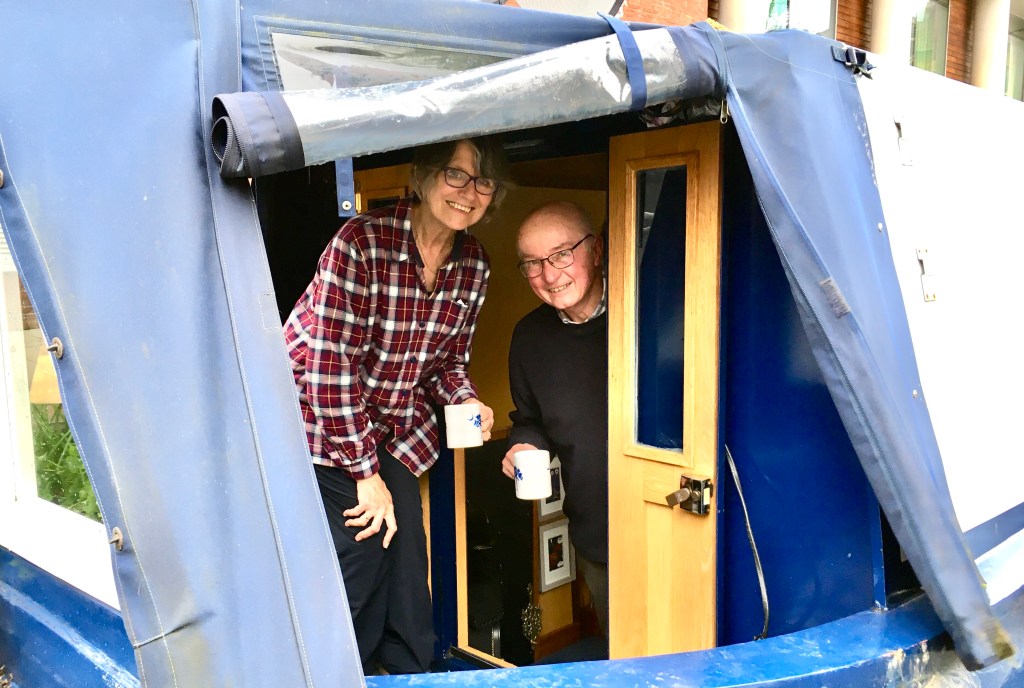

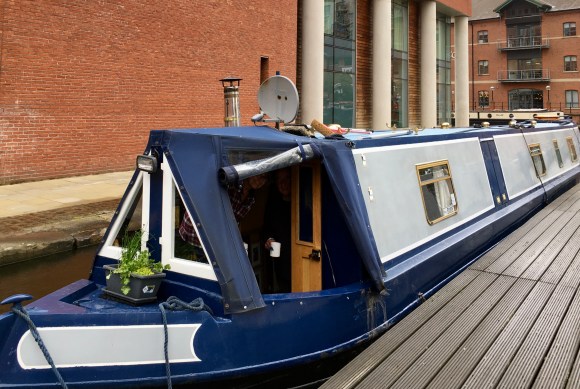
The city centre was a fascinating mix of old and new, with lots of the old being repurposed into housing developments, hotels and bars. Lockdown restrictions meant it probably wasn’t as lively as it might have been, the cold and rain not being conducive to sitting outside with a beer.
May 14 We left Leeds under cold grey skies. The first lock, like all the others, was heavy and difficult, and marked the end of the Leeds-Liverpool Canal. We were now on the River Aire.

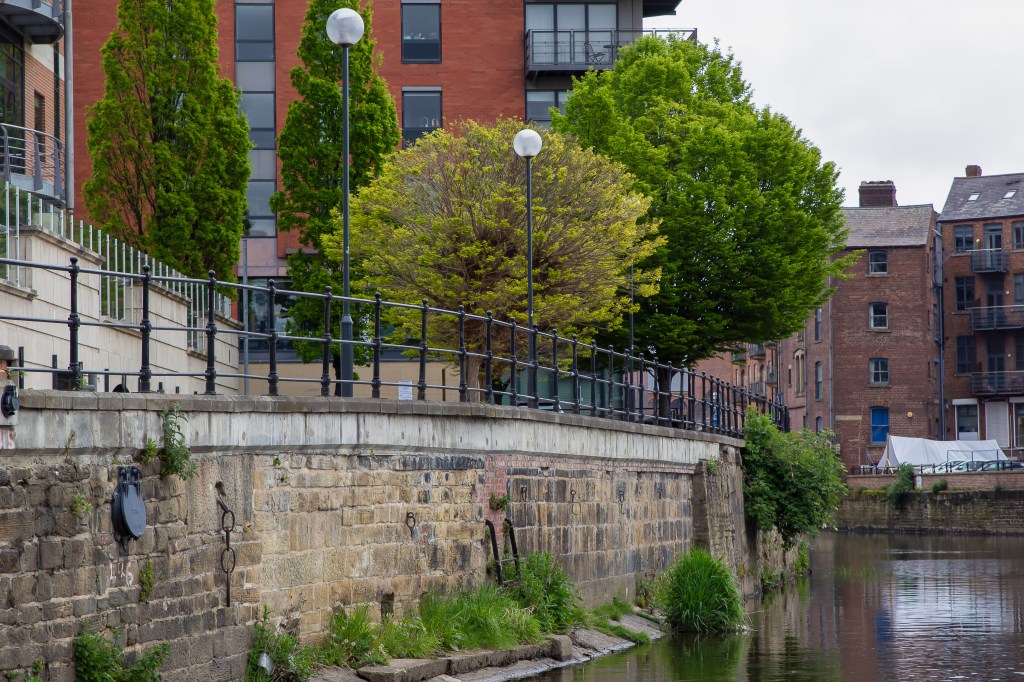

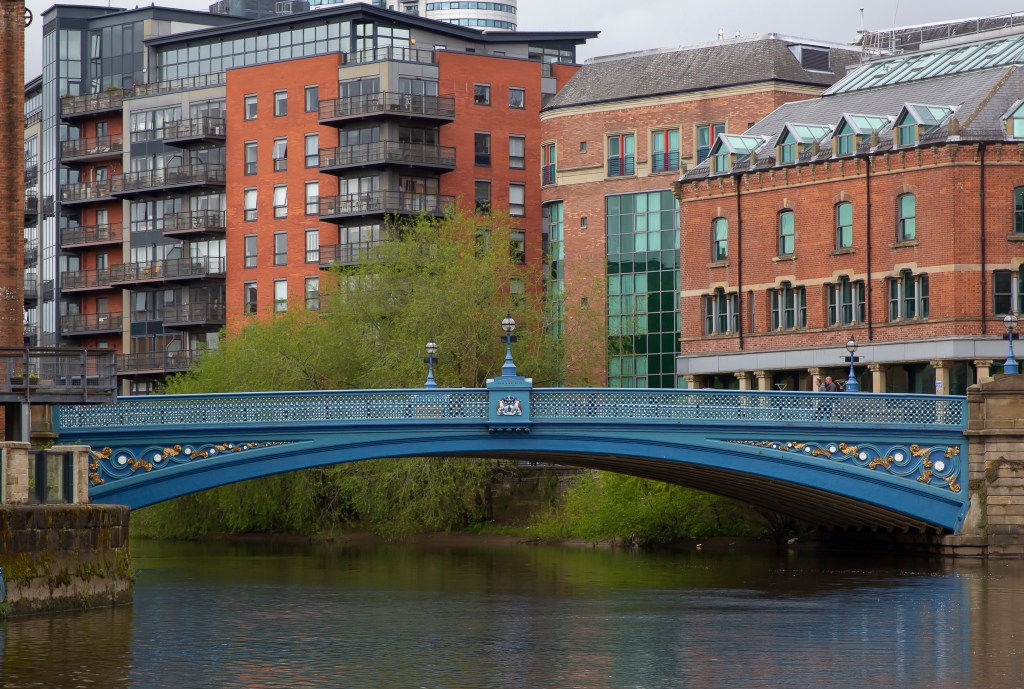
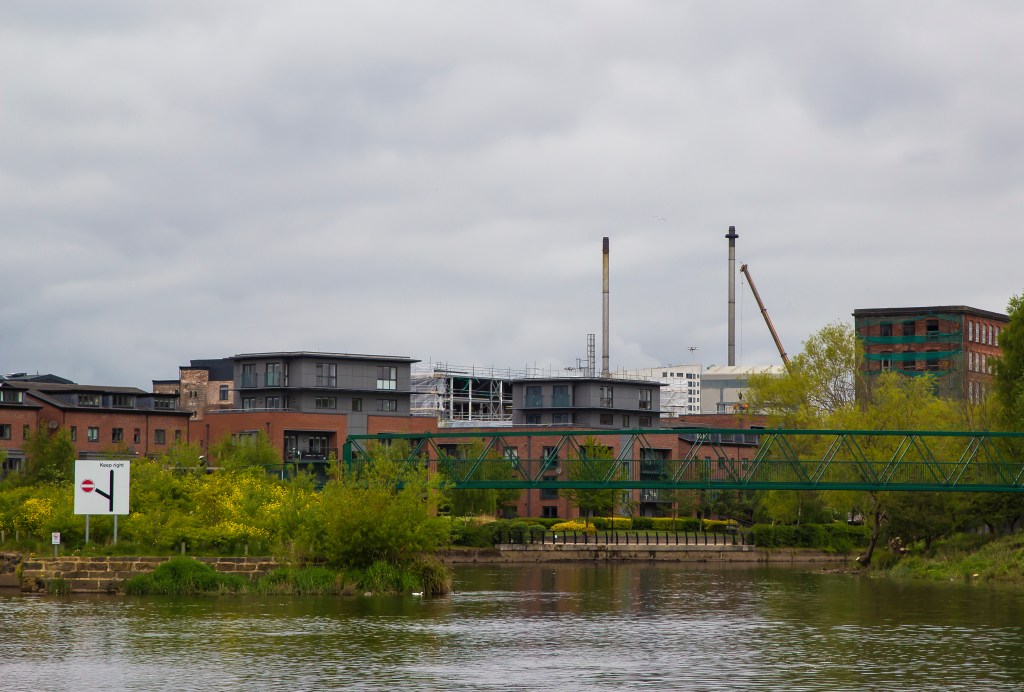
At Thwaite Gate, the waterway leaves the river and we were on to the Aire and Calder Navigation. This is a commercial waterway used, according to the Nicholson’s guide, by 600-tonne tankers and large sand-carrying barges, although we didn’t encounter any of these vessels. It did mean that on this stretch the locks were mechanically operated. All you had to do was follow the instructions and press the buttons in the right order.
We had gleaned from various sources that the Calder and Hebble Navigation was closed at Normanton, because a lorry had left the M62, crahed through the barrier, and into the canal. Miraculously, the driver had suffered only minor injuries, but Highways England, whose responsibility it was, seemed in no hurry to remove the debris and allow boats to pass through. They thought a few days. Sometimes it’s useful being a retired civil engineer who knows how these things work, and Ian’s polite, measured persistence had the desired effect and the canal was re-opened in time for us to pass through the following day.
One change since we last went on a narrowboat is our acquisition of smartphones and access to Google maps. This enabled me to identify the presence at Woodlesford of a highly recommended fish and chip shop. Fortuitously, our arrival coincided with lunch time, and the half-mile walk into the village was suitably rewarded, and we didn’t need much dinner when we moored at Birkwood Lock.
15th May Ian had arranged to stop at Stanley Ferry Marina at 10 o’clock to get some boat essentials that we needed, so we had a relaxed breakfast as it wasn’t very far away from Birkwood. When we got there the place seemed deserted and there was a sign saying that the opening hours were 1 till 4 on Saturdays. Then the manager appeared and had all the stuff we wanted ready for us. He had come in specially early, to fit in with our timetable.
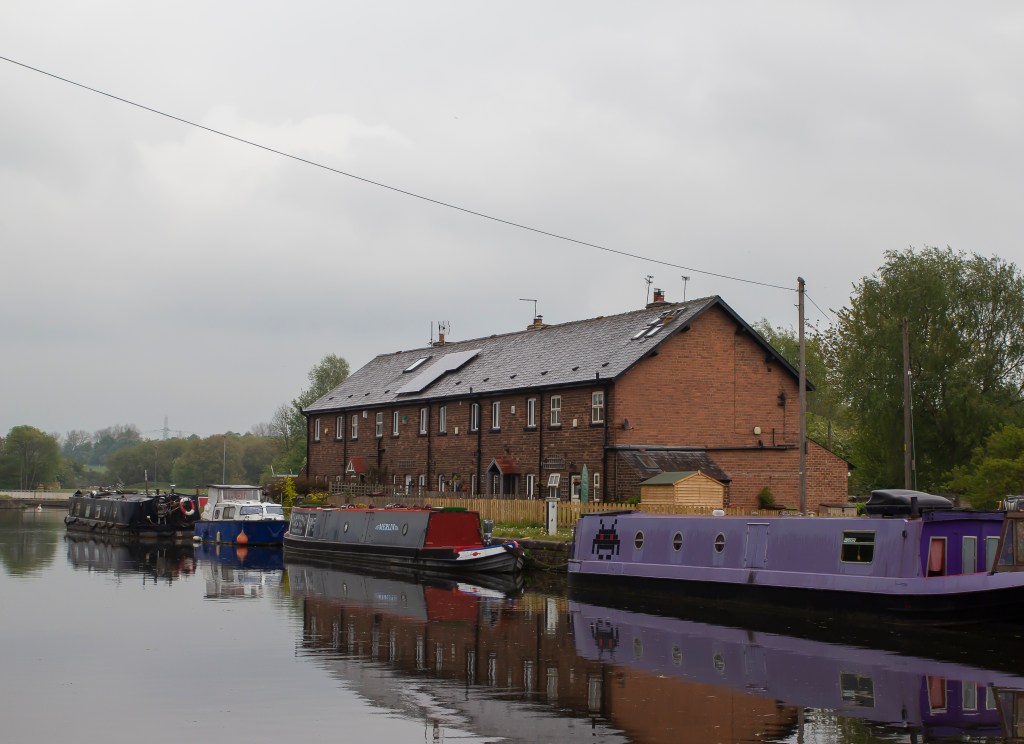
At Fall Ings lock, we had a slight contretemps with some other boat owners. At Fall Ings, the Calder and HebbleNavigation leaves the River Calder at a sharp right-angle turn. Ian held the boat at the lock moorings and waited while I went up to the lock. Two other boats were already in the lock, and as they opened the paddles to let the water out, there was a massive surge into the river which made it really difficult for Ian to keep hold of our boat. I asked the people to close the paddles so that the lock would empty more slowly, but they were oblivious to the threat to Derwent Lass and were concerned only with the fact that we were occupying the space where they would have to get back on their boats. I turned and saw our boat about 10 yards into the river, tipping from side to side, with Ian and a helpful bystander struggling to control her. Eventually the water flow slowed down and we were safe. But later when I went below, there were two wine bottles smashed on the galley floor. Closer inspection revealed however, that it was only the red one which had broken. The white wine was unscathed.
The rest of the day passed without incident and our final mooring was near Thornhill Locks.
May 16th It was another misty start, but we finally saw the sun as we approached Thornhill Locks near Dewsbury, where there was a sweeping view of the open countryside.

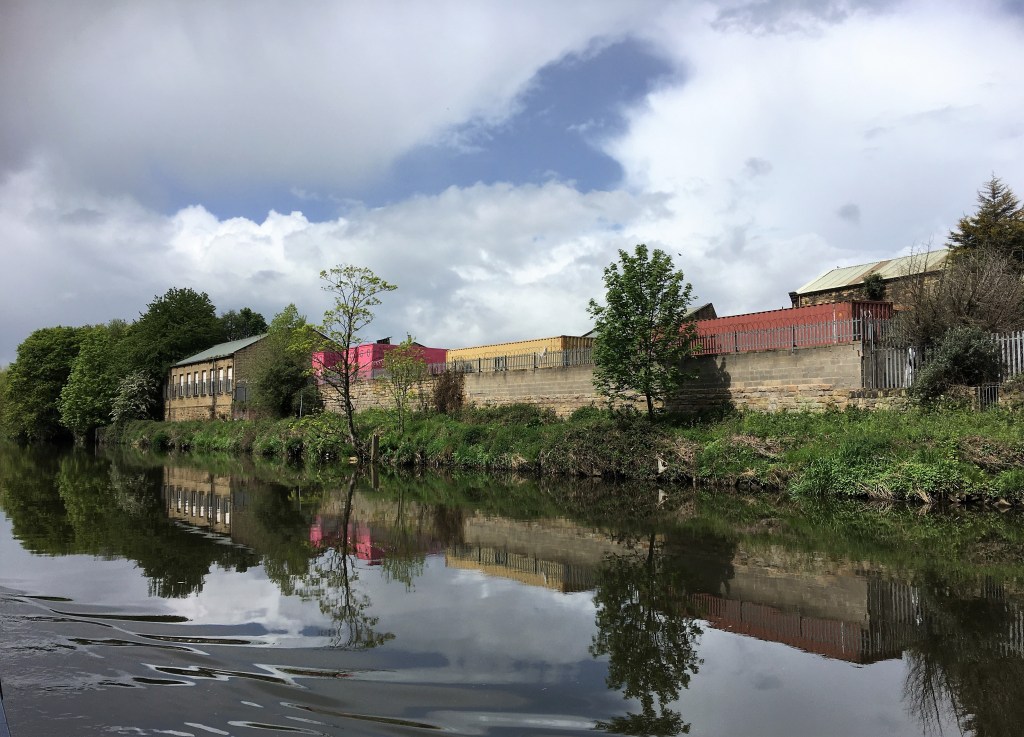
We finally made it to Mirfield and met our neighbours at the boatyard, packed up the car and headed home, before leaving the next day for the long-awaited reunion with the family in Shropshire.

 Narrowboating in Yorkshire